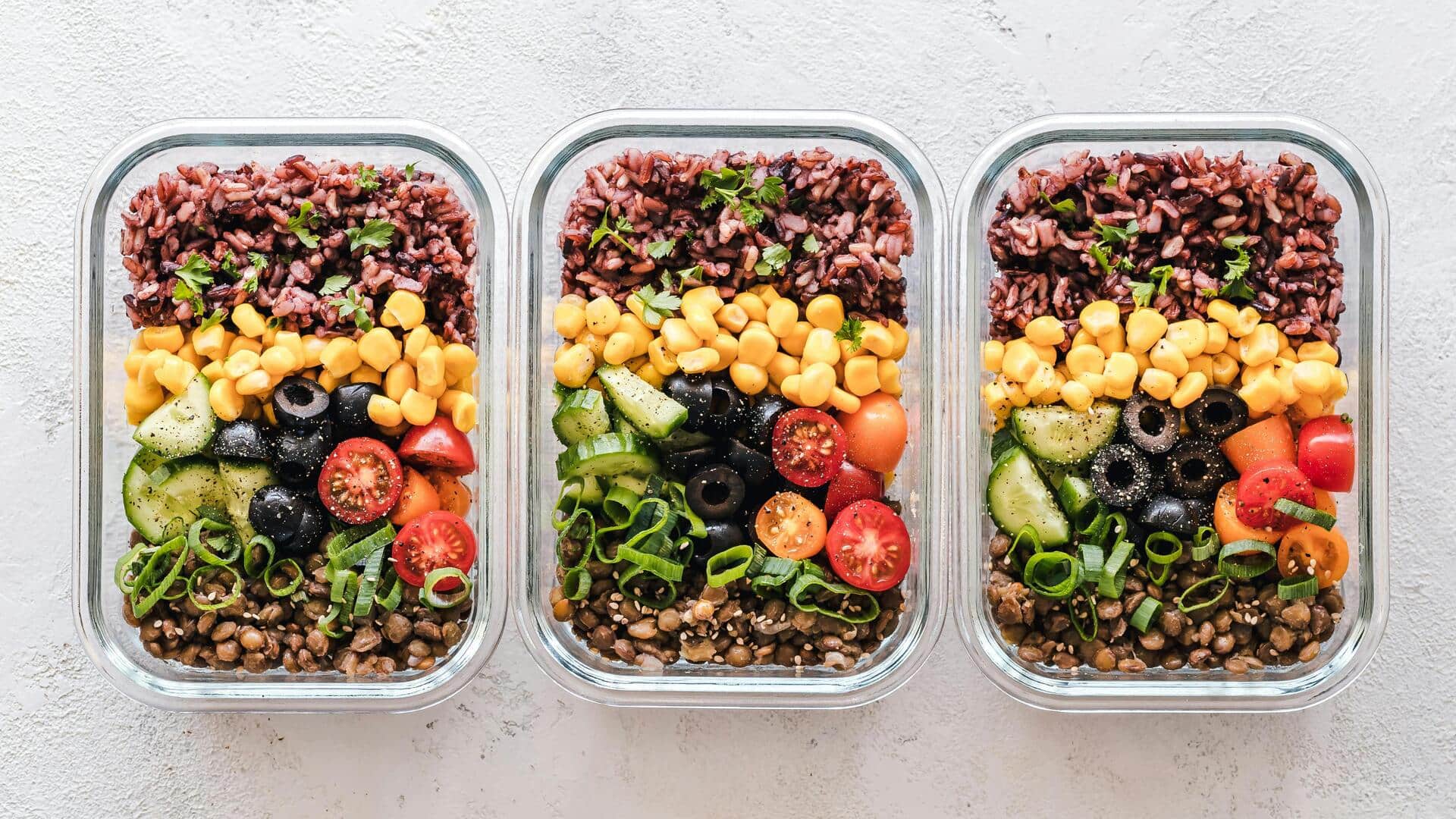
5 easy meal planning tips to reduce food waste
What's the story
Creating a weekly meal plan can help you save money and reduce food waste. By planning meals, you can make the most of what you buy and avoid unnecessary purchases. This not only helps your wallet but also contributes to a more sustainable lifestyle by minimizing waste. Here are some practical tips to create an efficient meal plan that aligns with your budget and reduces environmental impact.
Inventory check
Assess your pantry and fridge
Before planning your meals, check what you already have in your pantry and fridge.
This way, you can use up ingredients that are nearing their expiry date or that you have in excess.
Not only does this prevent food waste, but it also helps you avoid buying unnecessary items.
Make a list of staple ingredients that need replenishing, and plan meals around them.
Flexible recipes
Plan versatile meals
Choose recipes that use similar ingredients to maximize efficiency and minimize waste.
For example, if a recipe calls for spinach, use it in salads, smoothies, or pasta dishes throughout the week.
This way, you ensure that all purchased ingredients are used up before they spoil, while also adding variety to your meals.
Repurposing ideas
Incorporate leftovers creatively
Leftovers are a great way to cut down on cooking time and avoid waste.
Get creative with how you use them by turning last night's dinner into today's lunch or incorporating them into new dishes.
For example, roasted vegetables can be added to sandwiches or wraps, and cooked grains can be tossed into salads or soups.
Budget-friendly shopping
Stick to a shopping list
Creating a shopping list based on your meal plan is key to staying within budget and avoiding impulse buys at the store.
Stick strictly to the list when shopping to prevent overspending on nonessential items.
This disciplined approach not only helps keep your finances in check, but also ensures that each purchase directly contributes toward your planned meals.
Serving control
Monitor portion sizes
Paying attention to portion sizes while cooking can go a long way in preventing food waste at home.
By serving appropriate amounts according to family needs, you reduce the likelihood of having uneaten food left over at the end of the meal.
This way, you not only save money but also contribute positively towards reducing overall household waste.