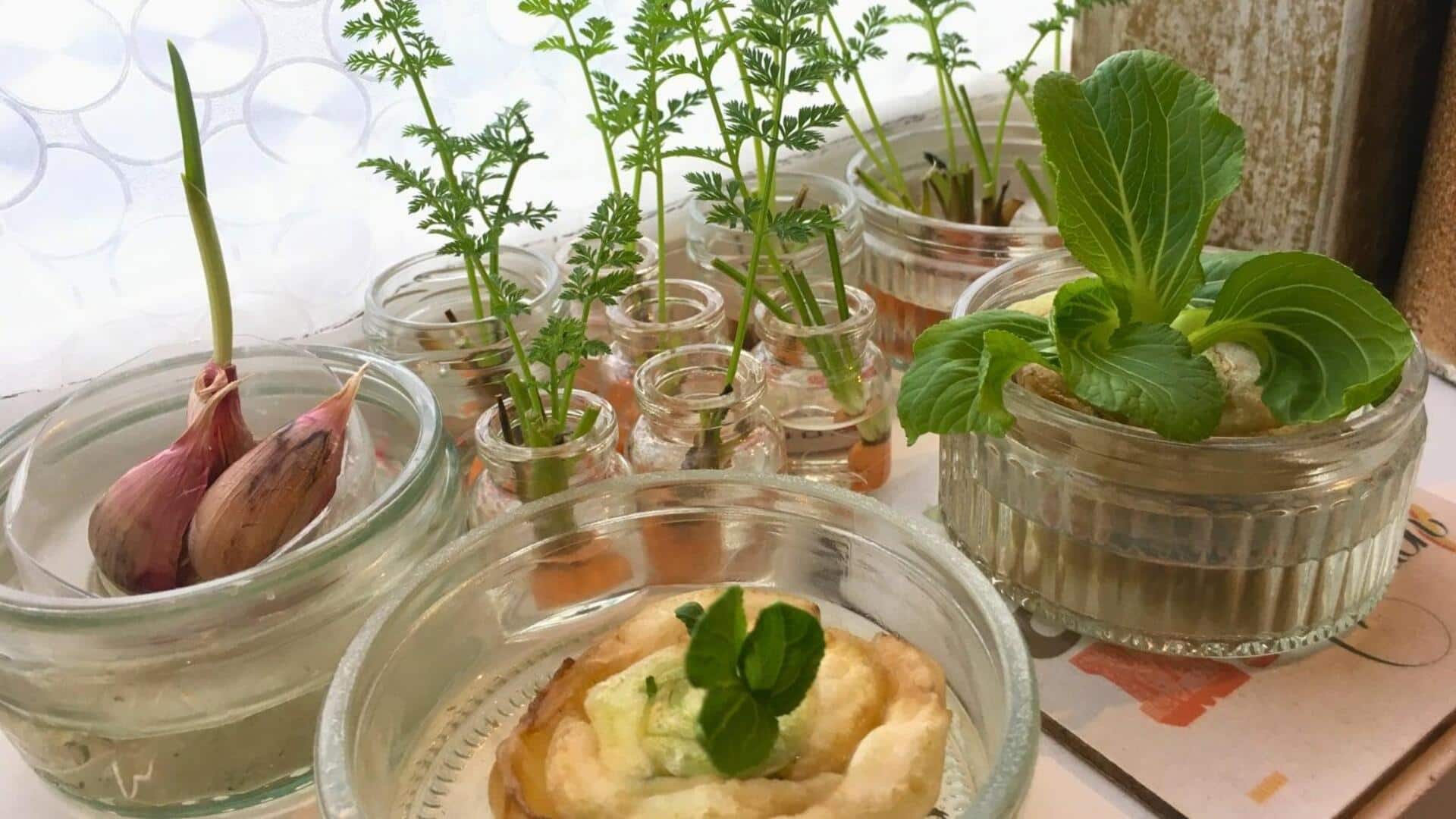
How to regrow vegetables from scraps at home
What's the story
Regrowing vegetables from scraps is an easy and sustainable way to grow your own food at home. Not only does this method reduce waste, but it also gives you a continuous supply of fresh produce. By using kitchen scraps, you can save money and reduce your carbon footprint. Here are some practical tips on how to regrow vegetables from scraps at home.
Tip 1
Regrowing green onions
Green onions are one of the easiest vegetables to regrow from scraps.
Just place the white root end in a glass of water, with the green tops above the waterline.
Keep it in a sunny spot, and change the water every few days.
In no time, you will have fresh green shoots ready to be harvested.
Tip 2
Carrot tops as new greens
Carrot tops can also be regrown into leafy greens.
Place carrot tops in a shallow dish with water, ensuring the cut side is facing down.
Keep it in indirect sunlight, and change the water regularly.
Within a week, you will see new leaves sprouting, which can be used in salads or as garnishes.
Tip 3
Lettuce leaves for continuous harvest
Lettuce leaves can be regrown by placing the base of the head in water.
Use a shallow bowl and cover half of the base with water only.
Place it near sunlight, and change the water every couple of days.
This way, new leaves will emerge from the center, giving you a continuous supply of lettuce.
Tip 4
Potato eyes for new tubers
Potato eyes can be planted directly into soil to grow new potatoes.
Cut potatoes into pieces, ensuring each piece has an eye or bud, then plant them about two inches deep in well-drained soil.
Water regularly, and keep them in full sun until harvest time comes after several months.
Tip 5
Celery stalks for fresh flavor
To regrow celery, place its base upright in water until roots form at its bottom within two weeks or so, depending on conditions like temperature and light exposure levels, etc.
Once rooted adequately enough, transfer them into potting mix, where they will thrive under proper care, including regular watering, ensuring soil remains moist but not soggy, preventing rot issues commonly associated with overwatering practices often seen elsewhere too.