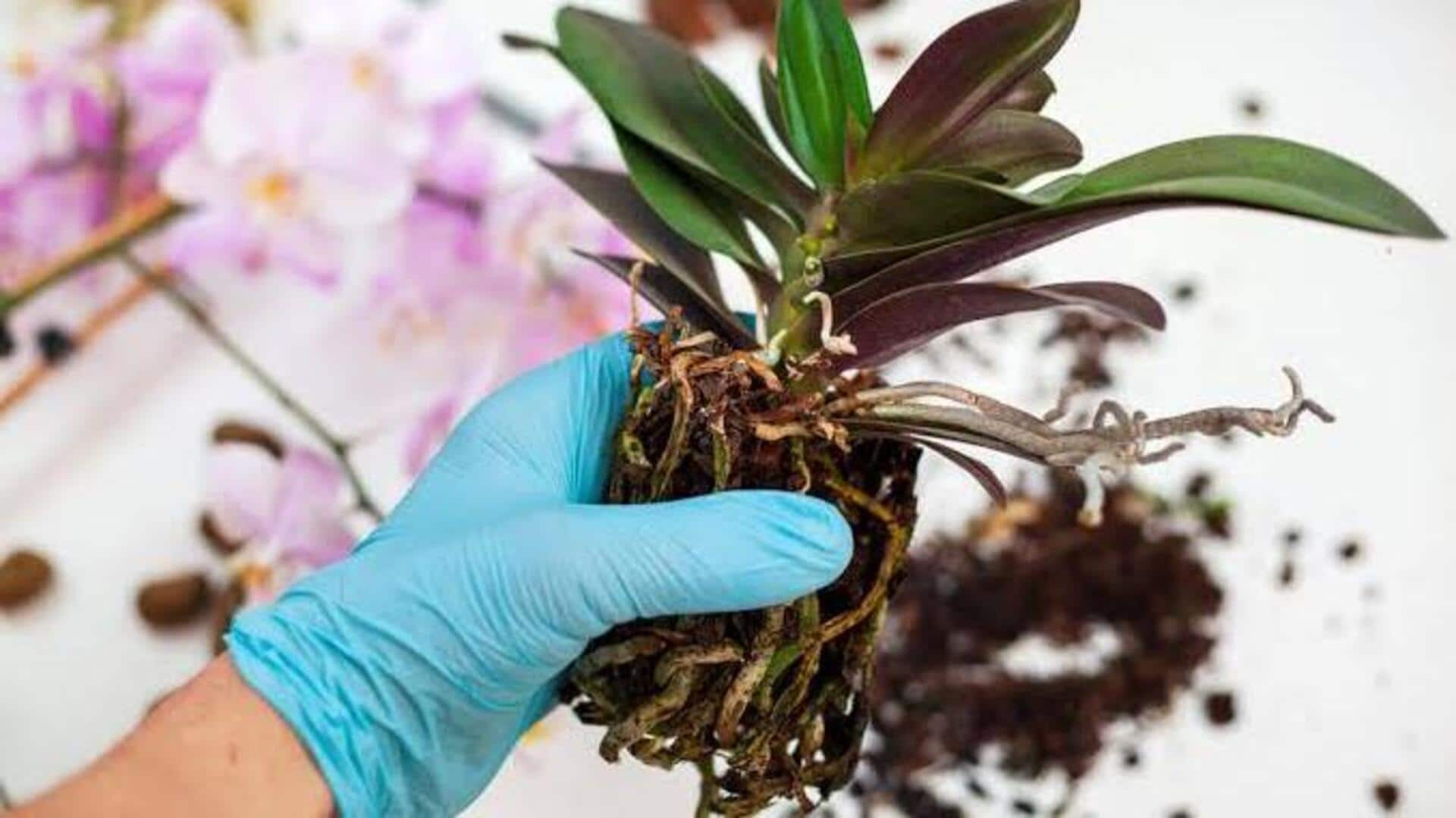
How to repot orchids without harming roots
What's the story
Repotting orchids can be tricky, but if you do it right, you can keep the roots healthy. Orchids need to be repotted every one to two years to ensure they have enough space to grow, and to keep their potting medium fresh. If you repot them the right way, you can avoid damaging the roots and keep the plant healthy. Here are some tips to help you repot orchids without harming their roots.
Timing
Choose the right time for repotting
Choosing the right time to repot is key to keeping orchid roots healthy.
The best time is just after flowering, when the plant is entering its growth phase.
Repotting during this time minimizes stress on the plant and gives it a chance to recover quickly.
Avoid repotting during dormancy or when the plant is blooming, as this can shock the orchid and hinder its growth.
Medium selection
Use appropriate potting medium
Choosing the right potting medium is key to keeping orchid roots healthy while repotting.
A mix of bark chips, sphagnum moss, and perlite is ideal as it provides good drainage and aeration.
This combination mimics the natural habitat of orchids, allowing moisture retention without waterlogging.
Avoid regular potting soil as it retains too much moisture, which can lead to root rot.
Root care
Handle roots with care
When repotting orchids, handle the roots delicately to avoid damaging them.
Use sterilized tools to trim any dead or rotting roots, which helps prevent infections.
Be gentle while separating tightly bound roots to avoid breaking them.
This careful handling ensures that the healthy parts of the root system remain intact and functional, promoting better growth and stability for the orchid post-repotting.
Pot selection
Ensure proper pot size
Choosing the right pot size is key to keeping orchid roots healthy after repotting.
A pot that's too big can retain excess moisture, leading to root rot. On the other hand, a pot that's too small can restrict growth and cause stress.
Ideally, choose a pot that is one or two inches wider than the current one, to give the roots enough room to expand, without compromising drainage or aeration.
Watering technique
Water wisely after repotting
After repotting an orchid, it's important to adjust your watering schedule.
Initially, water sparingly until you notice new growth, which indicates that the plant has adapted to its new environment.
This cautious approach prevents overwatering, which can suffocate roots in their vulnerable state post-repotting.
Gradually increase watering as needed based on environmental conditions and the specific needs of your orchid species.