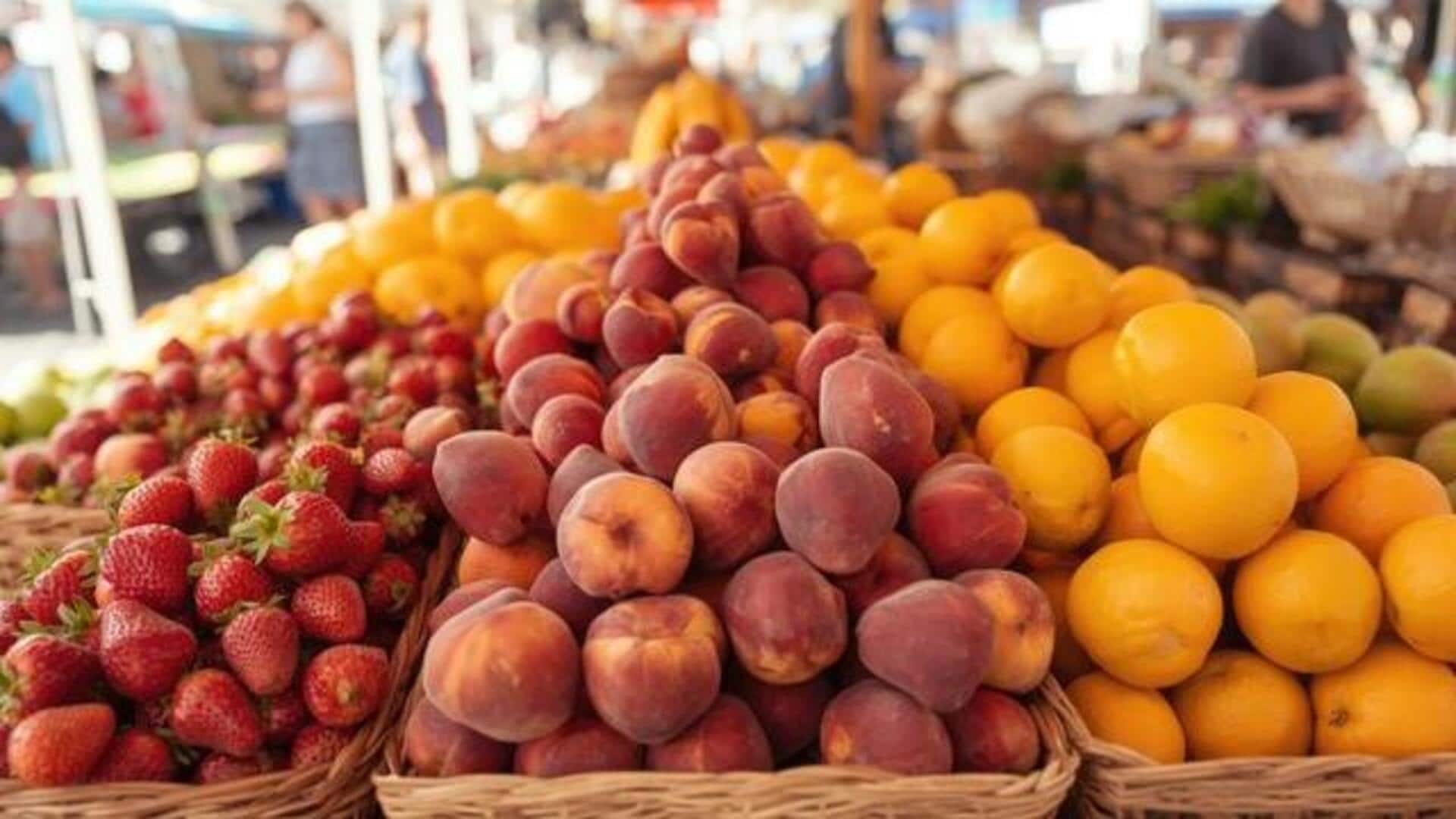
How to shop sustainably at fruit markets
What's the story
African fruit markets are a treasure trove of fresh produce and cultural experiences. However, shopping sustainably at these markets requires a bit of planning and awareness. By following some simple tips, you can ensure that your shopping habits are eco-friendly, while supporting local economies. Here are some practical insights into how you can make your market visits more sustainable, without compromising on quality or variety.
Tip 1
Choose seasonal fruits
Opting for seasonal fruits not only ensures freshness but also reduces the carbon footprint associated with transportation.
Seasonal fruits are usually grown locally, which means less energy is used in getting them to market.
This practice also supports local farmers, who rely on the demand for their produce during peak seasons.
Tip 2
Bring reusable bags
Carrying reusable bags is a simple, yet effective way to cut down on plastic waste.
Many markets still use plastic bags, which can be harmful to the environment.
By bringing your own bags, you contribute to reducing this pollution and set an example for others.
Tip 3
Support local vendors
Buying from local vendors helps keep money in the community and promotes sustainable farming practices.
Local vendors are more likely to use organic methods and avoid harmful chemicals, as they depend on their reputation in the community.
Plus, it gives you a chance to know where your food comes from.
Tip 4
Practice mindful buying
Mindful buying means only purchasing what you need and avoiding wasteful purchases.
This not only helps reduce food waste but also encourages more conscious consumption habits.
By planning your purchases beforehand, you can avoid impulse buys, which lead to unnecessary waste.
Tip 5
Engage in barter systems
Many African markets also have barter systems, where goods are exchanged without cash.
This not only promotes sustainability by encouraging the reuse of resources, but also strengthens community ties.
Participating in such systems can be a rewarding way to engage with local cultures while promoting sustainable practices.