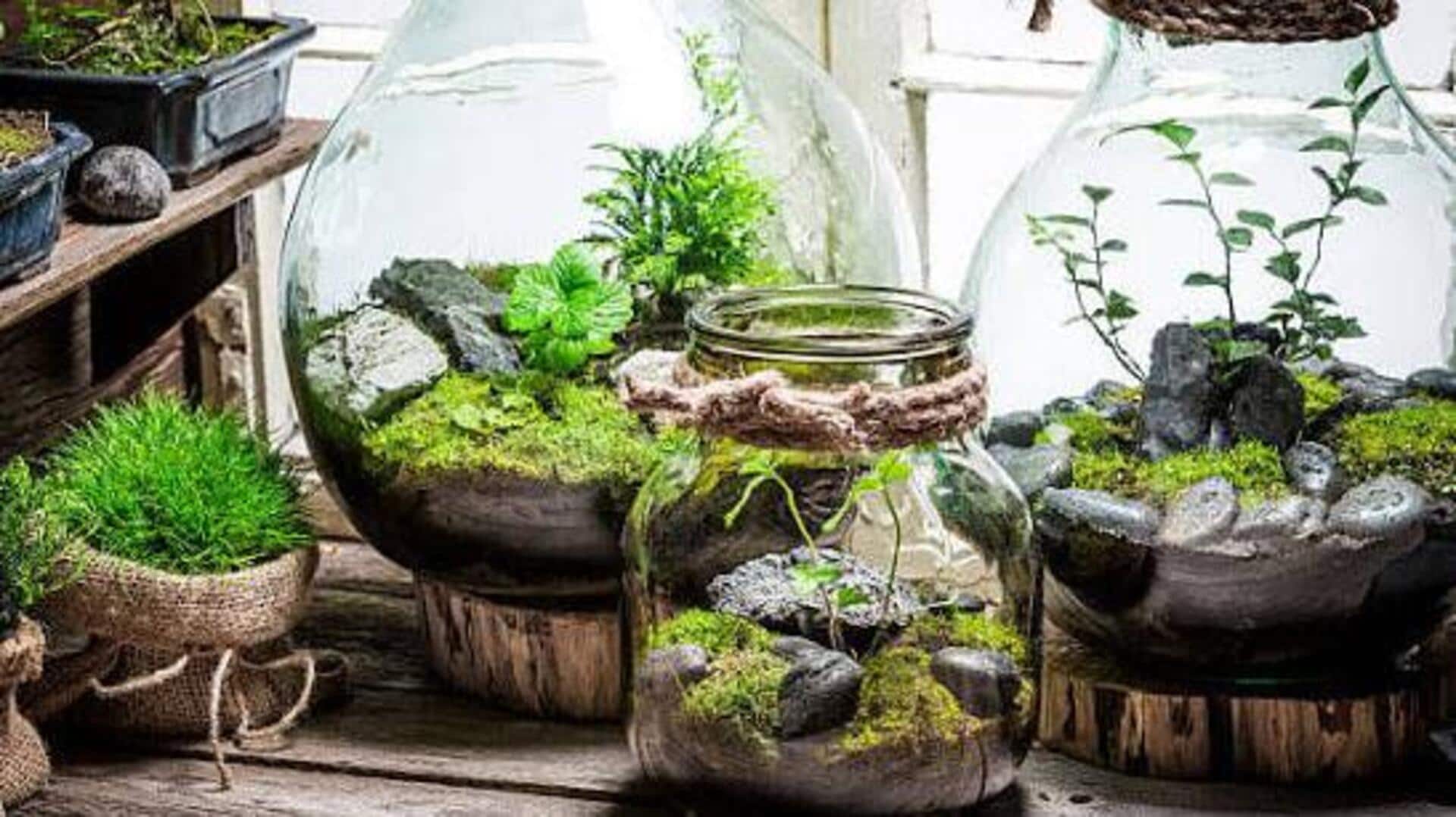
How to style a terrarium for any room
What's the story
Terrariums are an amazing way to bring the beauty of nature indoors. These miniature gardens, enclosed in glass containers, give you an opportunity to create your own little ecosystem. They are perfect for adding a touch of greenery to any space, be it home or office. With their low maintenance and versatility, terrariums can be styled in different ways to suit different tastes and interiors.
Container selection
Choosing the right container
Selecting the right container is key to terrarium styling.
Glass containers come in various shapes and sizes, from jars to hanging globes. The choice depends on the type of plants you want to include and the space available.
Open containers are great for succulents and cacti, as they require good air circulation, while closed ones are perfect for humidity-loving plants like ferns.
Plant choices
Plant selection and arrangement
Choosing plants that complement each other is essential for a harmonious terrarium.
Consider mixing small ferns, mosses, or air plants with succulents for a diverse look.
Arrange taller plants at the back or center, and shorter ones around them to create depth.
Ensure that all plants have similar light and water requirements to thrive together.
Decoration tips
Adding decorative elements
Incorporating decorative elements can enhance the visual appeal of your terrarium.
Small stones, pebbles, or sand can be used as a base layer or to create pathways within the garden.
Miniature figurines or natural materials, like driftwood, add personality and charm.
These elements should complement the overall theme without overcrowding the space.
Care instructions
Maintenance tips for longevity
Proper maintenance ensures your terrarium stays vibrant over time.
Water sparingly, as overwatering is a common mistake that can lead to root rot.
Place your terrarium in an area with appropriate light conditions based on its plant selection; bright, indirect light is ideal for most varieties.
Regularly check moisture levels by touching soil surfaces before watering again when needed.