
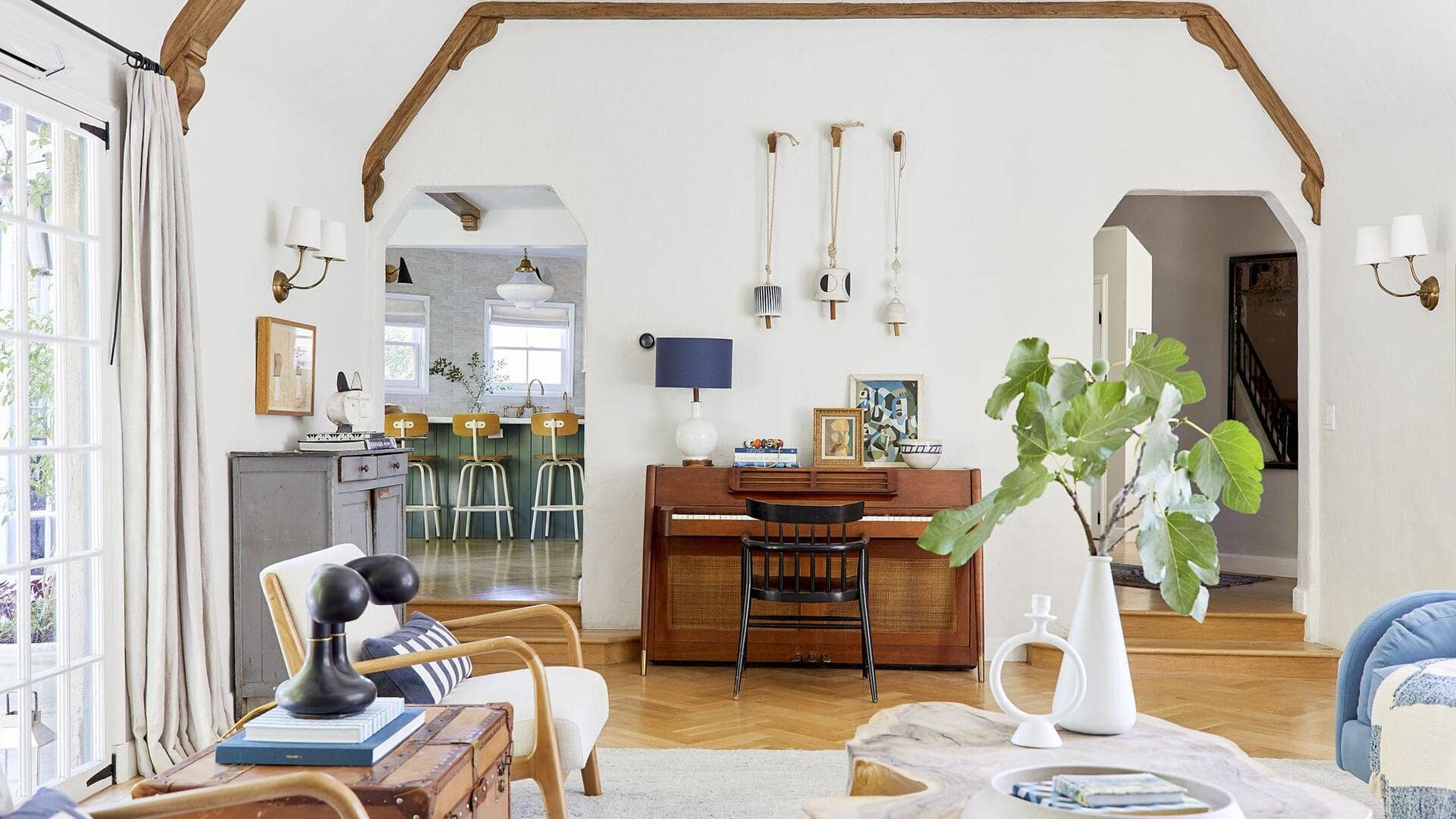
How to style your space with different wood tones
What's the story
Combining different wood tones in your home can be a tricky affair. However, if you do it right, it can add depth and character to your space. The key is to find a balance between the various shades, so that they complement rather than clash with each other. Here are some practical tips to help you mix wood tones seamlessly in your home decor.
Tip 1
Start with a neutral base
Begin by establishing a neutral base with walls and larger furniture pieces. This foundation allows the wood tones to stand out without overwhelming the space. Neutral colors like beige, gray, or white work well as they provide a blank canvas for the wood elements. Once the base is set, you can introduce various wood tones gradually.
Tip 2
Use a common element
Incorporate a common element that ties all wood tones together. It could be a shared finish or stain color that appears across different pieces. This creates cohesion within the room while allowing individual pieces to shine. For instance, if you have both light and dark woods, choose one tone that appears in all items for consistency.
Tip 3
Balance light and dark woods
Achieving harmony between light and dark woods is key to a well-designed space. Pair lighter woods with darker ones to create contrast without making it look disjointed. For example, pair oak shelves with walnut furniture for an appealing visual balance that adds depth without overpowering the room.
Tip 4
Vary textures for interest
Incorporate different textures when mixing wood tones to add interest and dimension to your decor. Smooth finishes can be paired with rougher textures like reclaimed wood or woven baskets for contrast. This variation keeps the eye engaged while maintaining an overall sense of unity among the various elements.
Tip 5
Consider room size and lighting
Consider the size of the room and lighting when selecting wood tones. Lighter woods can make small spaces appear larger, while darker woods add warmth and coziness to larger rooms. Natural light also plays a crucial role; it brings out different hues in each piece throughout the day, enhancing their beauty without altering their inherent qualities.