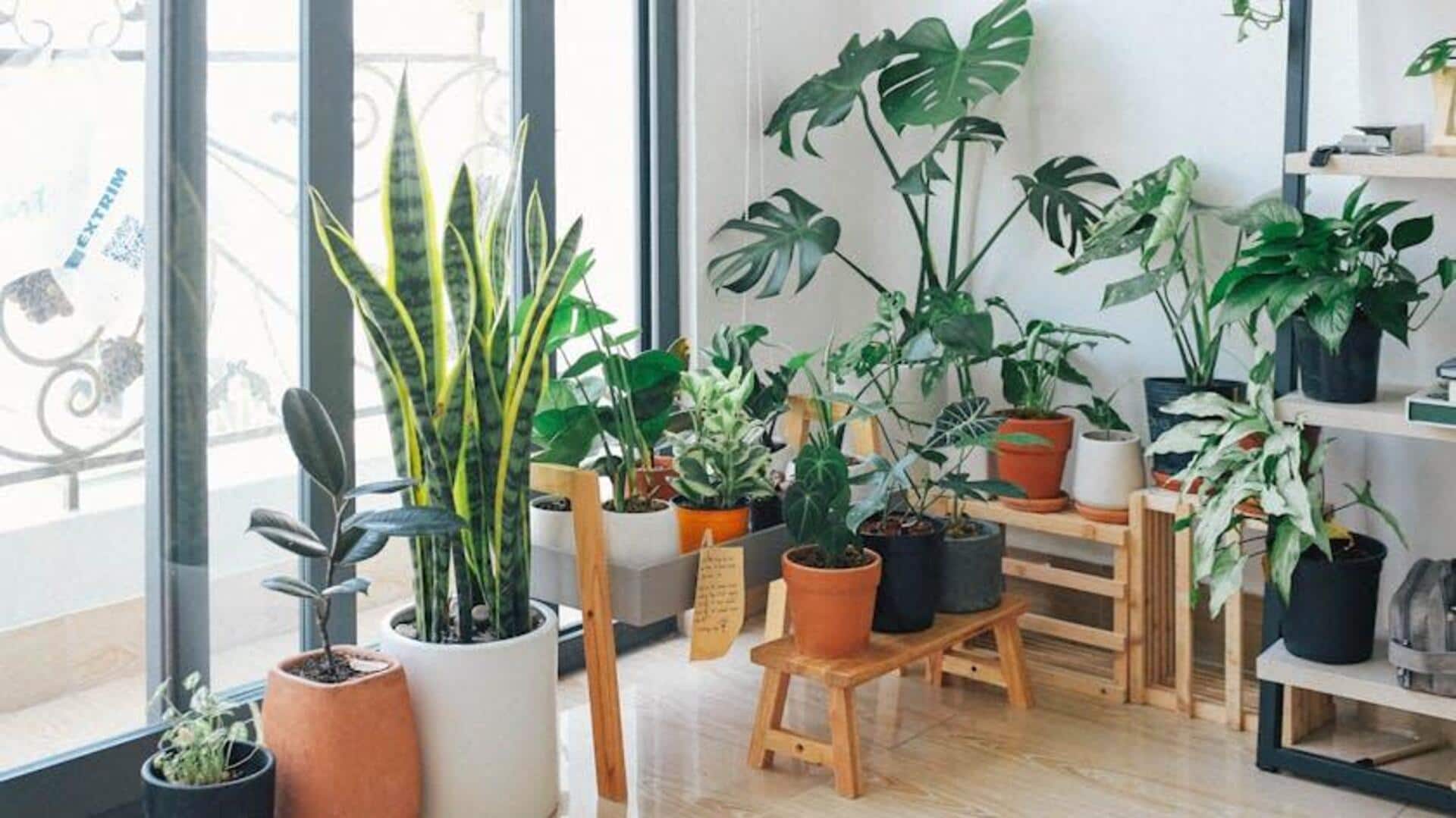
How to tell your plant needs more oxygen
What's the story
Indoor plants are a great way to liven up your home, but they need proper care to thrive. One of the most important aspects of plant care is ensuring that your plants get enough oxygen. Plants need oxygen for respiration, which is necessary for their growth and survival. Knowing how to tell if your indoor plants need more oxygen can help you keep them healthy and vibrant.
Tip 1
Observe leaf color changes
If the leaves of your indoor plants start turning yellow or brown at the edges, it could be an indication of insufficient oxygen levels.
Healthy leaves are usually a vibrant green color, so any change in color could mean that the plant is struggling to breathe properly.
This could be due to poor air circulation or compacted soil, which restricts root access to oxygen.
Tip 2
Check for wilting leaves
Wilting leaves are another sign that your indoor plant isn't getting enough oxygen.
While wilting can also be due to lack of water, if you have been watering it properly, then lack of oxygen could be the cause.
The roots may be suffocating due to lack of air pockets in the soil or poor ventilation around the plant.
Tip 3
Monitor growth patterns
Abnormal growth patterns, such as stunted growth or leggy stems, can indicate that your indoor plant isn't getting enough oxygen.
Plants usually grow steadily when they have access to adequate amounts of oxygen through photosynthesis and respiration processes.
If you notice slow growth or elongated stems with fewer leaves, it may be time to assess their environment for better airflow.
Tip 4
Evaluate root health
Healthy roots are essential for delivering nutrients and water from the soil to the rest of the plant.
If roots are brown or mushy, it could be due to a lack of oxygen (root rot).
Proper aeration helps keep roots healthy by allowing them access to necessary gases within the soil.