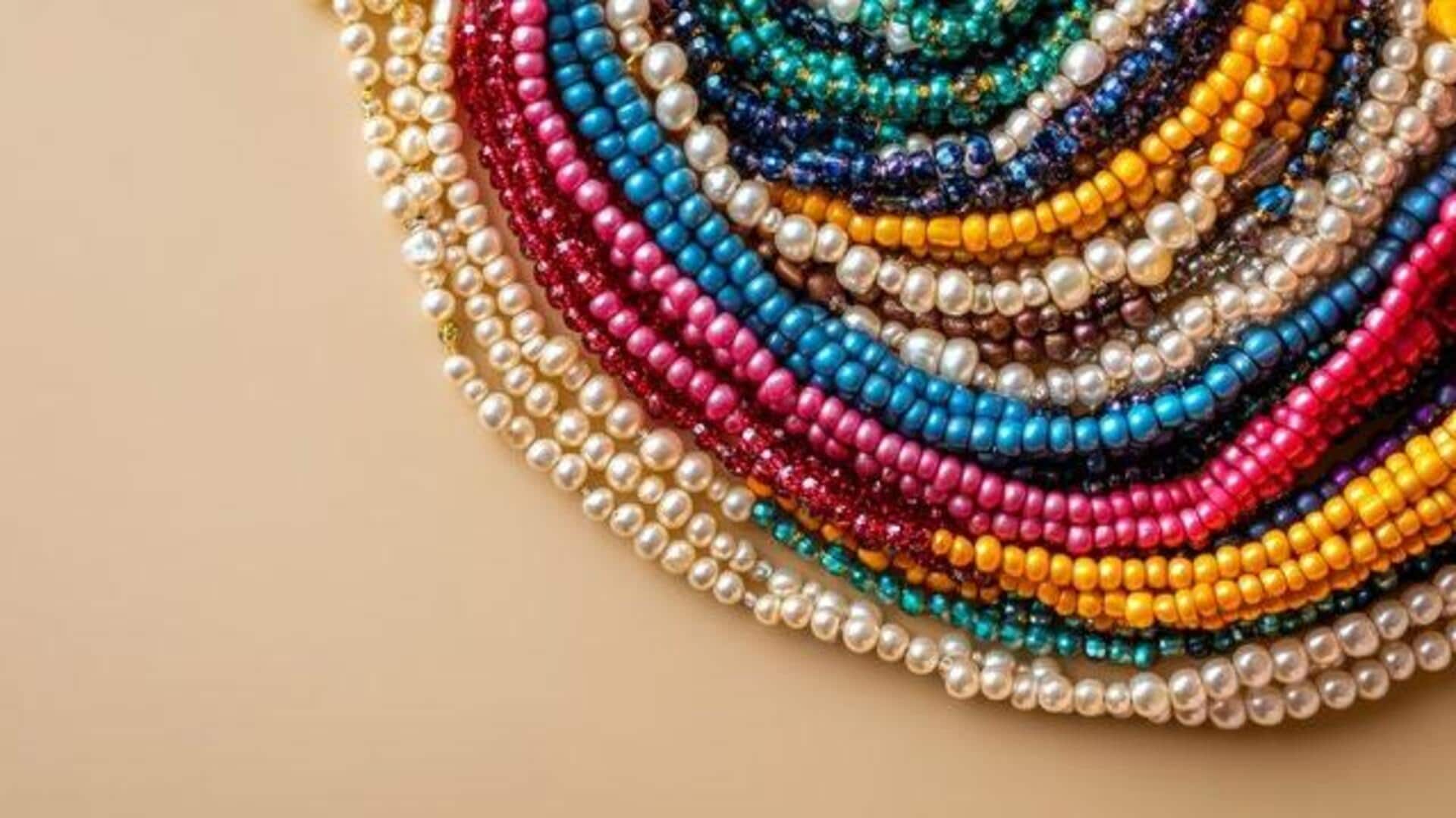
How artisans create beadwork from recycled plastic
What's the story
African beadwork is a traditional art form used for centuries to create beautiful and meaningful designs. But, with the rise of environmental consciousness, artists are now exploring ways to incorporate recycled materials into their work. One such innovative approach is upcycling plastic into African beadwork. This not only helps reduce waste but also adds a unique twist to the traditional craft. By transforming discarded plastic into colorful beads, artisans can create stunning pieces that are both eco-friendly and culturally significant.
#1
Transforming plastic waste into beads
Transforming plastic waste into beads is a creative process that involves cleaning, melting, and molding the plastic into desired shapes and sizes.
The process begins with collecting discarded plastics like bottles or containers. Once cleaned, these plastics are melted down and shaped into beads.
This method not only reduces environmental impact but also provides an affordable alternative to traditional bead materials.
#2
Techniques for effective upcycling
Artists employ various techniques to ensure effective upcycling of plastic waste.
One common method is using heat guns or ovens to melt the plastic evenly before shaping it into beads.
Some artisans also add natural dyes or pigments during the melting process to achieve vibrant colors without harming the environment.
Experimenting with different techniques allows for unique textures and patterns in each piece.
#3
Economic benefits of upcycling
Upcycling plastic waste into African beadwork offers economic benefits for artisans and communities involved.
By utilizing readily available materials, artists can reduce production costs significantly compared to sourcing new materials.
This cost-effectiveness opens up new opportunities for selling their creations at competitive prices while maintaining profitability.
#4
Promoting sustainable fashion trends
The incorporation of recycled plastics in African beadwork is also a step toward promoting sustainable fashion trends globally.
As consumers become more aware of environmental issues, there is a growing demand for eco-friendly products made from recycled materials.
Artisans who embrace this trend can attract a wider audience interested in supporting sustainable fashion initiatives through their unique creations.