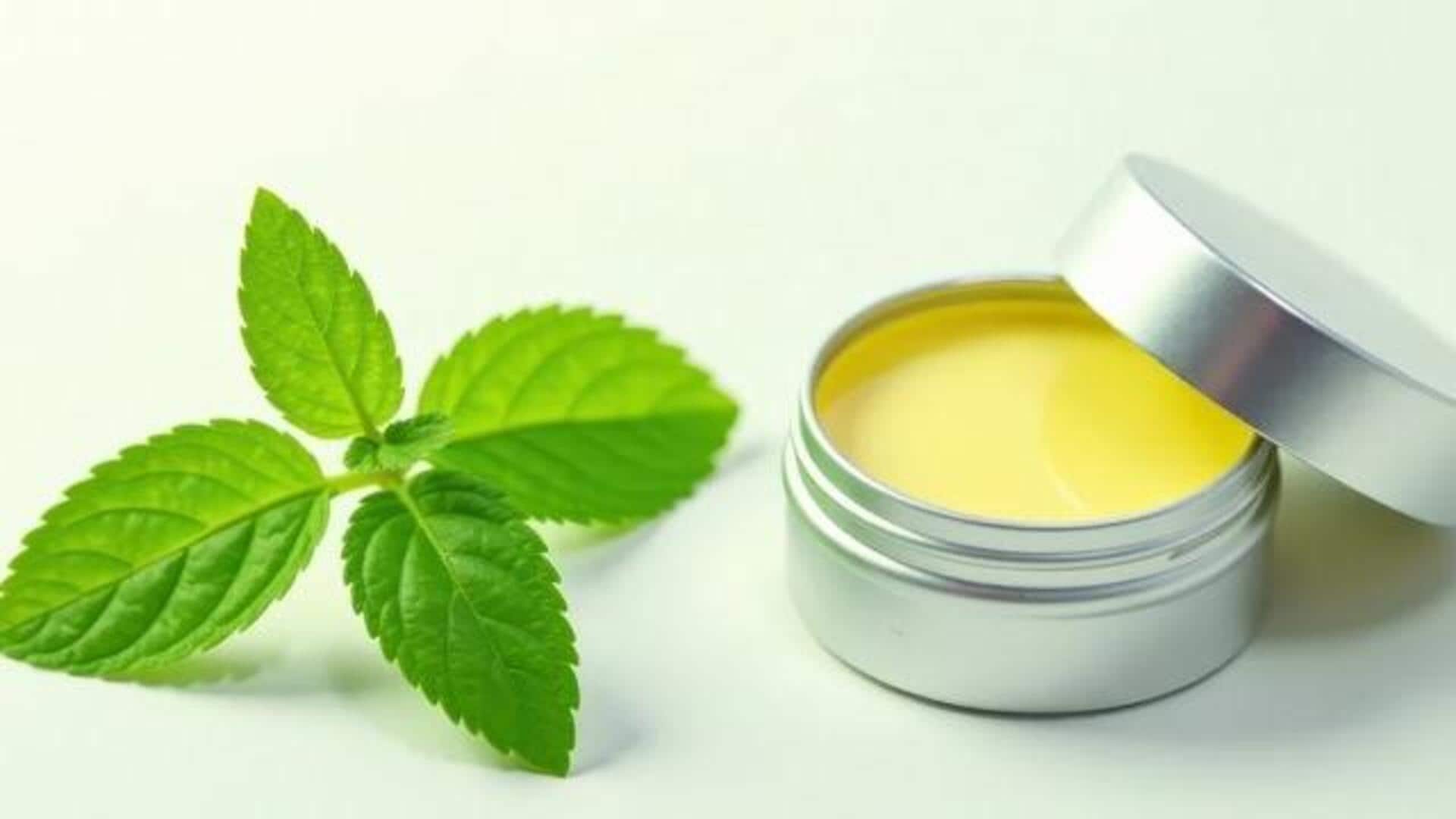
How to make peppermint balm for headache relief
What's the story
Headaches can be a common ailment that many of us experience from time to time. While there are several remedies available, peppermint oil balm has emerged as a popular natural alternative. Known for its soothing properties, peppermint oil can provide relief by cooling and calming the affected area. Here is how you can make and use peppermint oil balm to ease headaches effectively.
Tip 1
Choosing the right peppermint oil
Selecting high-quality peppermint oil is essential for effective relief.
Look for pure essential oils with no additives or synthetic ingredients.
Check the label to ensure it is steam-distilled from the leaves of the Mentha piperita plant, as this process preserves its natural properties.
A reputable brand will often provide information about sourcing and testing to guarantee purity.
Tip 2
Preparing your peppermint oil balm
To prepare your own peppermint oil balm, you will need a carrier oil like coconut or almond oil, beeswax (optional), and pure peppermint essential oil.
Melt one part beeswax with two parts carrier oil in a double boiler until combined.
Remove from heat, and add five to 10 drops of peppermint essential oil.
Pour into a small container, and let it cool before use.
Tip 3
Applying the balm correctly
For best results, apply the peppermint oil balm directly onto your temples, forehead, and back of the neck, where tension often builds up during headaches.
Use gentle circular motions to massage it into your skin.
The cooling sensation can help reduce pain signals while promoting relaxation through its aromatic properties.
Tip 4
Frequency of use for optimal results
Using peppermint oil balm regularly can help manage headache symptoms more effectively over time.
It's safe to apply every few hours, as needed, when experiencing discomfort.
However, if headaches persist beyond normal frequency or intensity levels, consult a healthcare professional for further evaluation and guidance on appropriate treatment options tailored specifically for you.