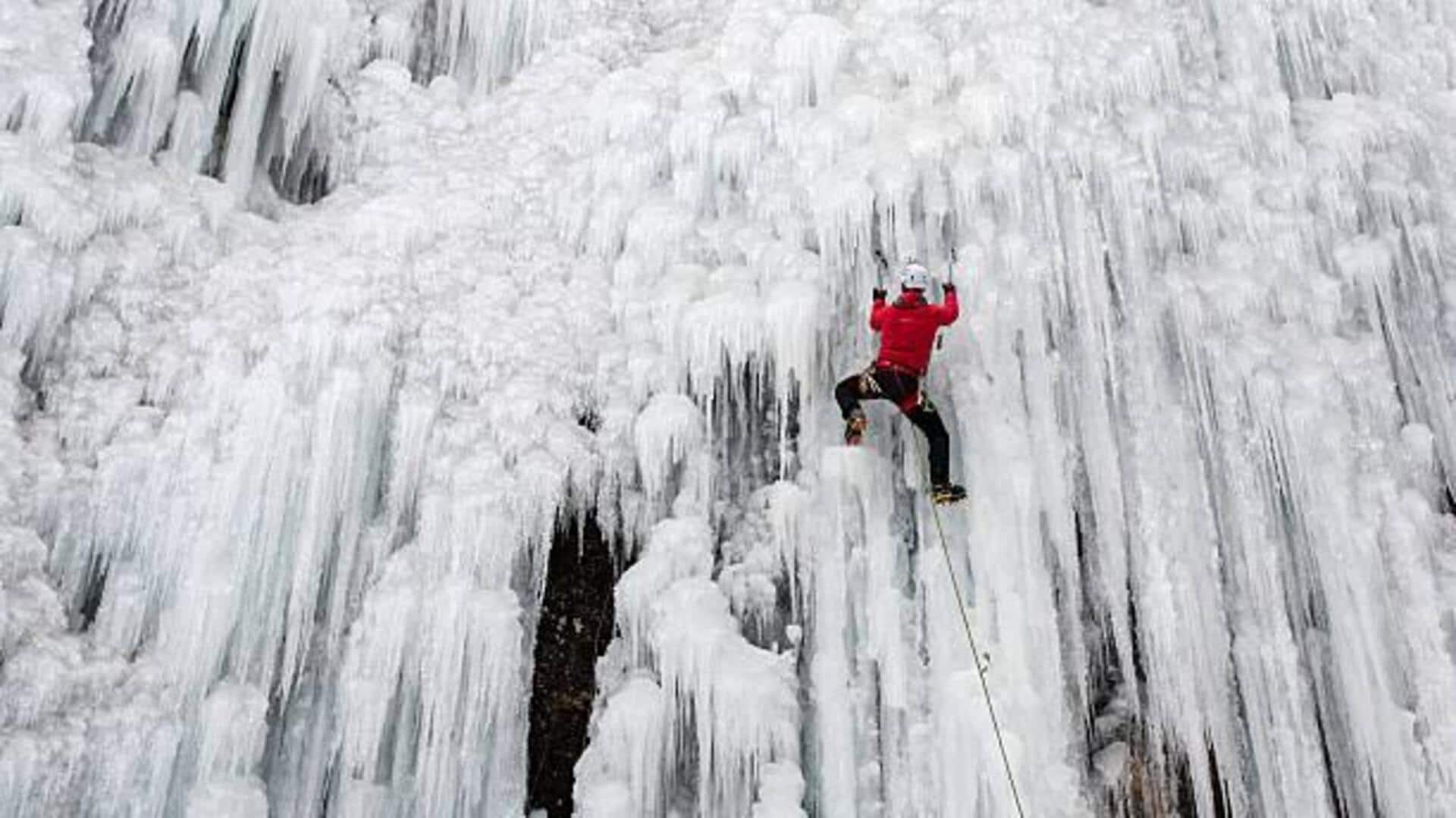
Ice climbing on Mount Kenya: The ultimate challenge
What's the story
Mount Kenya, Africa's second-highest peak, offers a thrilling ice climbing experience for the adventurous. The challenge of scaling its icy slopes is not just about physical strength, but also mental resilience. With unpredictable weather and technical routes, climbers must be well-prepared to face the elements. This article delves into the unique aspects of ice climbing on Mount Kenya, offering insights into what makes this journey both challenging and rewarding.
#1
Understanding Mount Kenya's terrain
Mount Kenya has a diverse terrain, ranging from glaciers to rocky outcrops. The glaciers are the main attraction for ice climbers, offering a unique challenge with their ever-changing conditions. The terrain requires climbers to be adept at navigating ice and rock, as they switch between different surfaces. Knowing the terrain is key to planning routes and ensuring safety during climbs.
#2
Essential gear for ice climbing
Proper gear is critical for ice climbing on Mount Kenya. Climbers must have crampons, ice axes, and other technical equipment designed for icy conditions. Warm clothing and protective gear against cold winds are also a must. Investing in high-quality gear can make a huge difference in comfort and safety while tackling the mountain's challenges.
#3
Weather considerations on Mount Kenya
Weather on Mount Kenya can be unpredictable, with sudden changes in temperature and visibility. Climbers should keep a close eye on weather forecasts before heading out, and be prepared for rapid shifts in conditions. Understanding how weather impacts climbing routes can help climbers make informed decisions about when to proceed or turn back.
Tip 1
Training tips for aspiring climbers
Aspiring climbers should focus on building both physical endurance and technical skills before attempting an ice climb on Mount Kenya. Regular cardiovascular exercises, strength training, and practicing with climbing gear can help prepare physically. Mentally, visualizing potential challenges and developing problem-solving strategies can help climbers stay focused during their ascent.