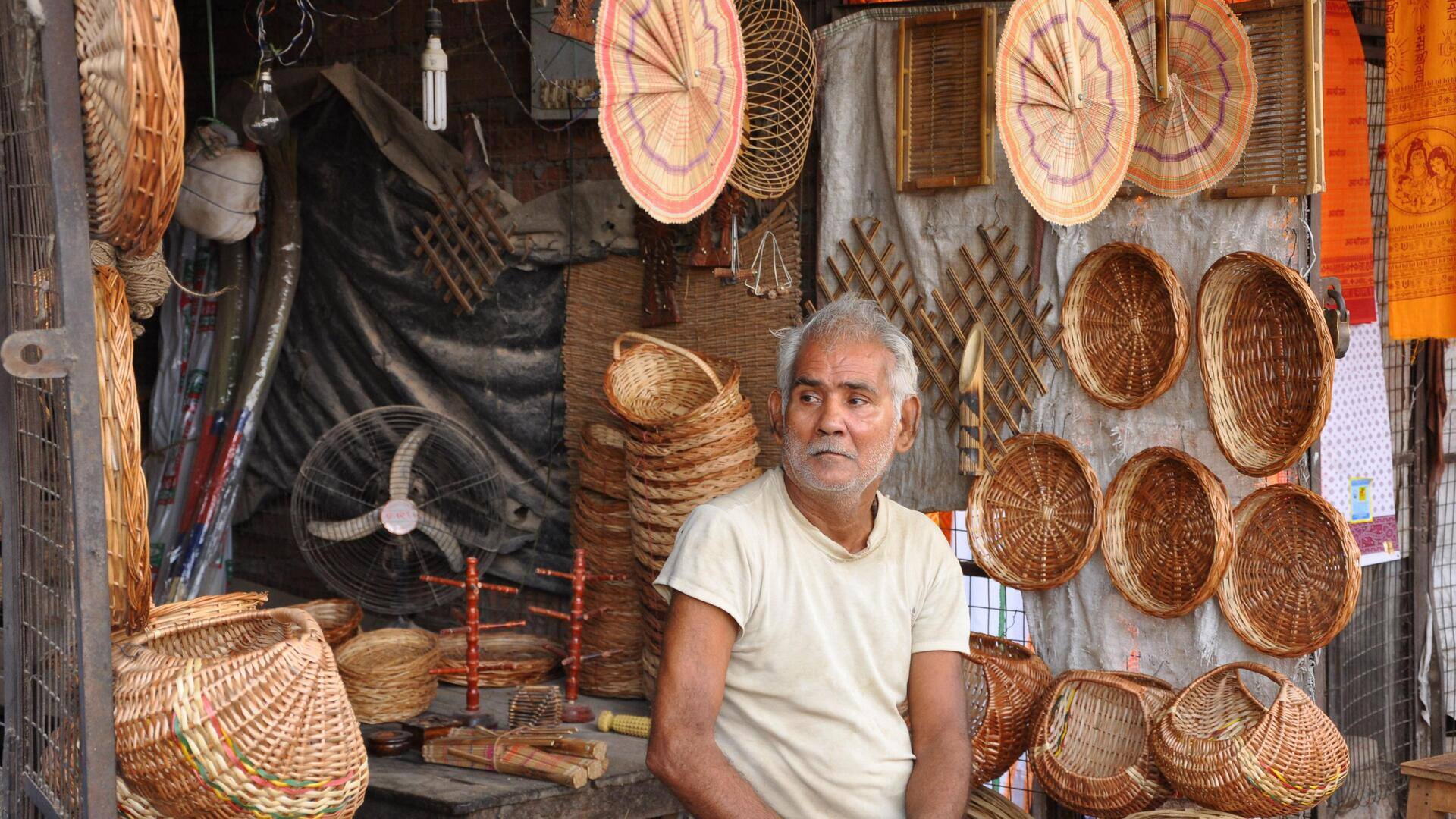
The story behind India's beautiful bamboo crafts
What's the story
India's bamboo crafts are a fascinating intersection of tradition and sustainability. These crafts, which are centuries old, are a testimony to the country's rich cultural heritage and its commitment to eco-friendly practices. From intricate baskets to sturdy furniture, bamboo artisans have mastered the art of turning this versatile plant into functional and decorative items. Here are five interesting insights into India's bamboo crafts, showcasing their uniqueness and significance.
#1
The versatility of bamboo
Bamboo is one of the most versatile materials in India. It grows rapidly, needs minimal resources, and can be used for a variety of purposes.
From construction to making household items like baskets and mats, bamboo is a go-to material.
Its natural strength makes it an ideal choice for durable products that are also lightweight.
#2
Regional variations in craftsmanship
Bamboo crafting techniques vary from region to region in India, owing to cultural influences and local resources.
In Assam, artisans make intricate bamboo furniture with traditional designs.
In Tripura, colorful bamboo handicrafts are made using age-old methods passed down generations.
Each region's unique style adds to the diversity of India's bamboo craft heritage.
#3
Economic impact on local communities
Bamboo crafts also provide livelihoods to thousands of artisans across India.
These crafts are often produced in small-scale industries or cooperatives that help empower local communities economically.
By creating jobs and generating income through traditional craftsmanship, these industries contribute significantly to rural development.
#4
Environmental benefits of bamboo crafting
Bamboo is also a sustainable alternative to other materials such as plastic or wood from deforested areas.
Since it grows so quickly, bamboo can be harvested without depleting natural resources or harming ecosystems.
By promoting bamboo-based products, artisans contribute to environmental conservation while preserving their cultural heritage.
#5
Innovations in modern bamboo design
Modern designers are also experimenting with bamboo by combining it with other materials such as metal or glass for contemporary looks without compromising on sustainability principles.
This fusion of traditional techniques with modern aesthetics opens up new avenues for creativity within this age-old craft form, while appealing to global markets seeking eco-friendly options.