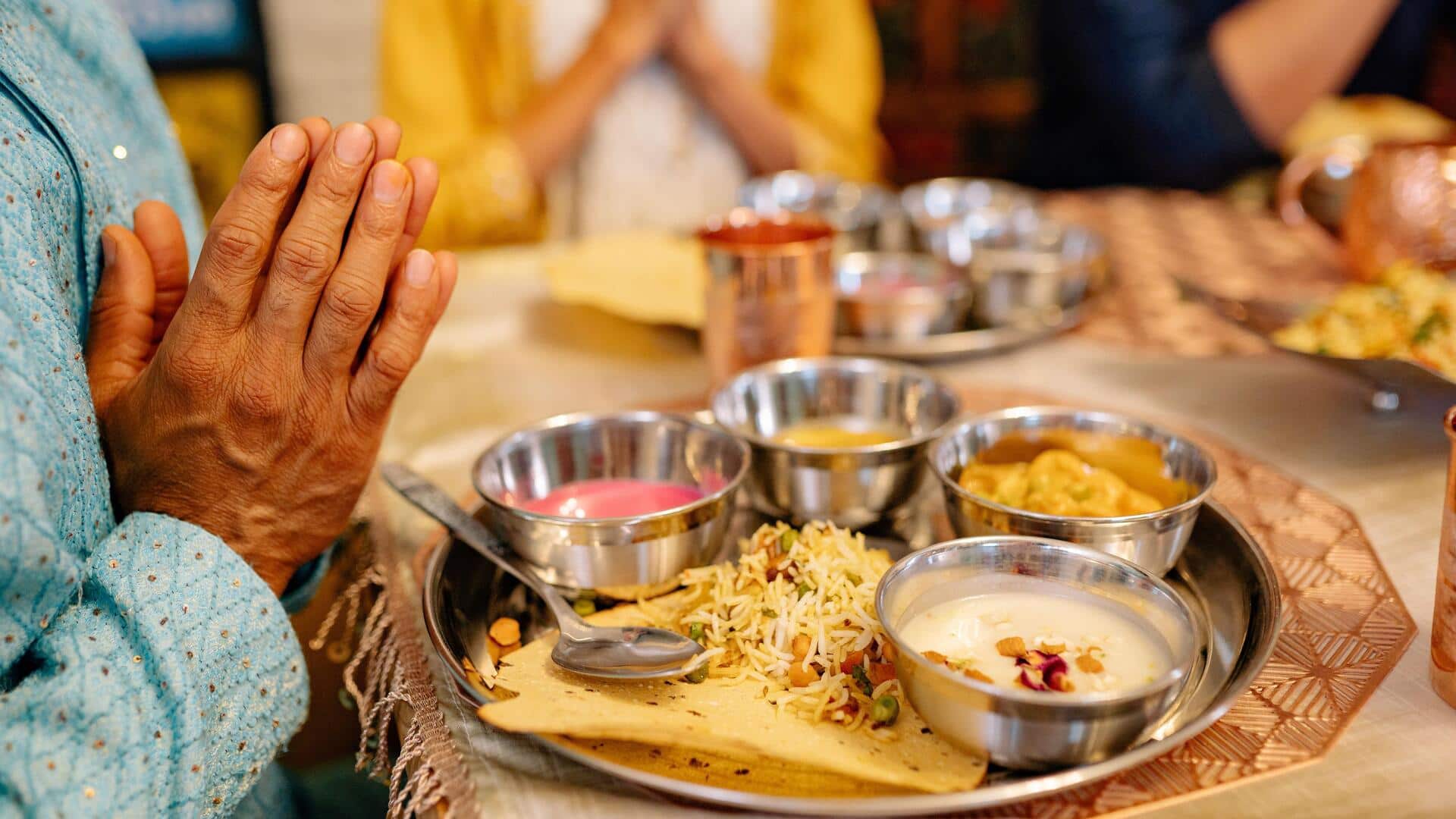
Indian thali: A taste of India's rich food culture
What's the story
The Indian thali is a colorful, diverse platter that represents the rich cultural heritage of India. It is a complete meal, which gives a taste of different regional cuisines, all on one plate. The thali is not just about food, but also about traditions and rituals that have been passed down through generations. Each component of the thali has its own story and significance, making it an integral part of Indian culture.
#1
Regional variations in thalis
Each region in India has its own version of the thali, depending on local ingredients and cooking styles.
For instance, a North Indian thali may include roti, dal, rice, and a variety of sabzis.
Meanwhile, a South Indian thali may feature rice served with sambar, rasam, and coconut chutney.
These variations highlight India's culinary diversity while maintaining the essence of the traditional thali.
#2
Ingredients that define a thali
A typical Indian thali comprises several elements that make it wholesome and balanced.
Staples like rice or roti form the base of the meal, while dals provide protein.
Vegetables cooked with spices add flavor and nutrition. Pickles and papads give additional taste contrasts, while sweets round off the meal with a hint of sweetness.
#3
Cultural significance of thalis
The Indian thali is not just a meal but also a cultural symbol that represents hospitality and generosity.
It is usually served during festivals or special occasions as an expression of abundance and variety.
Sharing a thali among family members or guests fosters bonding and shows respect for different tastes.
#4
Tips for enjoying an authentic thali experience
To savor an authentic Indian thali experience, try every item on your plate without hesitation.
Mix different components together to discover new flavor combinations, which are unique to each region's cuisine.
If you're unsure about any dish, feel free to ask your host or server for details about its preparation or significance within the meal context.