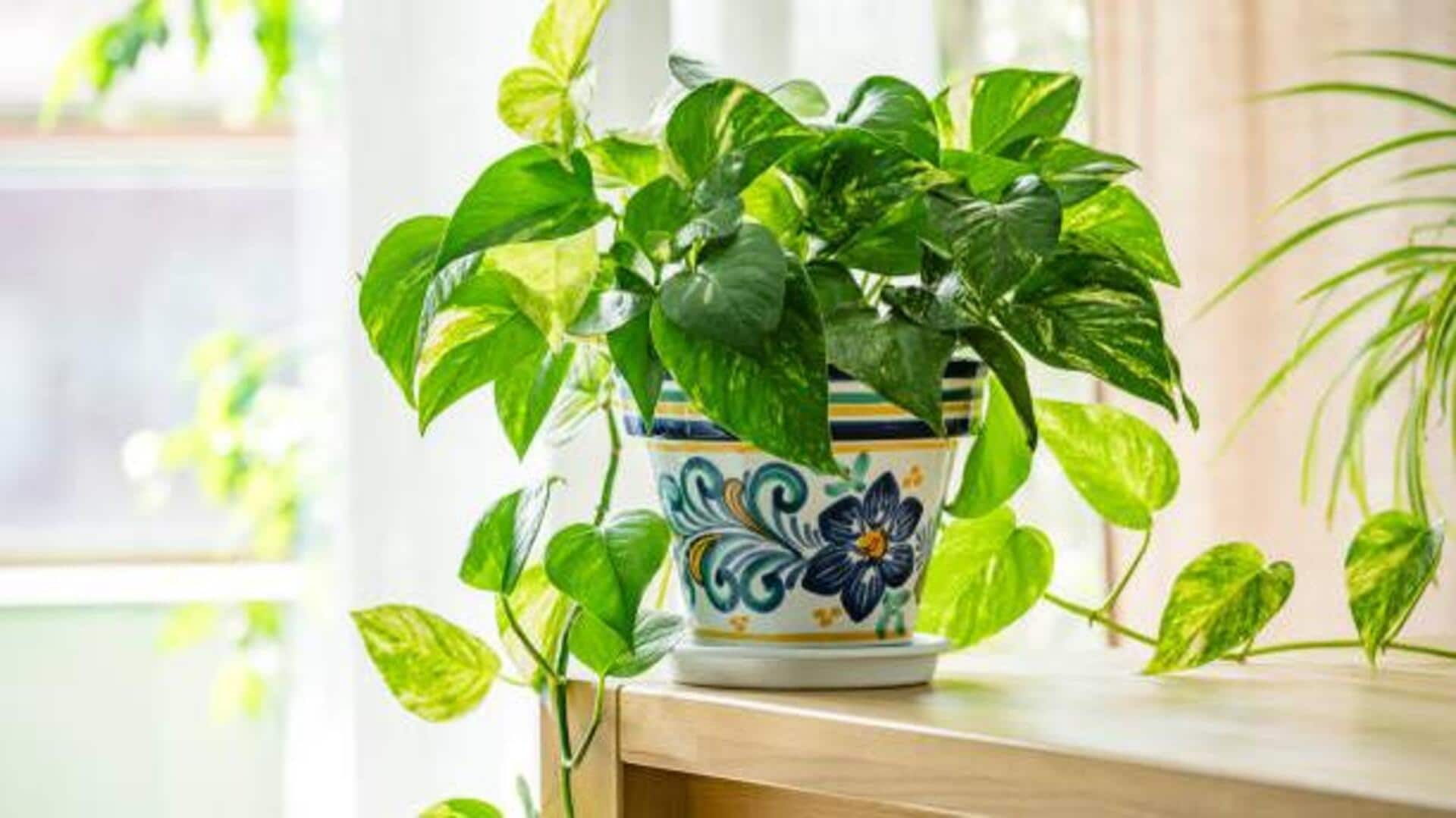
How to protect your plants from pests
What's the story
Indoor plants can be a great way to liven up your space, but they are also prone to pest problems. Chemical pesticides can be harmful indoors, which is why natural pest repellents are a great alternative. They are safe, eco-friendly, and can keep your plants healthy without the use of harsh chemicals. Here are five natural remedies to keep your indoor plants pest-free.
Tip 1
Neem oil: A versatile solution
Neem oil is extracted from the seeds of the neem tree and is known for its insecticidal properties.
It disrupts the life cycle of pests, making it difficult for them to grow and reproduce.
To use neem oil, mix two tablespoons with one liter of water, and spray it on affected plants every two weeks.
This method is effective against aphids, spider mites, and whiteflies.
Tip 2
Garlic spray: A potent repellent
Garlic has natural compounds that repel many common garden pests.
To prepare garlic spray, blend two cloves of garlic with one liter of water and let it sit overnight.
Strain the mixture before spraying it on your plants' leaves.
The strong smell deters insects like ants and aphids, without harming beneficial insects.
Tip 3
Soap solution: Simple yet effective
A simple soap solution can effectively eliminate soft-bodied insects, such as aphids and mealybugs.
Use mild liquid soap, not detergent, mixed with water in a ratio of one tablespoon per liter.
Spray this solution directly onto the pests on your plants every few days until they are gone.
Tip 4
Essential oils: Aromatic deterrents
Essential oils like peppermint or eucalyptus can also act as natural repellents for indoor plant pests.
Mix five drops of essential oil with one liter of water in a spray bottle, and apply it on the affected areas of your plants regularly.
These oils not only help keep pests away but also leave a pleasant aroma in your home.
Tip 5
Diatomaceous earth: Natural barrier
Diatomaceous earth is made from fossilized algae and works as a physical barrier against crawling insects, such as ants or cockroaches, around plant pots or trays.
Sprinkle a thin layer around the base of your indoor plants, ensuring it does not clump up due to moisture, which would render it ineffective over time.