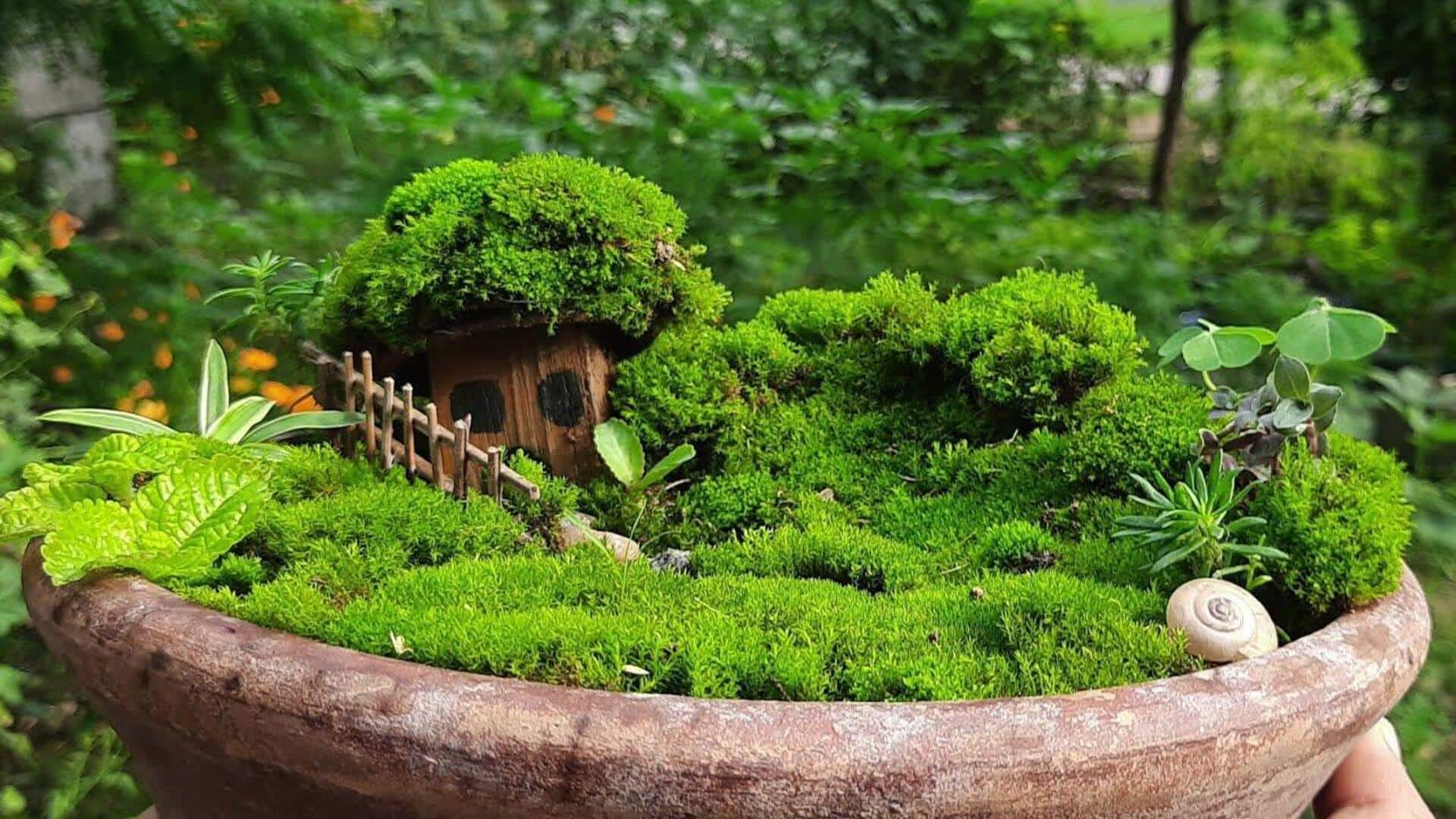
How to grow an indoor moss garden
What's the story
Indoor moss gardening is an excellent way to bring a touch of nature indoors. Not only is it aesthetically pleasing, but it also purifies the air and boosts humidity levels. Moss gardens are easy to maintain and can flourish in low light, making them perfect for indoor spaces. Be it a beginner or an expert, knowing the basics of moss gardening will help you create a lush, green oasis at home.
#1
Choosing the right moss species
Choosing the right species is key to a successful indoor moss garden.
Some popular species include sheet moss, cushion moss, and fern moss.
Each species has its own requirements in terms of light, moisture, and temperature.
Researching these needs will help you select the best fit for your environment.
For example, sheet moss does well in low-light conditions, while cushion moss prefers slightly brighter spaces.
#2
Creating the perfect environment
Moss thrives in humid environments with indirect sunlight.
To create an ideal environment, place your moss garden near a north-facing window, or use artificial grow lights if natural light is insufficient.
Maintain humidity levels between 40% and 70% by misting regularly or using a humidifier.
Keep temperatures between 15 degrees Celsius and 24 degrees Celsius to ensure optimal growth.
#3
Setting up your moss garden
Setting up your indoor moss garden requires choosing an appropriate container or terrarium that allows for good drainage.
Layering materials such as pebbles, activated charcoal, and potting soil can help create a balanced ecosystem for your plants.
Once set up, carefully arrange your chosen moss species within the container, ensuring even coverage, without overcrowding.
#4
Maintaining your indoor moss garden
Regular maintenance is key to keeping your indoor moss garden healthy and vibrant.
Watering should be done sparingly; overwatering can lead to mold growth or root rot. Instead of soaking the substrate completely, mist lightly when needed, instead of soaking it completely.
Trim back any overgrown areas periodically, using sharp scissors to avoid damaging surrounding plants.