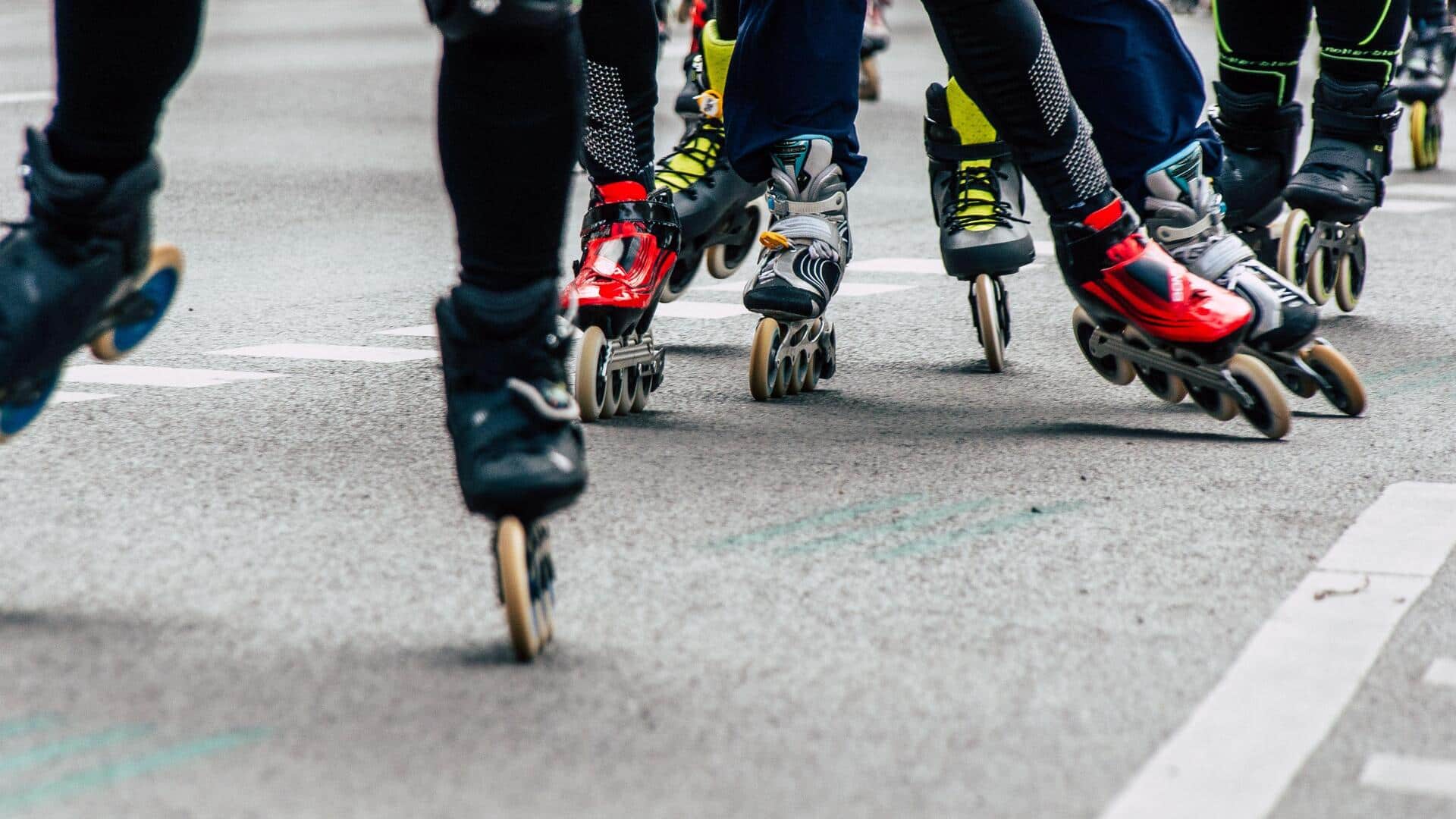
Inline skating or dance: What is better for your heart?
What's the story
Inline skating and dance are two popular forms of exercise that promise cardiovascular benefits. Both activities engage different muscle groups and provide unique challenges to the body. While inline skating is a low-impact aerobic workout, dance offers a dynamic way to improve heart health through rhythm and movement. Knowing the differences between these activities can help you choose the one that suits your fitness goals better.
#1
Impact on cardiovascular health
Inline skating is known for its low-impact nature, which is easier on joints than many other forms of cardio.
It elevates heart rate effectively by working large muscle groups in the legs and core.
Studies indicate that regular inline skating can improve cardiovascular endurance by up to 50%.
On the other hand, dance workouts can be high-intensity depending on the style, such as hip-hop or salsa, and can improve heart health by increasing blood circulation and reducing stress levels.
#2
Caloric burn comparison
Both inline skating and dance are effective at burning calories, but they do so in different ways.
Inline skating usually burns around 600 calories an hour for a 155-pound person at a moderate pace. The number can go up with speed or duration.
Dance sessions, depending on intensity and duration, can burn anywhere between 300 and 500 calories an hour.
This makes both activities great options for weight management.
#3
Muscle engagement differences
Inline skating mainly targets lower body muscles like quadriceps, hamstrings, calves, and glutes, while also engaging core muscles for balance and stability.
It builds strength over time as you push against resistance from the ground.
Dance involves full-body movement, engaging arms, legs, torso, and even facial expressions in styles like ballet or jazz.
This full-body engagement helps improve flexibility along with strength.
#4
Accessibility considerations
When choosing between inline skating or dance for cardiovascular benefits, consider accessibility factors, like space availability, equipment costs, and class fees.
Inline skaters need safe outdoor paths or indoor rinks, while dancers may require studio space, costumes, and props.
Both activities offer online tutorials, making them accessible to beginners regardless of location.