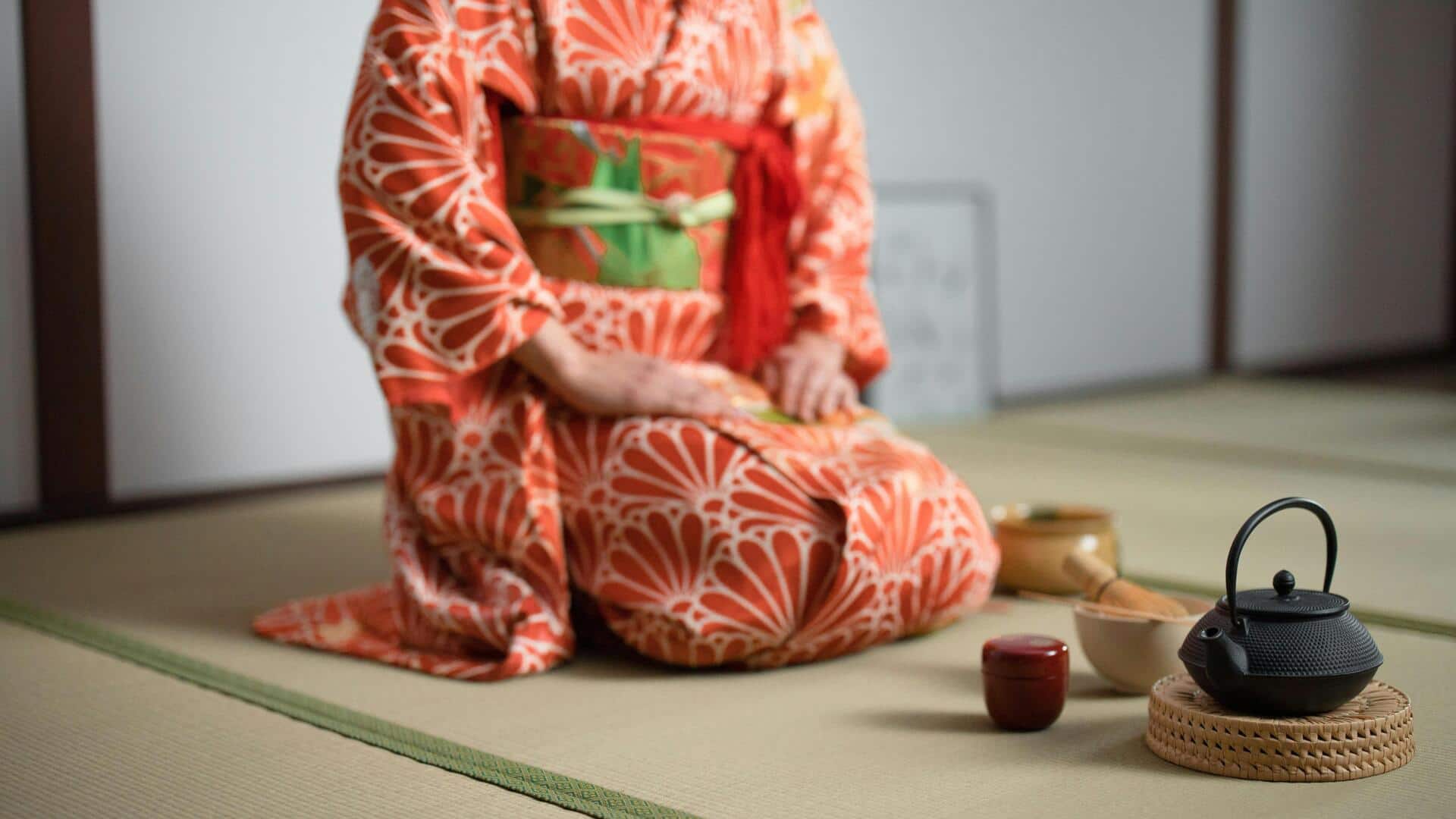
5 things to remember in a Japanese tea ceremony
What's the story
Japanese tea ceremonies are a beautiful blend of art, culture, and etiquette. These ceremonies are not just about drinking tea, but also about appreciating harmony, respect, purity, and tranquility. Knowing the etiquette of these ceremonies is important for anyone looking to experience this age-old tradition. Here are five important etiquette rules that are followed during Japanese tea ceremonies.
#1
Bowing as a sign of respect
Bowing is an important part of Japanese culture and is used to show respect during tea ceremonies.
Guests bow when they enter the room and when they are greeted by the host.
The depth of the bow can differ depending on the situation, but it is always a sign of respect towards the host and other guests.
#2
Handling utensils with care
In a Japanese tea ceremony, the utensils used are treated with utmost care and reverence. Each item has its own significance and should be handled gently.
When passing or receiving these items, it is customary to use both hands as a gesture of respect and appreciation.
This careful handling reflects the deep-seated cultural values associated with the ceremony.
#3
Silence as a form of appreciation
Silence is also an important aspect of Japanese tea ceremonies.
It gives participants a chance to reflect on every step of the process and appreciate the beauty of their surroundings.
Speaking too much during this time can be seen as disrespectful or disruptive to the ceremony's flow.
#4
Accepting tea with gratitude
When receiving tea during a ceremony, it is customary to bow slightly as a gesture of gratitude toward your host.
Accepting the bowl with both hands signifies respect for both your host and the tradition itself.
Before drinking, guests may admire its appearance, a moment that highlights the appreciation for the craftsmanship involved in its creation.
#5
Expressing gratitude after drinking
After finishing your tea at a ceremony, it is polite to express gratitude by placing your bowl back down gently on its mat or tray without making noise.
This action signifies contentment with what you have received while honoring those who prepared it, an essential parting gesture before leaving or continuing further activities within this serene setting.