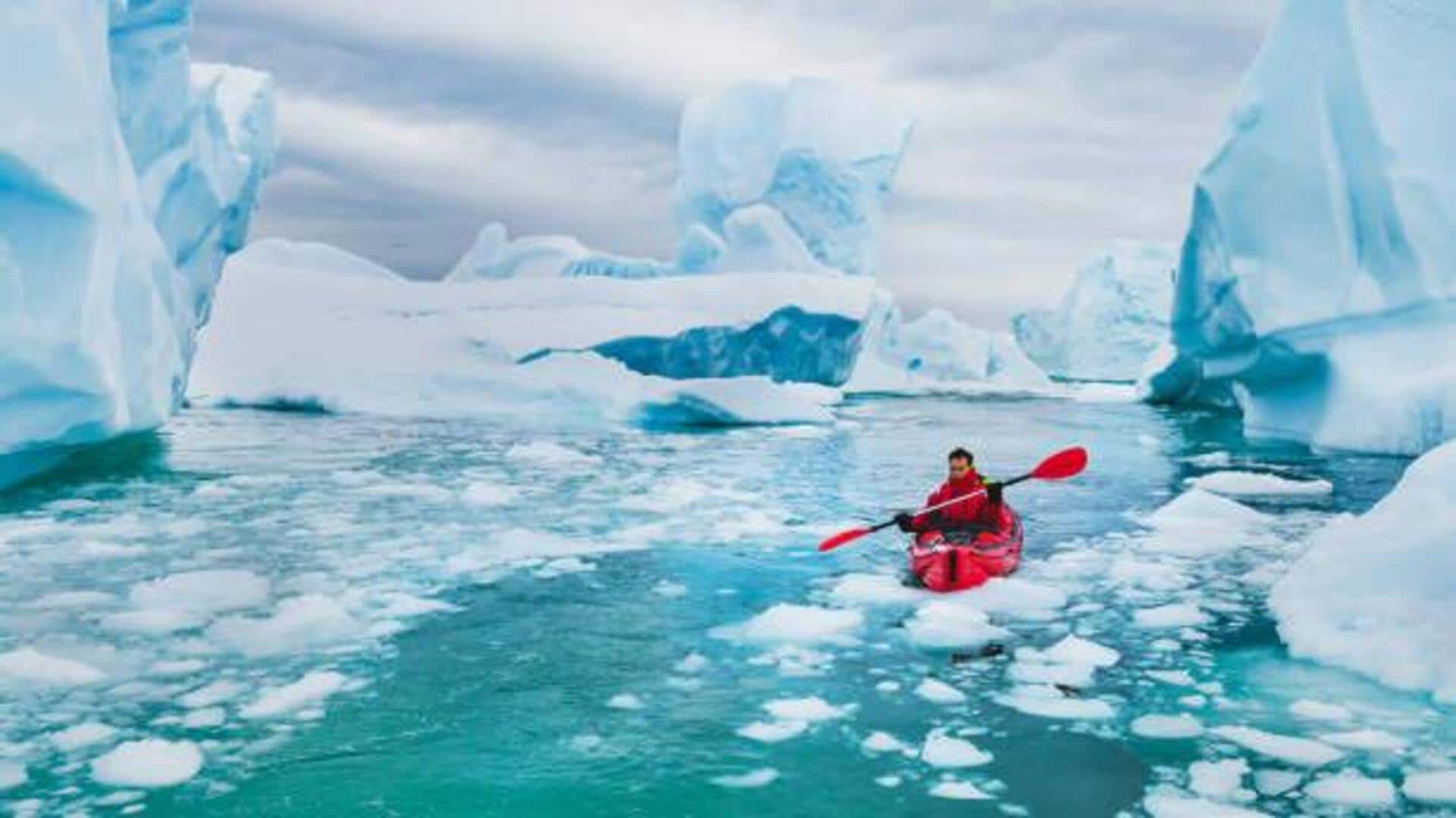
Your guide to kayaking in Antarctica
What's the story
Kayaking in Antarctica is a unique opportunity to explore the icy waters and witness the continent's breathtaking beauty. This activity allows adventurers to get up close with glaciers, icebergs, and diverse marine wildlife. The experience is unlike any other, offering a chance to paddle through pristine waters, surrounded by towering ice formations. Whether you are an experienced kayaker or a novice, Antarctica's waters promise an unforgettable journey into one of the world's most remote and stunning environments.
Gear essentials
Essential gear for Antarctic kayaking
When heading for kayaking in Antarctica, having the right gear is critical.
A dry suit or wet suit is a must to keep you warm in freezing waters. Waterproof gloves and boots will protect your hands and feet from the cold.
A reliable life jacket is a must for safety.
Also, carry binoculars for wildlife spotting, and a waterproof camera to capture the stunning views.
Timing tips
Best time for kayaking adventures
The best time for kayaking in Antarctica is during the summer months of November to March, when temperatures are relatively milder, and daylight hours are longer.
During this period, sea ice melts enough to make it accessible for kayakers.
Weather conditions are also more favorable, with calmer seas and clearer skies, making it perfect for paddling through these pristine waters.
Wildlife spotting
Wildlife encounters on your journey
Antarctica's waters are teeming with wildlife, giving kayakers the opportunity to witness seals lounging on ice floes, penguins diving into the sea, and whales surfacing nearby.
These encounters are rare and give you a glimpse of the unique ecosystem of the continent.
Observing these animals in their natural habitat adds an enriching dimension to your adventure.
Safety measures
Safety tips for icy waters
Safety should always be the top priority while kayaking in Antarctica's icy waters.
Always check weather forecasts before heading out, as conditions can change rapidly.
Stay close to your group, and keep communication devices handy for emergencies.
Be aware of your surroundings at all times, especially when near large ice formations or passing ships.