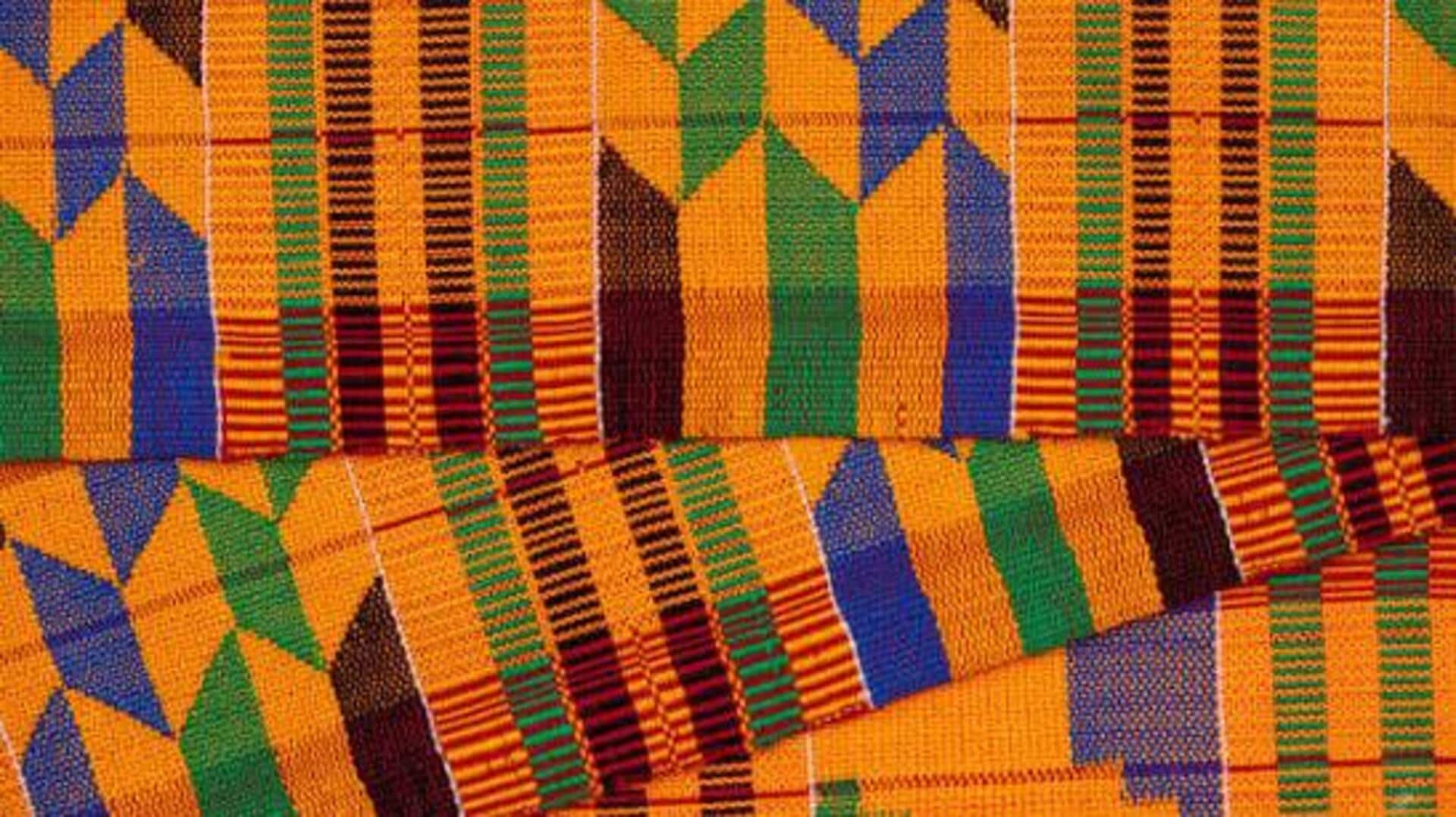
How strips and bands create amazing kente patterns
What's the story
Kente weaving is an age-old craft from West Africa, especially Ghana, known for its colorful and symbolic patterns. The art of kente weaving involves the use of strips and bands to create intricate designs. These designs are not just visually appealing, but also rich in cultural significance. By mastering the use of strips and bands, one can create stunning kente cloths that tell stories through their patterns.
#1
Understanding the basics of kente weaving
Kente weaving starts with understanding the basic elements: strips and bands.
Strips are narrow pieces of cloth woven together to form a larger piece. Bands are wider sections that often contain more complex patterns.
Together, they form the basis of traditional kente textiles. Knowing how to manipulate these elements is key to creating authentic designs.
#2
Choosing the right materials for weaving
Selecting appropriate materials is crucial in kente weaving.
Traditionally, cotton or silk threads are used for their durability and vibrant colors. The choice of material affects the texture and appearance of the final product.
Weavers must also consider the availability of resources in their region when selecting materials.
#3
Techniques for creating intricate patterns
Creating intricate patterns in kente cloth requires skillful manipulation of strips and bands.
Techniques include twisting, folding, and interlacing strips to form geometric shapes or symbolic motifs.
Each pattern has its own meaning within different cultures, making it essential for weavers to understand these meanings before starting their work.
Tip 1
Tips for preserving cultural significance in designs
To preserve cultural significance in kente designs, weavers should research traditional patterns and their meanings thoroughly before incorporating them into their work.
This ensures that each piece respects its cultural heritage while allowing for personal expression within those boundaries.