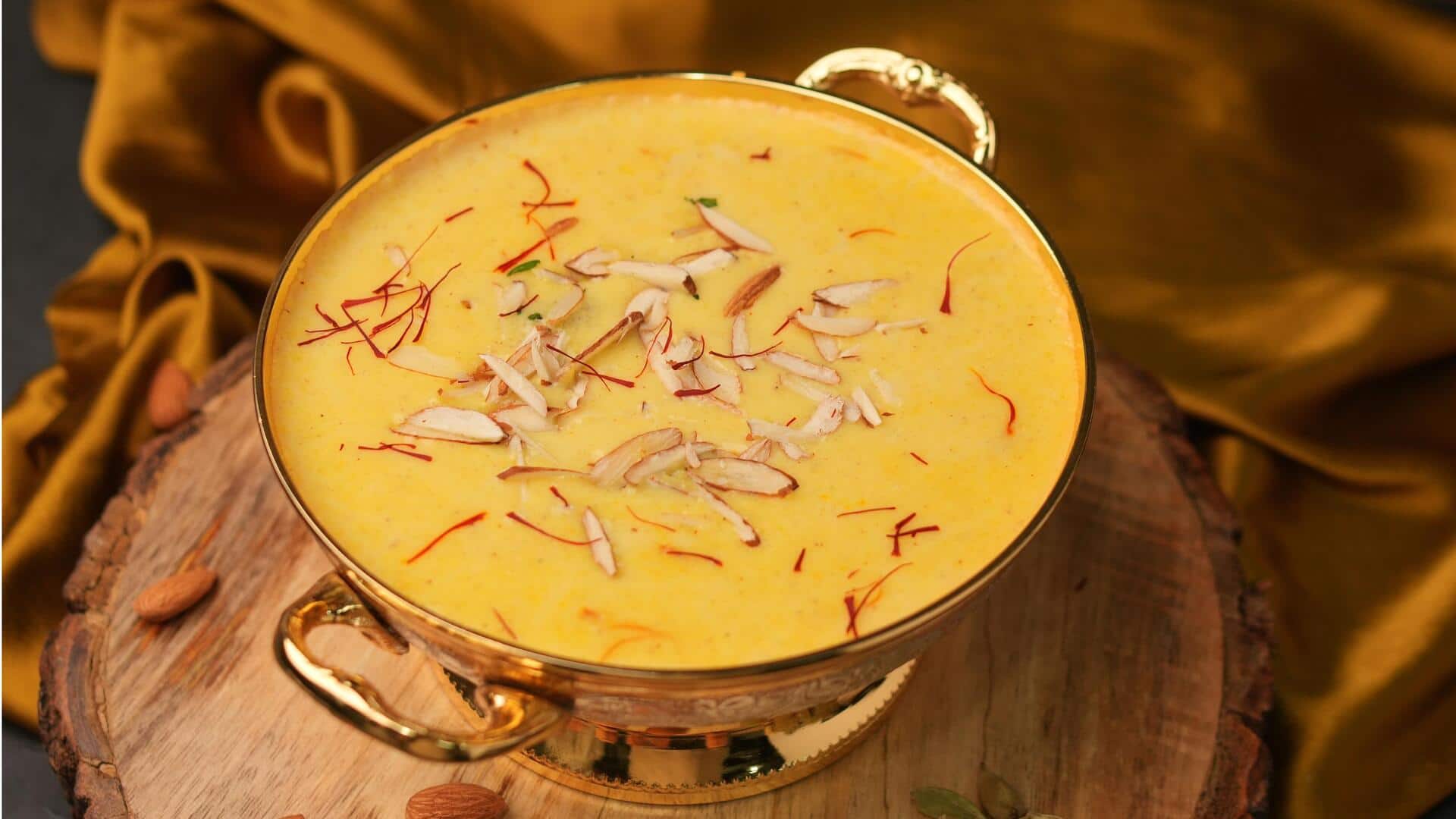
Kheer: An Indian dessert with a fascinating history
What's the story
Kheer, a beloved Indian dessert, has a rich history that spans centuries. This creamy rice pudding, often flavored with cardamom and garnished with nuts, has evolved. Its journey reflects cultural exchanges and culinary innovations across India. From ancient kitchens to modern-day celebrations, kheer has retained its essence while adapting to changing tastes and traditions. Here are five key milestones in kheer's evolution.
#1
Ancient origins in royal kitchens
Kheer's history dates back to ancient India, where it was first prepared in royal kitchens.
This dessert was made with simple ingredients like rice, milk, and sugar, symbolizing luxury and indulgence.
The use of saffron and nuts made it a favorite among kings and queens.
This early version of kheer set the tone for its evolution by establishing a foundation of rich flavors and textures.
#2
Influence of trade routes
The expansion of trade routes also had a major role to play in kheer's evolution.
Spices such as cardamom and saffron were introduced from far-off lands, giving the dessert a whole new depth of flavor.
These ingredients became staples in kheer recipes across India, giving rise to regional variations that reflected local tastes and available resources.
#3
Regional variations across India
As kheer traveled across different parts of India, it adapted to local ingredients and cooking methods.
In Bengal, for example, it is made with jaggery instead of sugar and flavored with coconut milk for an extra creaminess.
In South India, payasam is prepared with vermicelli or lentils instead of rice.
These regional variations show how versatile this dish is while retaining its core identity.
#4
Modern adaptations in urban kitchens
In urban centers across India today, modern adaptations of kheer are all the rage as chefs experiment with new flavors like chocolate or fruit purees like mango or strawberry.
These innovations cater to contemporary palates while keeping traditional elements intact, like the use of milk-based bases thickened with rice starch or cornstarch alternatives when required.
#5
Global popularity beyond borders
Kheer's global popularity is a testament to its universal appeal, transcending borders and cultures.
It is now found in restaurants worldwide, often served at festive occasions like weddings or Diwali celebrations, where guests relish its creamy texture and aromatic spices.
This reflects the dessert's timelessness and adaptability, making it a cherished part of culinary heritage.