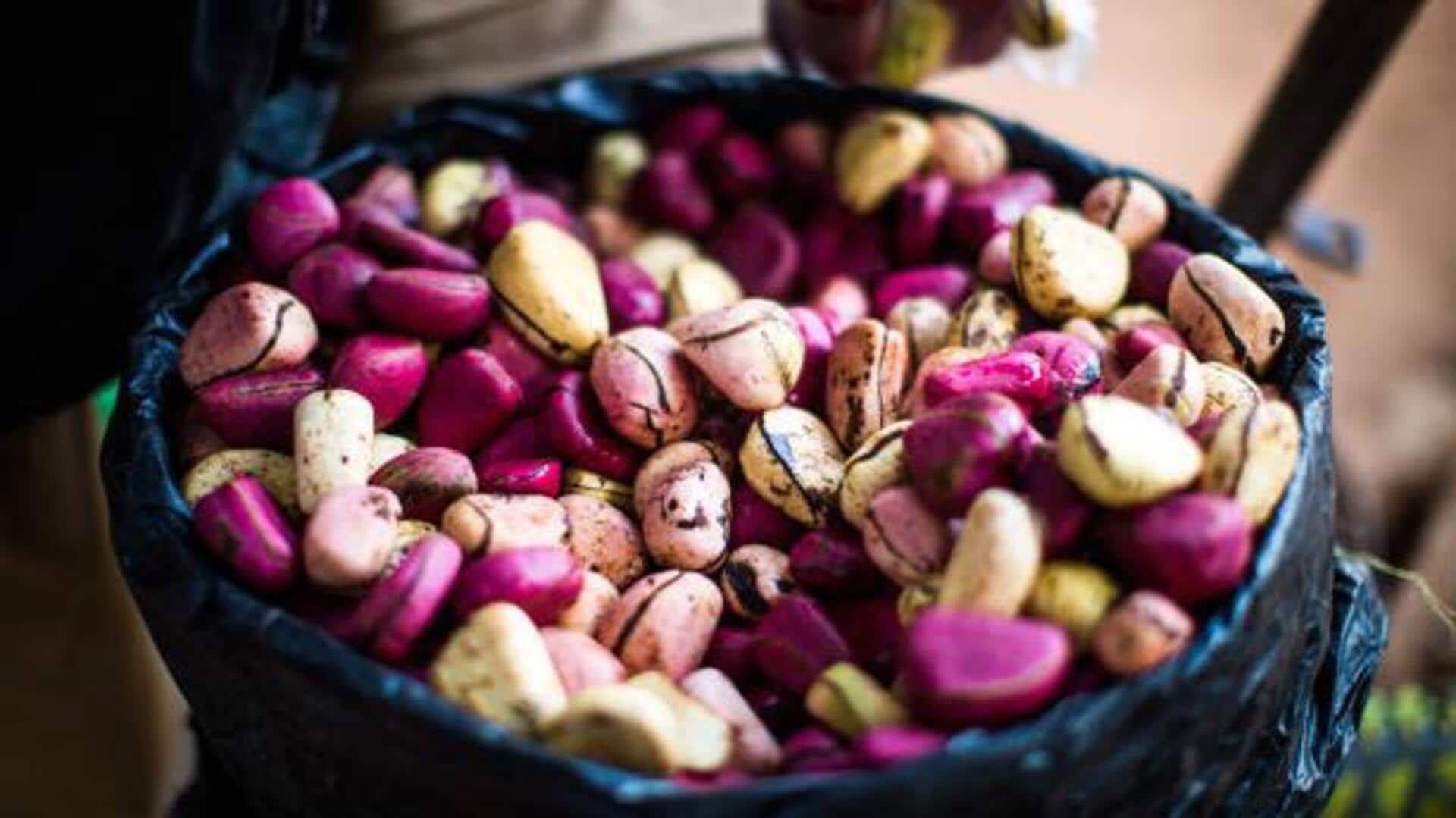
5 traditional uses of kola nuts
What's the story
Kola nuts have been an integral part of African traditions for centuries. These seeds, native to the tropical rainforests of Africa, are not just known for their stimulating properties but also for their cultural significance. From being used in rituals to serving as a symbol of hospitality and respect, kola nuts play a vital role in various aspects of African life. Here are five traditional uses of kola nuts across the continent.
#1
Rituals and ceremonies
In many African cultures, kola nuts are an integral part of rituals and ceremonies. They are offered to ancestors or deities as a sign of respect and reverence.
The act of breaking a kola nut can mark important events such as weddings or naming ceremonies.
The number of pieces broken can even have a symbolic meaning, reflecting the wishes or blessings sought from the spiritual realm.
#2
Symbol of hospitality
Kola nuts are also a symbol of hospitality in several African communities.
When guests arrive, hosts often present them with kola nuts as a warm welcome gesture.
This tradition signifies goodwill and friendship, establishing the tone for the visit.
The offering is usually accompanied by prayers or blessings, making it an essential part of social interactions.
#3
Medicinal uses
Traditionally, kola nuts have been used for their medicinal properties in several African communities.
They are believed to aid digestion and relieve headaches because of their caffeine content.
Some even use them as a natural remedy for fatigue due to their stimulating effects on the body.
Though scientific evidence may vary, these beliefs continue to be passed down through generations.
#4
Economic trade item
Historically, kola nuts have also been an important trade commodity across West Africa and beyond.
Their high value made them currency-like items in trade transactions between communities and regions.
The demand for kola nuts ensured economic activity and exchange networks flourished long before modern currencies were introduced.
#5
Educational tools
In some cultures, kola nuts serve as educational tools to teach children about tradition and responsibility.
Children learn how to properly handle and present kola nuts during ceremonies, instilling values of respect, patience, and community involvement.
This practice helps preserve cultural heritage while educating younger generations about their identity and history.