What is hanbok? All about Korea's traditional attire
What's the story
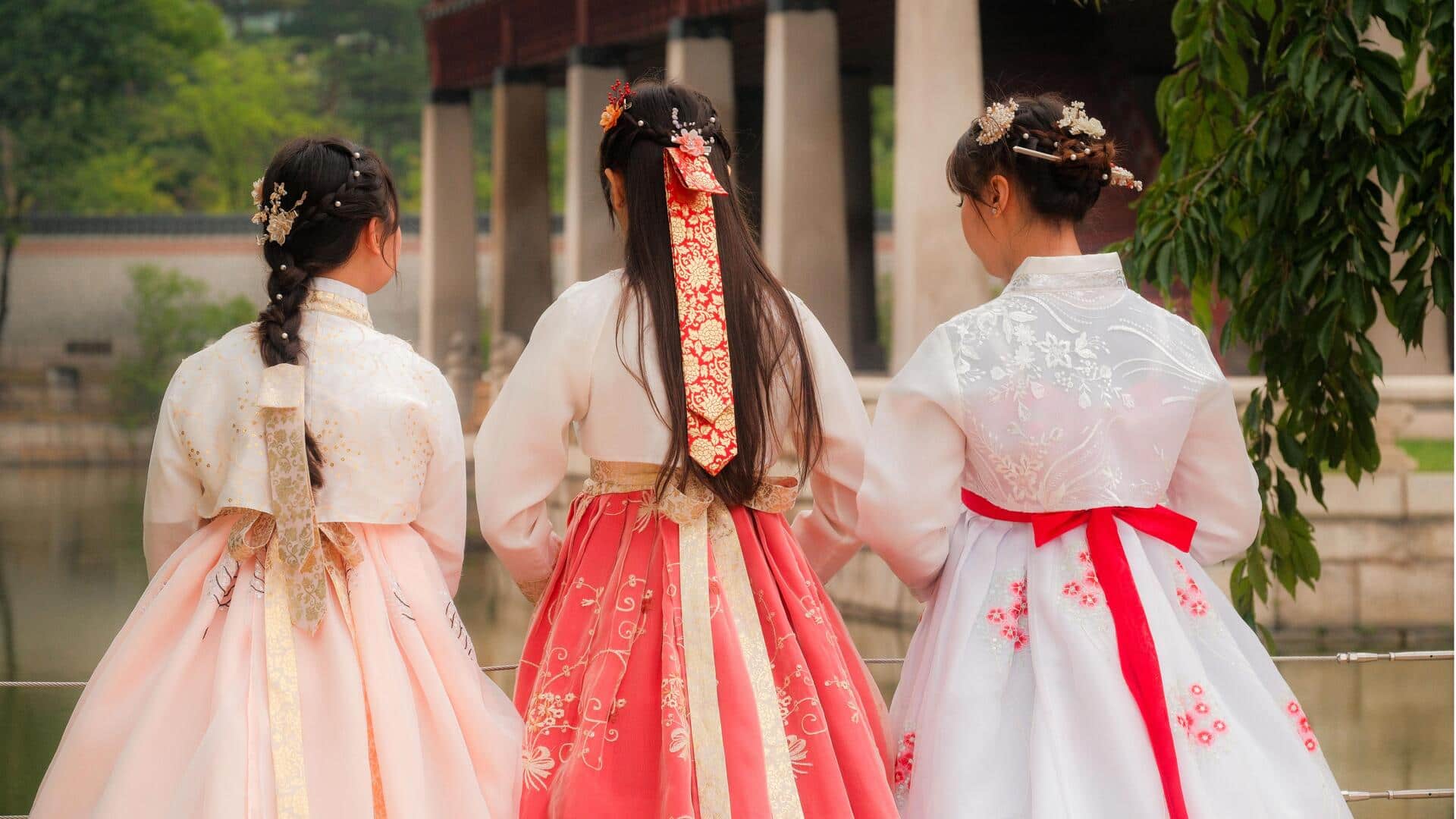
The hanbok is a traditional Korean attire, characterized by its vibrant colors and simple lines. It is usually worn during festivals, celebrations, and special occasions. The hanbok has a long history, dating back thousands of years. Its design has been influenced by Korea's changing climate, social norms, and cultural exchanges with neighboring countries. Today, the hanbok is a symbol of Korean identity and heritage.
#1
Historical evolution of Hanbok
The hanbok has evolved a lot over the centuries. In the Goryeo Dynasty, the attire became more elaborate with intricate patterns and designs.
The Joseon Dynasty saw a shift towards simplicity with an emphasis on practicality and modesty.
This period also saw the introduction of specific garments like jeogori (jacket) and chima (skirt) for women, and baji (pants) for men.
#2
Cultural significance in modern times
In modern Korea, the hanbok is worn during major life events such as weddings, birthdays, and funerals. It is also worn during traditional holidays like Chuseok and Seollal.
The attire serves as a reminder of Korea's rich cultural heritage, while also being a source of national pride.
Many young Koreans are embracing traditional clothing as a way to connect with their roots.
#3
Contemporary adaptations
Designers have also started creating contemporary versions of the hanbok that cater to modern tastes without losing the traditional elements.
These adaptations include using lighter fabrics or incorporating Western-style cuts while maintaining the characteristic colors and patterns.
This way, the younger generations can appreciate this cultural treasure without compromising on comfort or style.
#4
Tips for wearing Hanbok today
When wearing a hanbok today, choose vibrant colors that reflect your personality but also respect cultural norms associated with specific occasions.
Ensure that your outfit fits well by consulting size guides provided by retailers specializing in traditional attire.
Consider pairing your hanbok with accessories like norigae (traditional pendants) or binyeo (hairpins) to enhance its elegance while paying homage to historical practices.