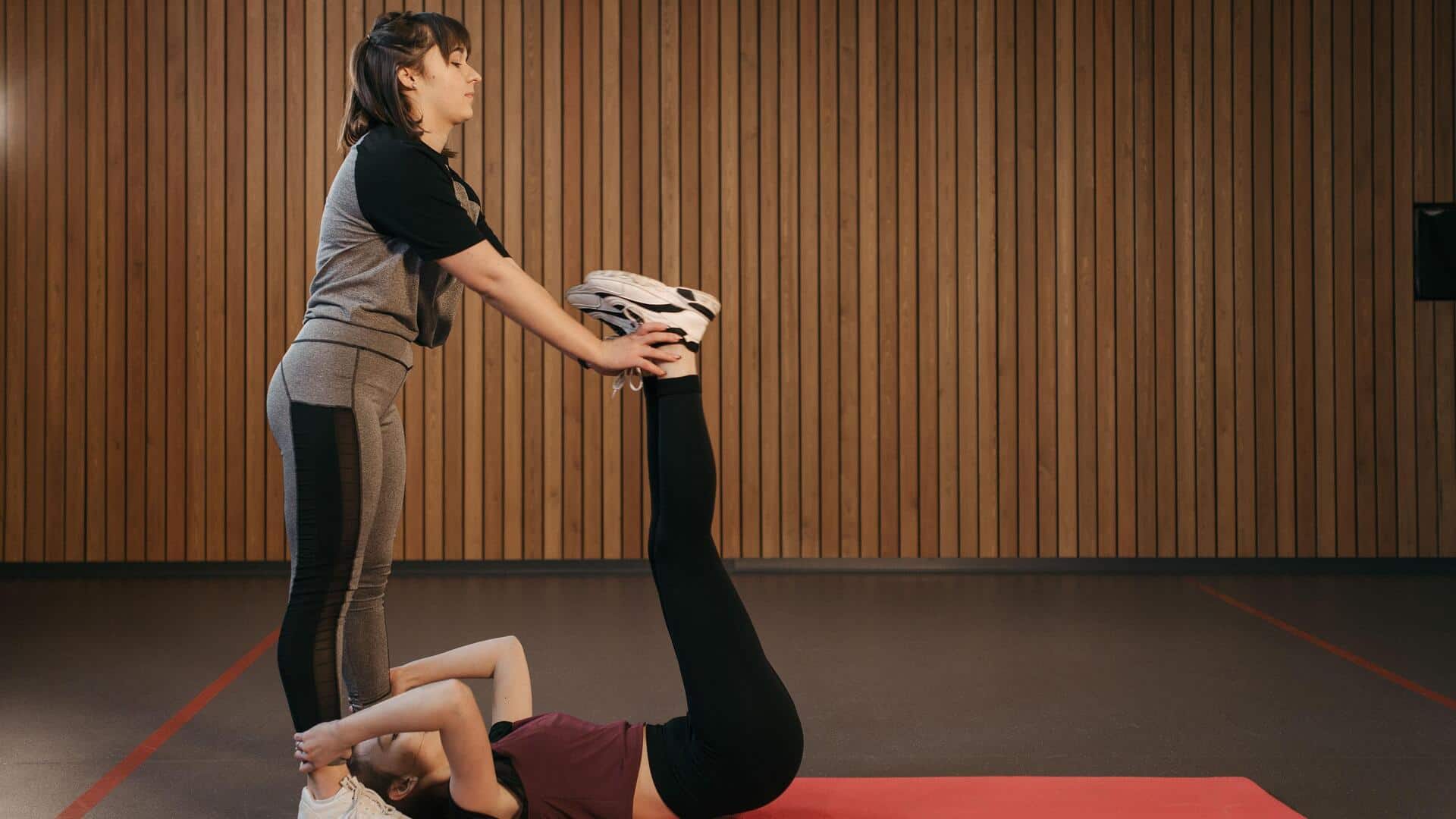
Leg raises: A great exercise for your lower body
What's the story
Leg raises are a popular exercise for strengthening the core and lower body. They target specific muscles, making them an effective addition to any workout routine. Knowing which muscles are engaged during leg raises can help improve technique and maximize benefits. This article explores the key muscles worked during leg raises, providing insights into their roles and how to perform the exercise correctly.
#1
Engaging the hip flexors
Hip flexors are a group of muscles that allow you to lift your knees towards your chest.
They play an important role in leg raises by assisting with the upward motion of the legs.
Strengthening the hip flexors can improve your overall mobility and support activities like running and cycling.
To target these muscles effectively, focus on controlled movements without swinging or using momentum.
#2
Strengthening lower abdominal muscles
The lower abdominal muscles are crucial for stabilizing your pelvis and spine during leg raises.
These muscles help maintain proper posture and balance when performing various activities.
By engaging these muscles, you can enhance core stability and reduce the risk of injury.
To effectively work out your lower abs, concentrate on squeezing them tightly as you lift your legs.
#3
Activating rectus abdominis
The rectus abdominis is a long muscle that runs vertically along the front of your abdomen.
It is popularly known as the six-pack muscle because of its appearance when toned.
This muscle is engaged during leg raises, as it helps control the movement of your torso while lifting your legs up.
Keeping this muscle engaged throughout the exercise can help you achieve a more defined abdomen.
#4
Utilizing oblique muscles
Oblique muscles, located on either side of the abdomen, are responsible for rotational movements and lateral flexion of the spine.
They get engaged during leg raises, especially when you add variations that require twisting or side bending, such as oblique leg raises.
Strengthening obliques can improve your athletic performance by enhancing rotational power needed in sports like tennis or golf.