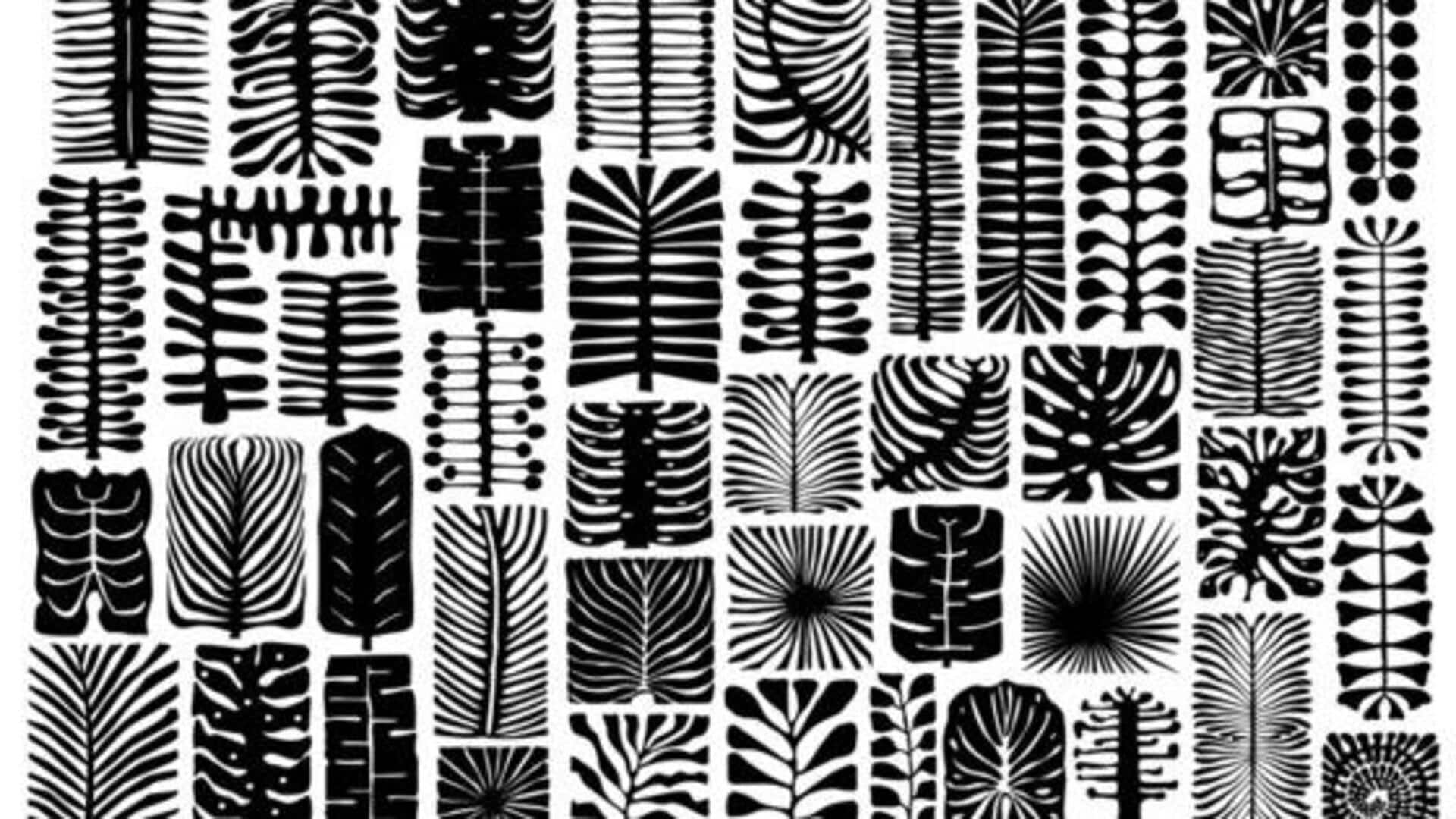
What is lino-printing?
What's the story
African patterns have always inspired artists, thanks to their rich cultural heritage and unique geometric designs. Lino-printing, a popular printmaking technique, gives artists a way to explore these patterns in a creative manner. By carving into linoleum and applying ink, artists can create stunning prints that reflect the beauty of African art. This article delves into the various aspects of using African patterns in lino-printing, offering insights and tips for artists looking to experiment with this vibrant style.
#1
Understanding African patterns
African patterns are characterized by bold lines, geometric shapes, and symbolic motifs.
These designs often tell stories or represent cultural beliefs.
Understanding these patterns is essential for artists who wish to incorporate them into their work.
By studying traditional African art, artists can gain inspiration and insight into how these patterns can be adapted for modern lino-printing techniques.
#2
Choosing the right materials
Selecting appropriate materials is key to successful lino-printing.
Artists should choose high-quality linoleum sheets that are easy to carve but durable enough to withstand multiple prints.
The choice of ink also matters; water-based inks are commonly used because they are easy to clean and safe to use.
Investing in good tools, like sharp knives or gouges, will make the carving process smoother.
#3
Techniques for carving designs
Carving designs on linoleum requires precision and patience.
Artists should start by sketching their chosen African pattern on paper before transferring it onto the linoleum sheet.
Using sharp tools, they can then carefully carve out the lines of their design, ensuring that the negative space remains intact.
Practicing on scrap pieces of linoleum can help hone these skills before working on final pieces.
#4
Printing methods explained
Once carved, it is time for printing!
Apply ink evenly over the carved surface using a brayer or roller, ensuring all areas are covered evenly, without excess ink pooling in low areas of the carved surface.
Press paper firmly against the inked block using either hand pressure or a printing press, if available, then carefully peel back the paper to reveal the print.
This method allows for the creation of multiple copies from the same carved block, making it an efficient way to produce artwork featuring African-inspired designs.