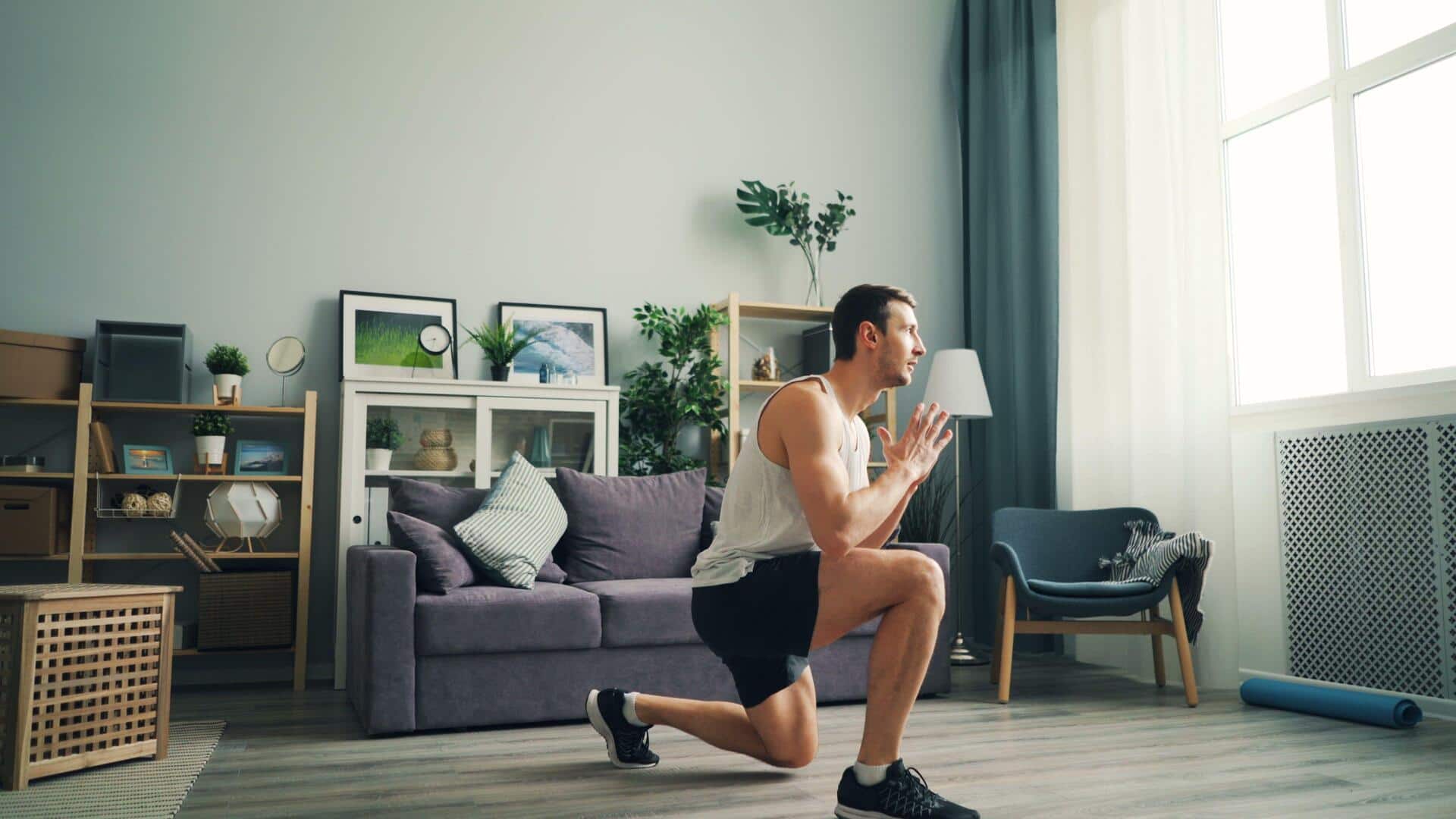
How to perform a reverse lunge with a twist
What's the story
The reverse lunge with a twist is an effective exercise to strengthen your core and improve overall stability. By adding a rotational movement to the traditional reverse lunge, you engage multiple muscle groups, including the abs, obliques, and glutes. This exercise not only enhances balance but also improves functional fitness by mimicking real-life movements. Incorporating this variation into your workout routine can lead to better posture and increased core strength.
Tip 1
Proper form is key
Maintaining proper form is essential for maximizing benefits and preventing injury during the reverse lunge with a twist.
Start by standing upright with feet hip-width apart.
Step back with one foot into a lunge position while keeping your front knee aligned over your ankle.
As you lower into the lunge, twist your torso towards the side of the extended leg, ensuring that your hips remain square.
Tip 2
Engage your core throughout
To effectively target the core muscles during this exercise, it is important to engage them throughout the movement.
Focus on tightening your abdominal muscles as you perform each repetition.
This engagement helps stabilize your spine and pelvis, allowing for a smoother execution of both the lunge and twist components of the exercise.
Tip 3
Control your movements
Controlling your movements is key to reaping the maximum benefits of the reverse lunge with a twist.
Avoid rushing through each repetition; instead, focus on slow and deliberate motions.
This controlled pace ensures that you are effectively working each muscle group, without compromising form or risking injury.
Tip 4
Incorporate variations for added challenge
To further enhance core strengthening and stability benefits, consider incorporating variations of the reverse lunge with a twist into your routine.
For example, you can add weights by holding dumbbells, or use resistance bands for added resistance.
These variations increase intensity and challenge different muscle groups within the core area.