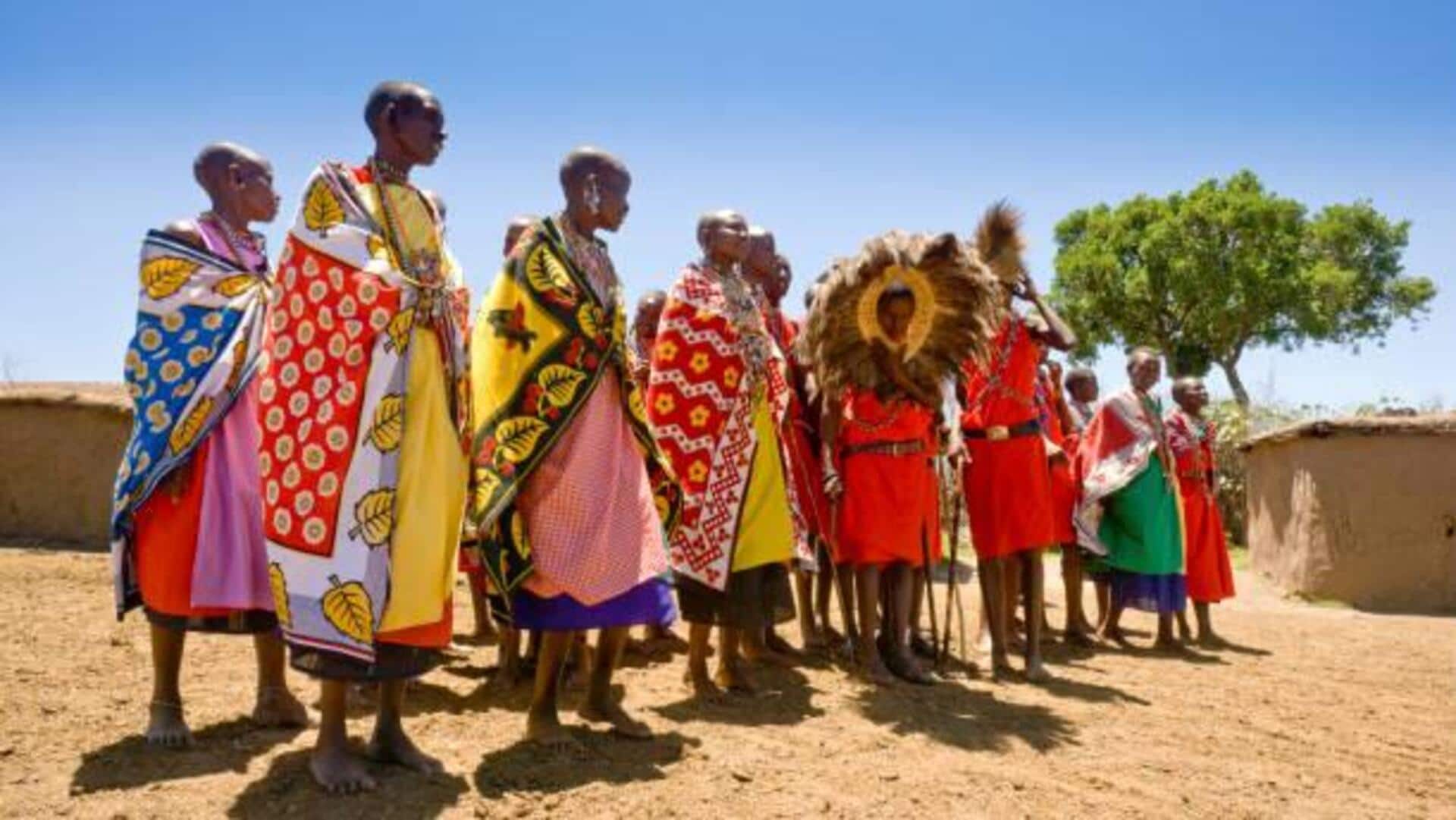
Maasai shuka: A traditional fabric from East Africa
What's the story
The Maasai shuka, a vibrant fabric from East Africa, has been making waves in global fashion. Traditionally worn by the Maasai people, the shuka is known for its bold colors and patterns. Its unique design has caught the attention of designers and fashion enthusiasts around the world. As a result, the shuka is no longer just a cultural symbol but also a trendsetting piece in modern wardrobes.
#1
Origins and cultural significance
The Maasai shuka has its roots in the Maasai community of Kenya and Tanzania.
Traditionally, the fabric is used as a wrap for protection against weather elements and a symbol of identity.
The bright red color is often associated with bravery and strength among the Maasai people.
While the shuka continues to be a part of daily life for many, its cultural significance goes beyond utility to represent heritage and pride.
#2
Global fashion influence
In recent years, the Maasai shuka has made its way into global fashion markets.
Designers are inspired by its striking patterns and colors, incorporating them into clothing lines ranging from casual wear to high-end fashion pieces.
This influence is evident in runway shows, where traditional motifs are reimagined in contemporary styles, appealing to diverse audiences around the world.
#3
Sustainable fashion movement
The rise of sustainable fashion has also contributed to the popularity of the Maasai shuka. Made from locally sourced materials, the fabric supports eco-friendly practices.
Many brands use the shuka's distinctive look to promote sustainable clothing options that respect cultural traditions, while minimizing environmental impact.
This aligns with growing consumer demand for ethically produced garments.
Tip 1
Tips for styling Maasai shuka
Incorporating Maasai shuka into your wardrobe can be both stylish and meaningful.
For casual looks, pair it with neutral tones or denim for balance.
As for formal occasions, drape it over shoulders as an elegant shawl or wrap dress alternative.
Accessories, like beaded jewelry, can enhance its traditional appeal without overpowering your outfit's overall aesthetic.