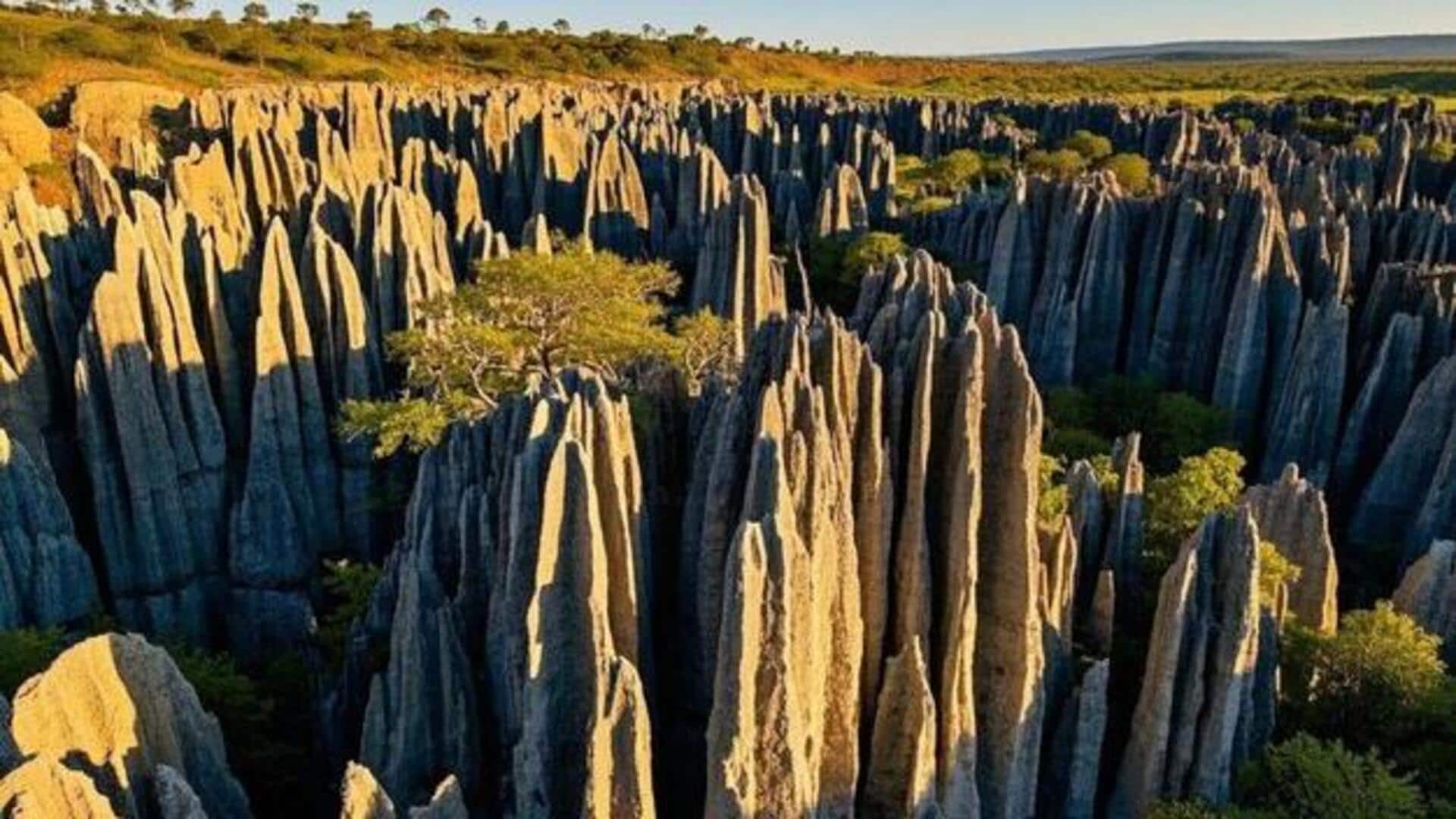
Tsingy de Bemaraha: A geological marvel in Madagascar
What's the story
Madagascar's Tsingy de Bemaraha is a one-of-a-kind caving adventure, which is not just about exploring caves, but also about walking through a forest of limestone needles. The UNESCO World Heritage site is famous for its razor-sharp pinnacles and rich biodiversity. The place gives you a chance to explore the hidden wonders of Madagascar, while also being a witness to its geological marvels.
#1
Discovering limestone formations
The limestone formations at Tsingy de Bemaraha are millions of years old and have been sculpted by erosion into a forest of jagged peaks.
These formations are not just visually stunning, but also ecologically important, as they provide habitat to several endemic species.
Exploring these formations gives you an insight into the Earth's geological history and the natural forces that shaped it.
#2
Biodiversity in Tsingy de Bemaraha
Tsingy de Bemaraha is home to a rich biodiversity, including several species found nowhere else on Earth.
The park is home to lemurs, birds, reptiles, and unique plant species.
This biodiversity makes it an important site for conservation efforts, and it offers visitors an opportunity to witness rare wildlife in their natural habitat.
#3
Tips for exploring safely
Exploring Tsingy de Bemaraha requires careful planning and preparation due to its rugged terrain.
Visitors should wear sturdy footwear suitable for hiking on uneven surfaces and carry plenty of water for hydration.
It's advisable to hire local guides who are familiar with the area, as they can enhance your experience by providing insights into both the natural environment and cultural significance of the site.
Tip 1
Best time to visit Tsingy de Bemaraha
The best time to visit Tsingy de Bemaraha is during Madagascar's dry season from April to November, when the weather conditions are more favorable for exploration.
During this period, rainfall is minimal, making trails more accessible, while reducing risks associated with slippery paths or flooding in caves.