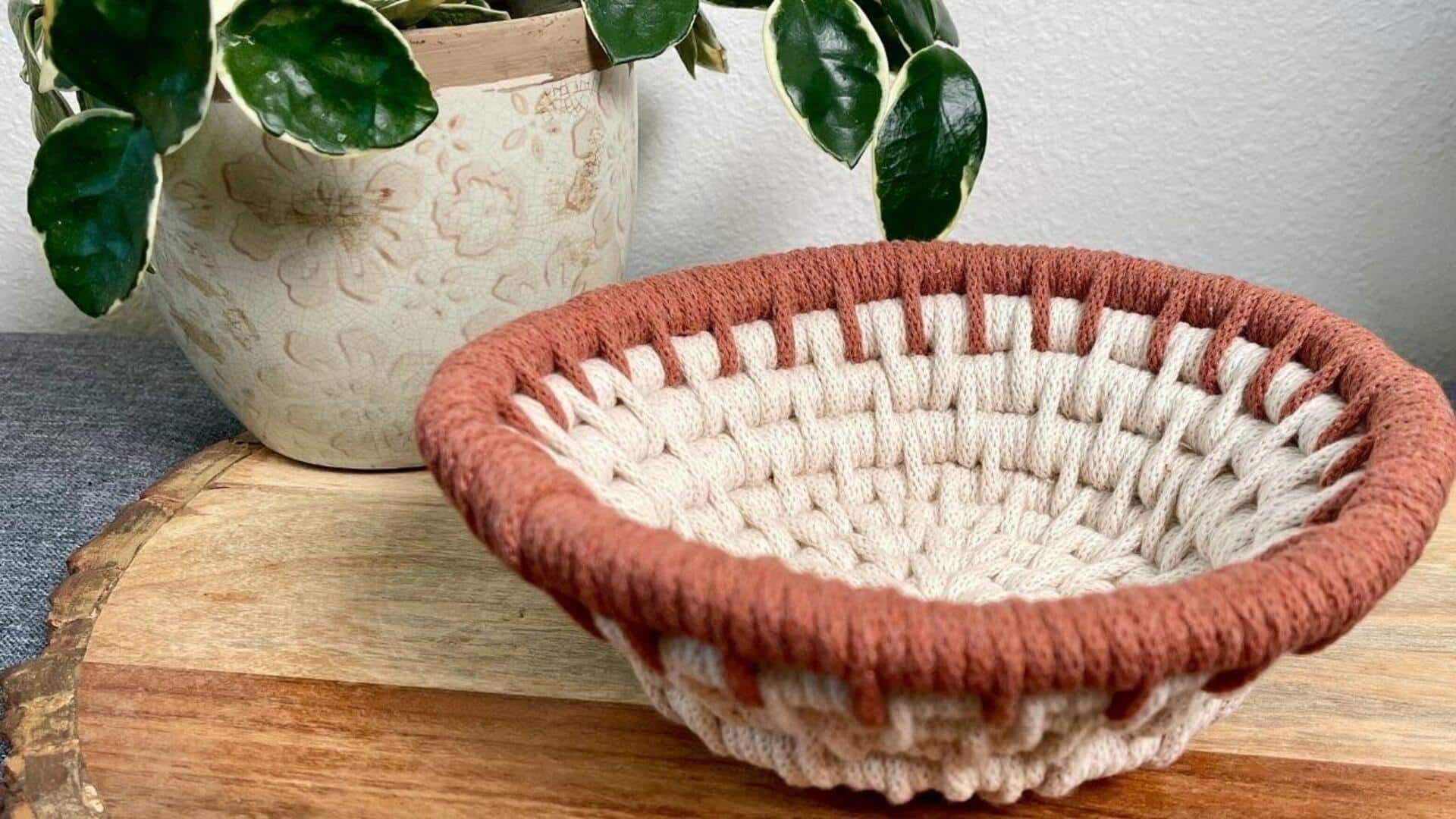
Step-by-step guide to creating coiled basketry
What's the story
African coiled basketry is a traditional craft that has been practiced for centuries. It involves weaving materials into intricate designs, often using natural fibers. However, in this modern twist, recycled poster strips are used as a sustainable alternative. This not only promotes environmental awareness, but also provides an innovative way to create colorful and durable baskets. The technique is accessible and can be easily adopted by anyone interested in crafting.
Material collection
Gathering materials for basketry
To start with African coiled basketry using recycled poster strips, gather necessary materials.
Collect old posters or paper with vibrant colors. Cut them into thin strips for easy handling.
You will also need a sturdy base material, like jute twine or sisal rope, to form the core of your basket.
These items are usually readily available at home or local recycling centers.
Weaving methods
Techniques for coiling baskets
The key to mastering African coiled basketry is learning the basic weaving techniques.
Start by wrapping the poster strip around the base material tightly, ensuring it stays in place as you continue to weave.
Use consistent tension throughout the process to maintain uniformity in your design.
Experiment with different patterns by alternating colors and widths of the strips.
Creative patterns
Designing patterns and shapes
Designing patterns is where creativity comes into play in this craft.
Think of traditional African motifs, or come up with your own unique designs by mixing colors and shapes as you weave.
Play with different shapes, like bowls or containers, by altering the shape and size of your base material while you work.
Final steps
Finishing touches for baskets
Once your basket reaches the desired height and shape, secure its structure by tying off ends securely with extra twine or string, if necessary.
Trim any excess strip length carefully so they do not fray over time.
Finally, apply glue sparingly along seams where needed, ensuring everything holds together well without compromising flexibility too much during use later on.