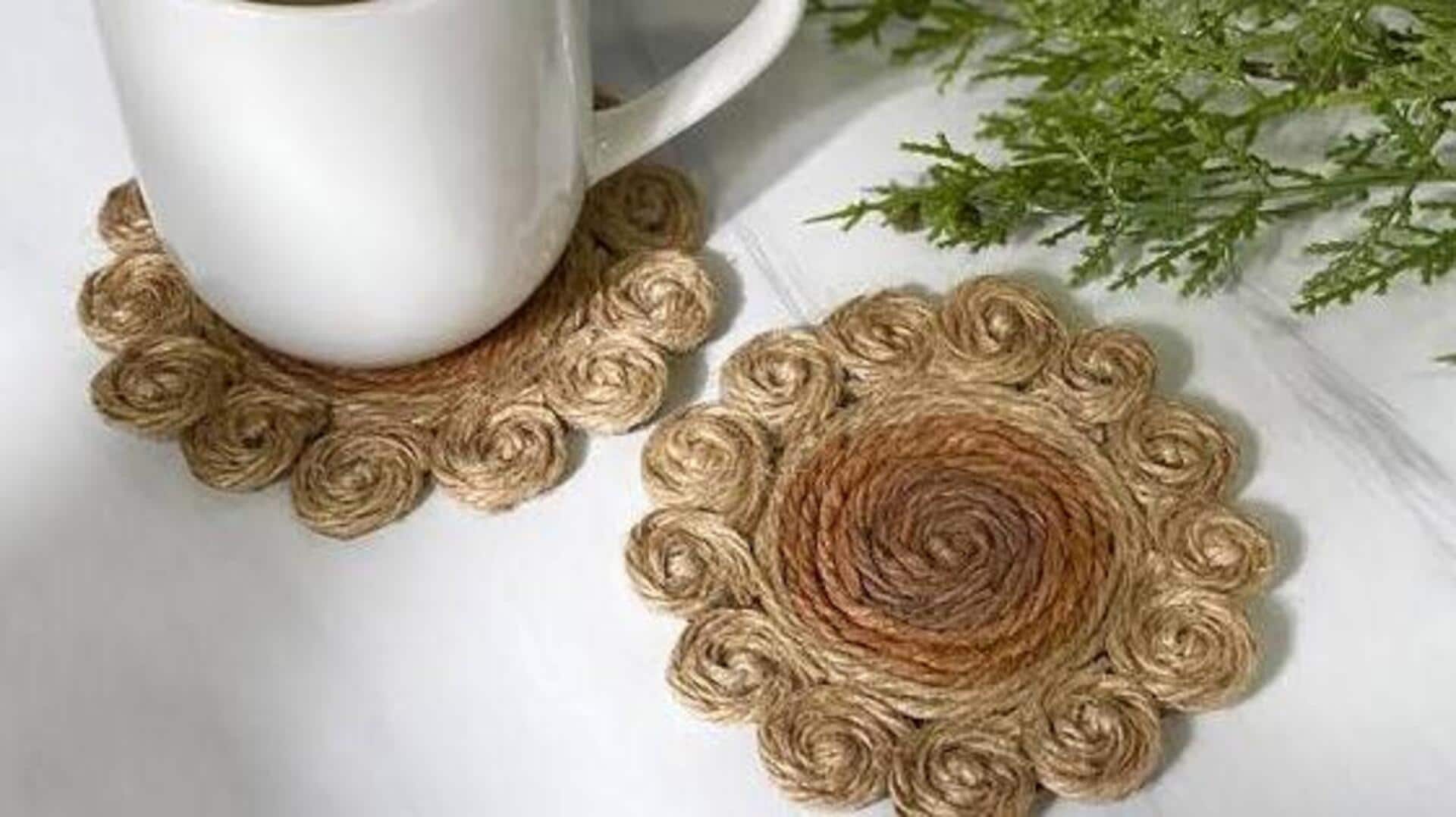
DIY: How to make jute coasters
What's the story
Creating coasters from jute and natural dyes is an eco-friendly craft that marries sustainability with creativity. Jute, a versatile plant fiber, makes for a durable base for coasters. Natural dyes, derived from plants and other organic sources, add vibrant colors without harming the environment. This article explores the steps to make these coasters, providing insights into materials and techniques that promote sustainable crafting practices.
#1
Selecting jute as base material
Jute is one of the most sustainable materials available. It is biodegradable and renewable, making it the perfect choice for eco-friendly crafts.
For coasters, select high-quality jute fibers that are strong enough to withstand daily use.
The texture of jute provides a natural grip, making it ideal for protecting surfaces from moisture and heat.
Using jute also supports the global textile industry while reducing environmental impact.
#2
Sourcing natural dyes
Natural dyes provide an eco-friendly alternative to synthetic colors. They are derived from plants, fruits, vegetables, and other organic sources.
To get vibrant hues for your coasters, explore options like turmeric for yellow, beetroot for red, and spinach leaves for green.
These dyes are not only safe but also add unique color variations to each piece. Sourcing these materials locally can further reduce your carbon footprint.
#3
Crafting process steps
The process of making jute coasters involves several steps.
Start by cutting the jute into desired shapes and sizes.
Then, prepare natural dye solutions by boiling the chosen plant materials in water until you achieve the desired color intensity.
Soak the cut jute pieces in these solutions until they absorb enough color.
Finally, let them dry completely before using or gifting them as sustainable home decor items.
Tip 1
Tips for maintaining durability
To ensure that your jute coasters last long, proper maintenance is key.
Avoid soaking them in water, as it may weaken their fibers over time.
Instead, gently wipe off spills immediately with a damp cloth. This will prevent stains from setting in without damaging the integrity of the material itself.
Regularly check each piece for wear and tear, and replace any that show signs of significant damage.