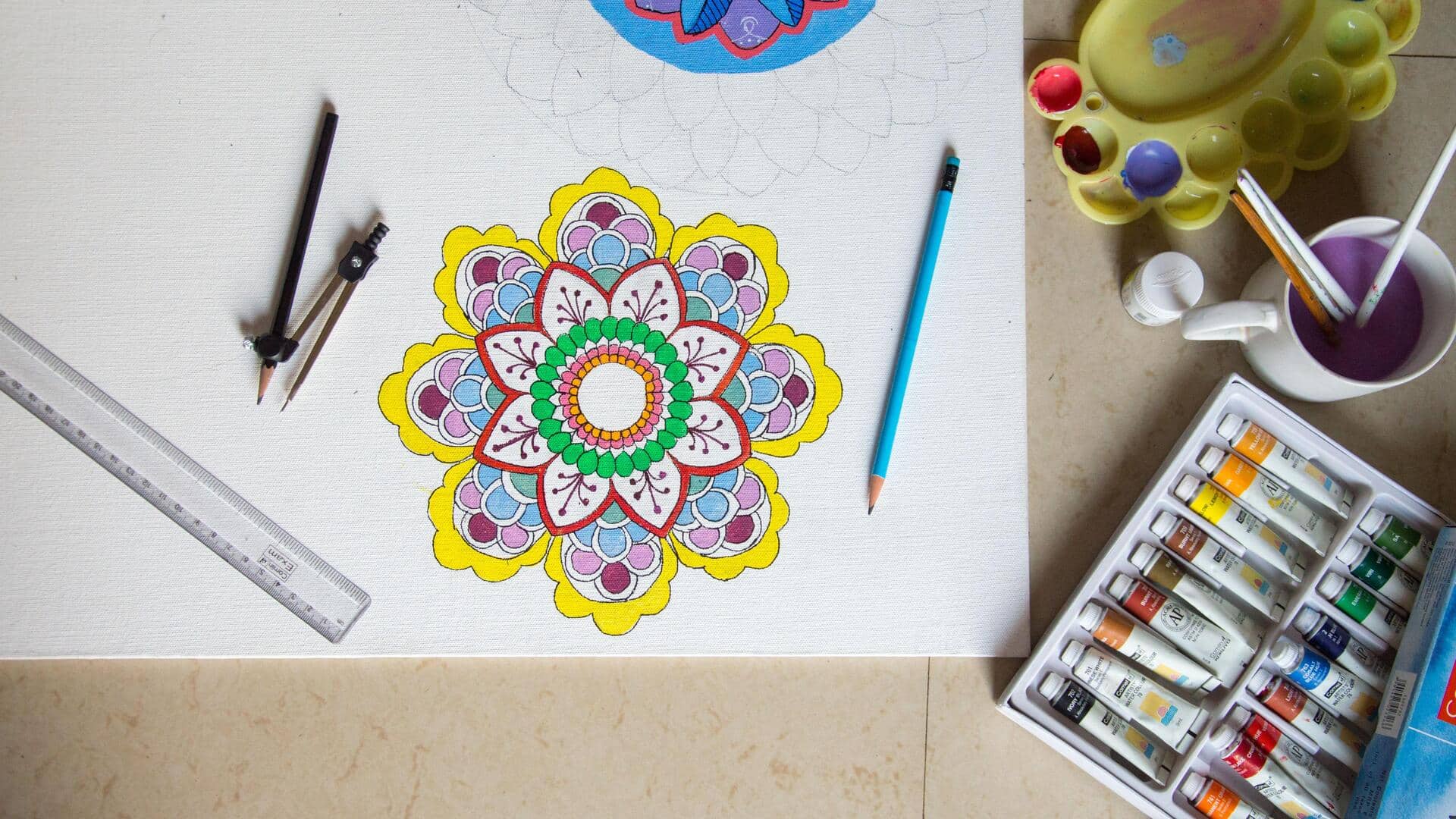
How mandala painting has changed over time
What's the story
Mandala painting is an ancient art form that has its roots in various cultures across the world. Famous for its intricate designs and symmetrical patterns, this art form has been used for centuries as a tool for meditation and spiritual growth. The history of mandala painting dates back to ancient India and Tibet, where it was used as a visual representation of the universe. Over time, the practice spread across cultures, each adding its own touch to the art form.
#1
Origins in ancient India
The origins of mandala painting can be traced back to ancient India, where it was used as a spiritual tool.
In Hinduism and Buddhism, mandalas were created as sacred diagrams representing the cosmos.
These paintings were often used in rituals and meditation practices to help practitioners focus their minds and connect with the divine.
#2
Tibetan influence on mandalas
In Tibet, mandala painting became an integral part of religious practices. Tibetan Buddhism adopted mandalas as teaching tools and aids for meditation.
The detailed designs often depicted various deities and symbolic elements, representing different aspects of spiritual life.
Tibetan monks are known for their meticulous craftsmanship in creating these intricate works of art.
#3
Spread across cultures
As trade routes expanded, mandala painting spread beyond India and Tibet to other parts of Asia and beyond.
In Japan, for example, mandalas were incorporated into Zen Buddhism practices.
In these cultures, the focus shifted from purely spiritual representations to include more personal interpretations through unique artistic styles.
#4
Modern adaptations
Today, mandala painting has found its way into contemporary art scenes across the globe.
Artists have adapted traditional techniques to create modern interpretations that resonate with diverse audiences.
These adaptations maintain the essence of symmetry and balance while exploring new themes relevant to today's society.