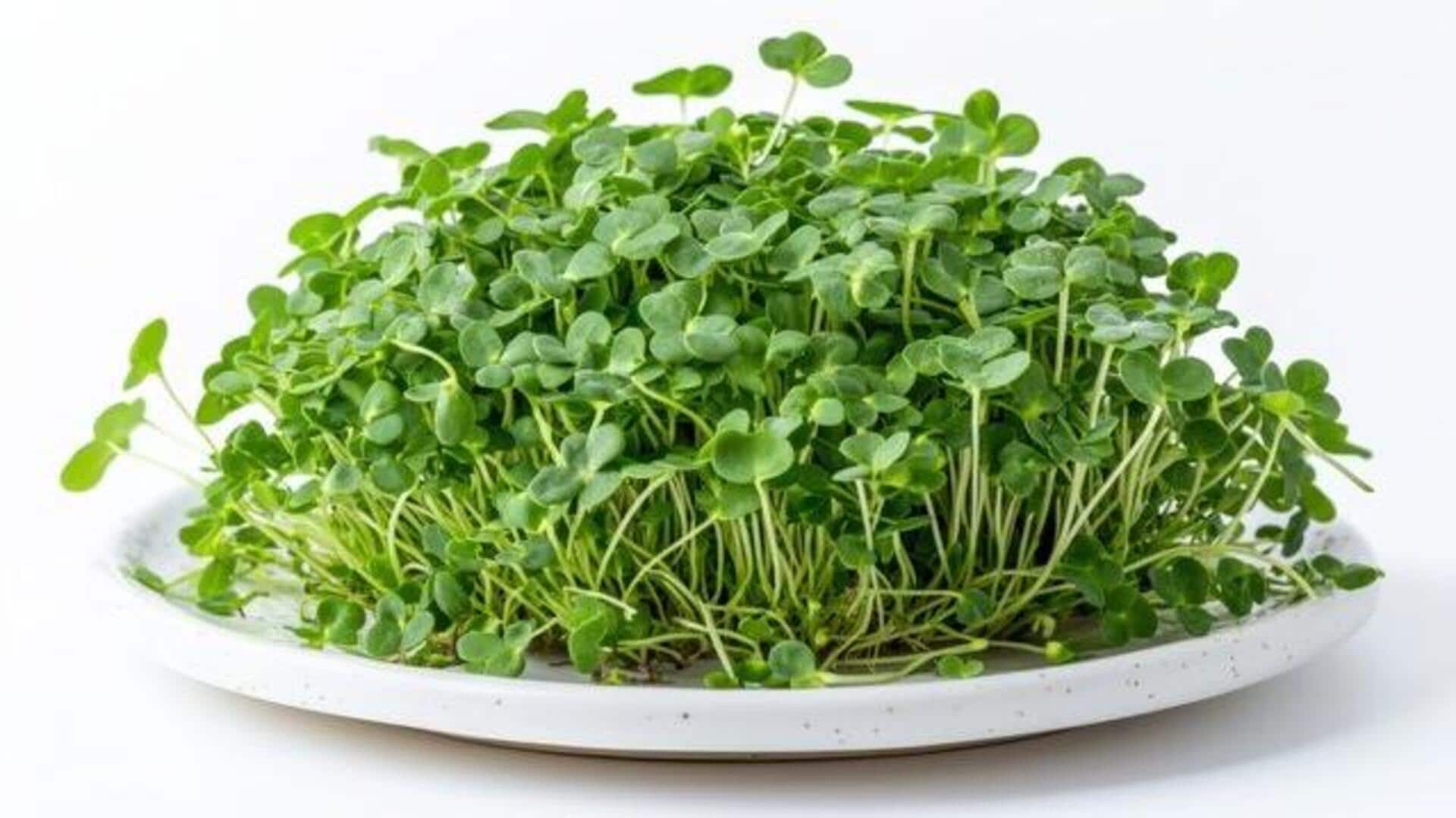
Are microgreens a really nutritional powerhouse?
What's the story
Microgreens, the tiny edible greens, have been the talk of the town for their health benefits. However, there are many myths surrounding their nutritional value. This article aims to debunk these myths and provide a clearer picture of what microgreens can actually do for your health. By focusing on facts, we hope to give you an insight into the real benefits of these small but mighty plants.
#1
Myth: Microgreens are always more nutritious than vegetables
One common misconception is that microgreens are always more nutritious than their mature counterparts. While some studies indicate that microgreens can have higher concentrations of vitamins and minerals, it is not a universal rule. The nutrient content of microgreens varies depending on the plant species and growing conditions. Therefore, it is important not to generalize their nutritional superiority without considering these factors.
#2
Myth: All microgreens have the same health benefits
Another myth is that all microgreens provide the same health benefits. In reality, different types of microgreens have different nutrient profiles based on the plant they come from. For example, broccoli microgreens are known for their high sulforaphane content, while radish microgreens provide a good dose of vitamin C. Knowing the specific benefits of each type can help you make informed dietary choices.
#3
Myth: Eating microgreens alone is enough for nutrition
Some people think eating microgreens alone can fulfill all nutritional needs. While they are nutrient-dense, relying solely on them for nutrition is impractical and may lead to deficiencies in certain nutrients found in other food groups. A balanced diet with a variety of foods is still essential for complete nutrition.
Tip 1
Myth: Growing microgreens at home is complicated
Many think growing microgreens at home is a complicated task requiring special equipment or expertise. In reality, growing microgreens at home is quite simple and requires little more than seeds, soil, or growing medium, and water. With basic supplies available at most gardening stores, anyone can grow these nutritious greens at home without much hassle or expense.