5 reasons Moroccan mosaic tiles stand out
What's the story
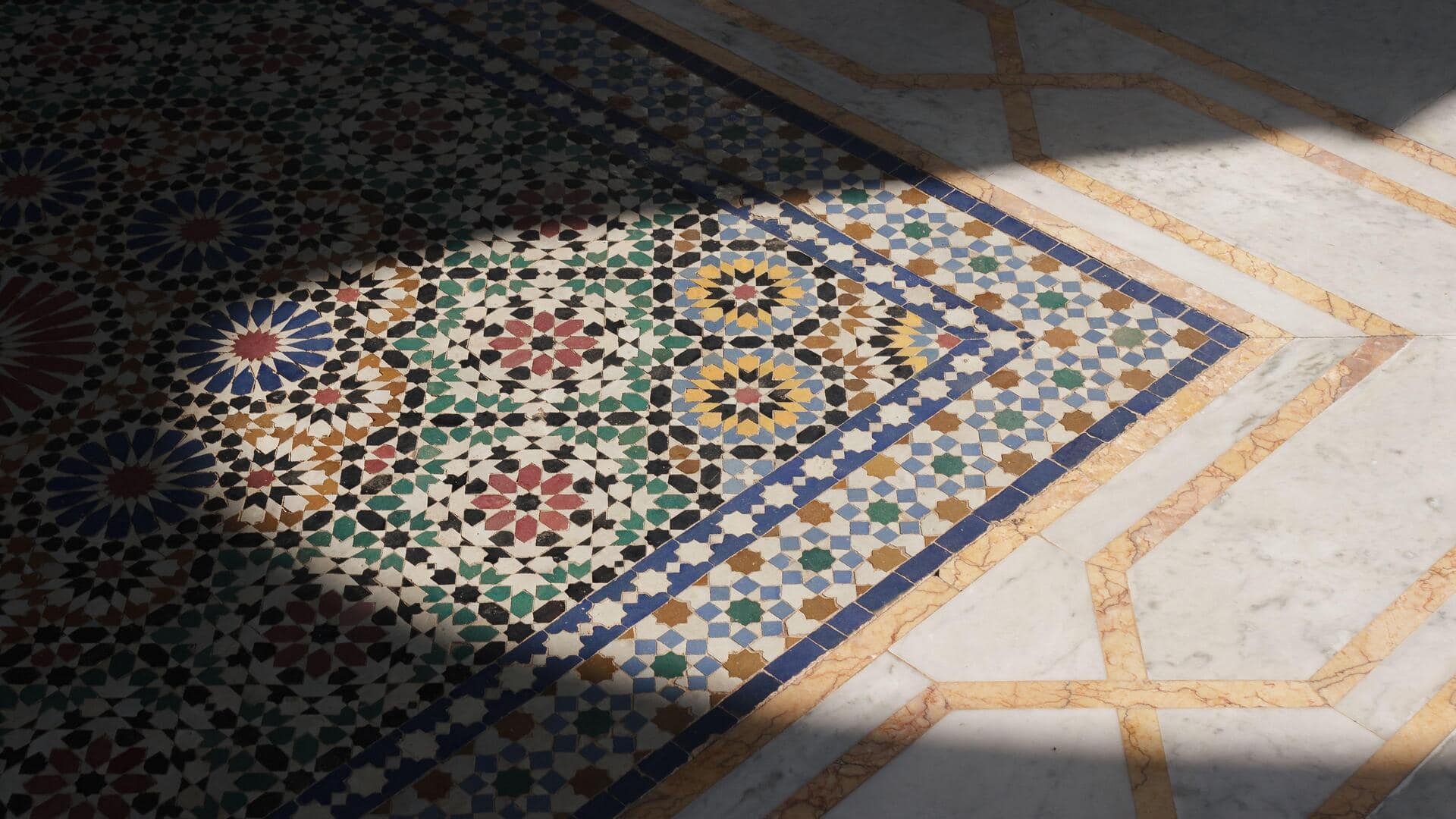
Moroccan mosaic tiles, or zellige, are a timeless art form that has been captivating people for centuries. These colorful tiles, made from clay and hand-cut into geometric shapes, are a hallmark of Moroccan architecture and design. The intricate patterns and vibrant colors of zellige tiles make them a favorite among homeowners and designers alike. Here are five fascinating facts about this unique art form.
#1
Ancient origins of zellige
Zellige tiles date back to the ninth century in Morocco. They were introduced by the Moorish artisans who brought their knowledge of tile-making from Spain.
The art form has been passed down through generations, with each artisan adding their own touch while sticking to traditional techniques.
This ancient craft is still practiced today, keeping its historical significance alive.
#2
Unique manufacturing process
The manufacturing of zellige tiles is a labor-intensive process that requires great skill and patience.
First, clay is shaped into small squares and fired in kilns at high temperatures.
Once cooled, artisans hand-cut each tile into geometric shapes with precision tools.
The tiles are then glazed with vibrant colors before being assembled into intricate patterns.
#3
Symbolism in patterns
The patterns created with zellige tiles are not just beautiful, but also rich in symbolism.
Many designs are inspired by nature or hold cultural significance, like stars or floral motifs that represent growth and harmony.
Each pattern tells a story or conveys a message that reflects Moroccan heritage.
#4
Versatility in design applications
Zellige tiles are versatile and can be used in a number of design applications, be it flooring, wall coverings, or decorative accents in homes and public spaces alike.
Their adaptability makes them suitable for both traditional settings as well as modern interiors, where a touch of history is desired without compromising on style.
#5
Sustainable craftsmanship practices
In addition to being beautiful, Moroccan mosaic tile-making is also eco-friendly.
Artisans use locally sourced materials, such as natural clay and non-toxic glazes, which are safe for the environment.
The techniques have been used for centuries, but they are still relevant today, as sustainability becomes a priority in the world of design.