
Nordic walking or cross-country skiing: Which is better?
What's the story
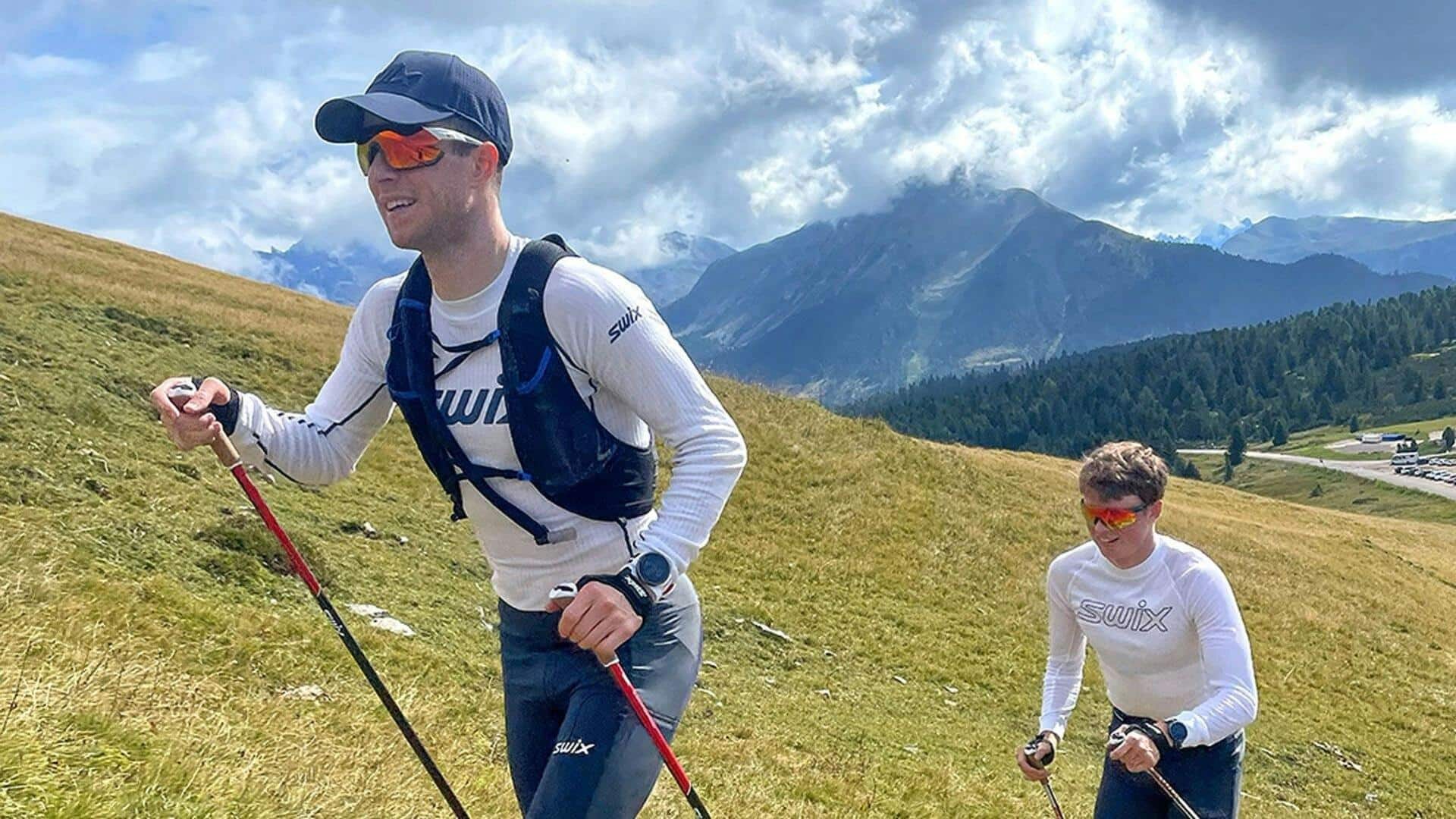
Nordic walking and cross-country skiing are two popular activities that provide a full-body workout. Both activities involve the use of poles, but they are performed on different terrains and have different techniques. While Nordic walking is usually done on flat surfaces, cross-country skiing is performed on snow-covered trails. Knowing the differences can help you choose the right activity for your fitness goals.
#1
Technique and equipment differences
Nordic walking employs a simple technique with specially designed poles to enhance the natural walking motion. The poles are used to propel forward, engaging the upper body and core. Cross-country skiing, on the other hand, requires skis and boots designed for snow conditions. The technique involves gliding on snow while using poles to balance and propel oneself forward. The equipment required for each activity varies significantly in cost and maintenance.
#2
Terrain considerations
The terrain is also a major factor when choosing between these two activities. Nordic walking can be done on paved paths, parks, or trails with gentle inclines. It is accessible year-round in most places. Cross-country skiing requires snow-covered trails or areas specifically designed for skiing. This limits its practice to winter months or regions with consistent snowfall.
#3
Caloric burn potential
Both Nordic walking and cross-country skiing are great for burning calories, but they differ in intensity levels based on speed and terrain difficulty. Cross-country skiing usually burns more calories due to its higher intensity level as skiers navigate uphill slopes and varying terrains. Nordic walking burns fewer calories but remains effective as a low-impact cardiovascular workout.
#4
Accessibility and cost factors
Accessibility also plays a role when choosing between these activities. Nordic walking is more accessible since it doesn't require special locations or expensive gear apart from poles and comfortable shoes. Cross-country skiing has higher initial costs because of the need for skis, boots, and possibly lift passes at ski resorts.