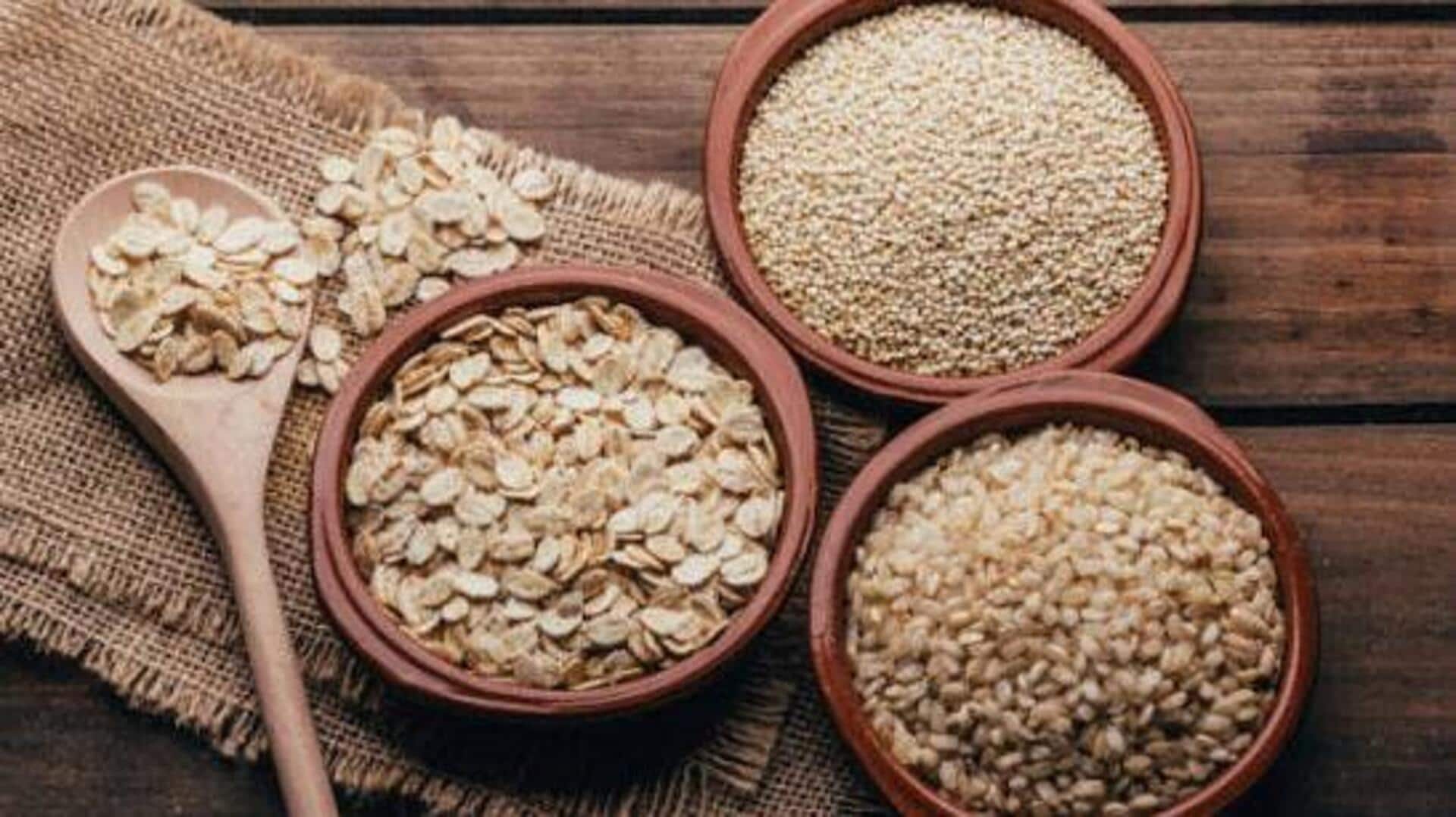
Oats v/s brown rice: Which one is healthier?
What's the story
Oats and brown rice are two of the most popular whole grains, both of which are known for their nutritional benefits. While both grains are healthy, they differ in terms of their nutritional profiles. Knowing these differences can help you make informed dietary choices. Here's a look at the nutritional differences between oats and brown rice, and what each grain has to offer.
#1
Fiber content in oats and brown rice
Oats are famous for their high fiber content, particularly beta-glucan, which helps in lowering cholesterol levels and improving heart health.
A serving of oats can give you about four grams of fiber.
Brown rice also has fiber but in lesser amounts than oats, with about two grams per serving.
The higher fiber content in oats makes it a good option for those looking to improve digestion and maintain healthy cholesterol levels.
#2
Protein levels in each grain
When it comes to protein content, both oats and brown rice provide decent amounts but differ slightly in their offerings.
Oats provide around six grams of protein per serving, making them a good source for plant-based diets.
Brown rice offers around five grams per serving.
While neither grain is a complete protein source on its own, they can be complemented with other plant-based proteins to meet daily requirements.
#3
Glycemic index comparison
The glycemic index (GI) of a food indicates how quickly it raises blood sugar levels after consumption.
Oats have a low to moderate GI, depending on how they are processed, which makes them great for keeping blood sugar levels stable.
Brown rice also has a low GI, but it is slightly higher than that of oats.
Both grains make for good options for diabetics or anyone looking to control their blood sugar levels.
#4
Vitamins and minerals present
Both oats and brown rice are packed with essential vitamins and minerals that promote overall health.
Oats are rich in B vitamins, such as thiamine and riboflavin, as well as iron and magnesium.
Brown rice also provides B vitamins, along with selenium and manganese.
Adding either grain to your diet can help you meet your daily nutrient needs, without much effort.