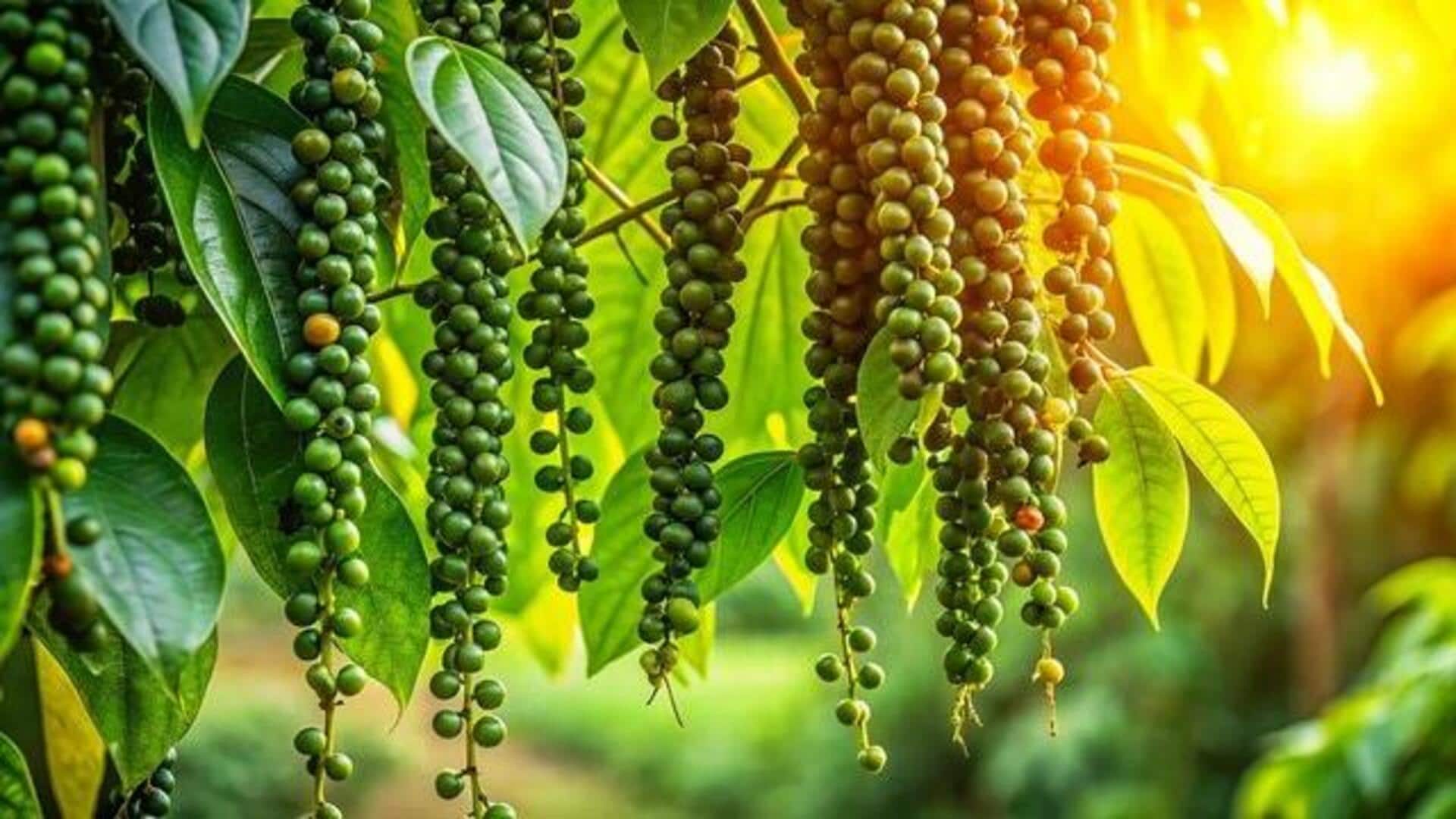
How to grow black pepper vines
What's the story
Growing black pepper vines organically can be a rewarding experience, giving you fresh spices right from your garden. Black pepper, a tropical vine, needs particular conditions and care to thrive. By following organic methods, you can ensure that your plants grow healthily without the use of synthetic chemicals. Here are some practical tips to help you grow black pepper vines successfully in an organic manner.
Tip 1
Choosing the right location
Selecting the right location is key to growing black pepper vines.
They flourish in warm climates with temperatures between 25 degrees Celsius and 30 degrees Celsius.
The area should also have partial shade, as direct sunlight can damage the leaves.
Make sure the soil is well-drained and rich in organic matter. Avoid areas prone to waterlogging, as this can damage the roots.
Tip 2
Preparing the soil
Preparing the soil properly is essential for healthy vine growth.
Black pepper prefers slightly acidic soil with a pH level of about 6 to 6.5.
You can improve soil fertility by adding compost or well-rotted manure, which provides essential nutrients without chemicals.
Regularly test soil pH and make necessary adjustments using natural amendments like lime or sulfur.
Tip 3
Planting techniques
When planting black pepper vines, space them adequately to allow for proper growth and airflow between plants.
Ideally, plant them about two meters apart in rows spaced three meters apart.
Use sturdy supports like trellises or poles, as these vines require climbing structures for support as they grow.
Tip 4
Watering and fertilizing organically
Consistent watering is key to keeping black pepper vines healthy but avoid overwatering which may cause root rot problems.
Water deeply once or twice a week depending on rainfall conditions during dry spells; mulching around plants helps retain moisture effectively while suppressing weeds naturally without using chemical herbicides.
Fertilize using organic options like fish emulsion every four weeks during active growing seasons.
Tip 5
Pest management strategies
Managing pests organically involves monitoring regularly for signs of common issues such as aphids or spider mites.
Introduce beneficial insects like ladybugs, which prey on these pests naturally.
Neem oil sprays can also be applied as a preventive measure against infestations, ensuring minimal disruption to the ecosystem surrounding your garden area.