
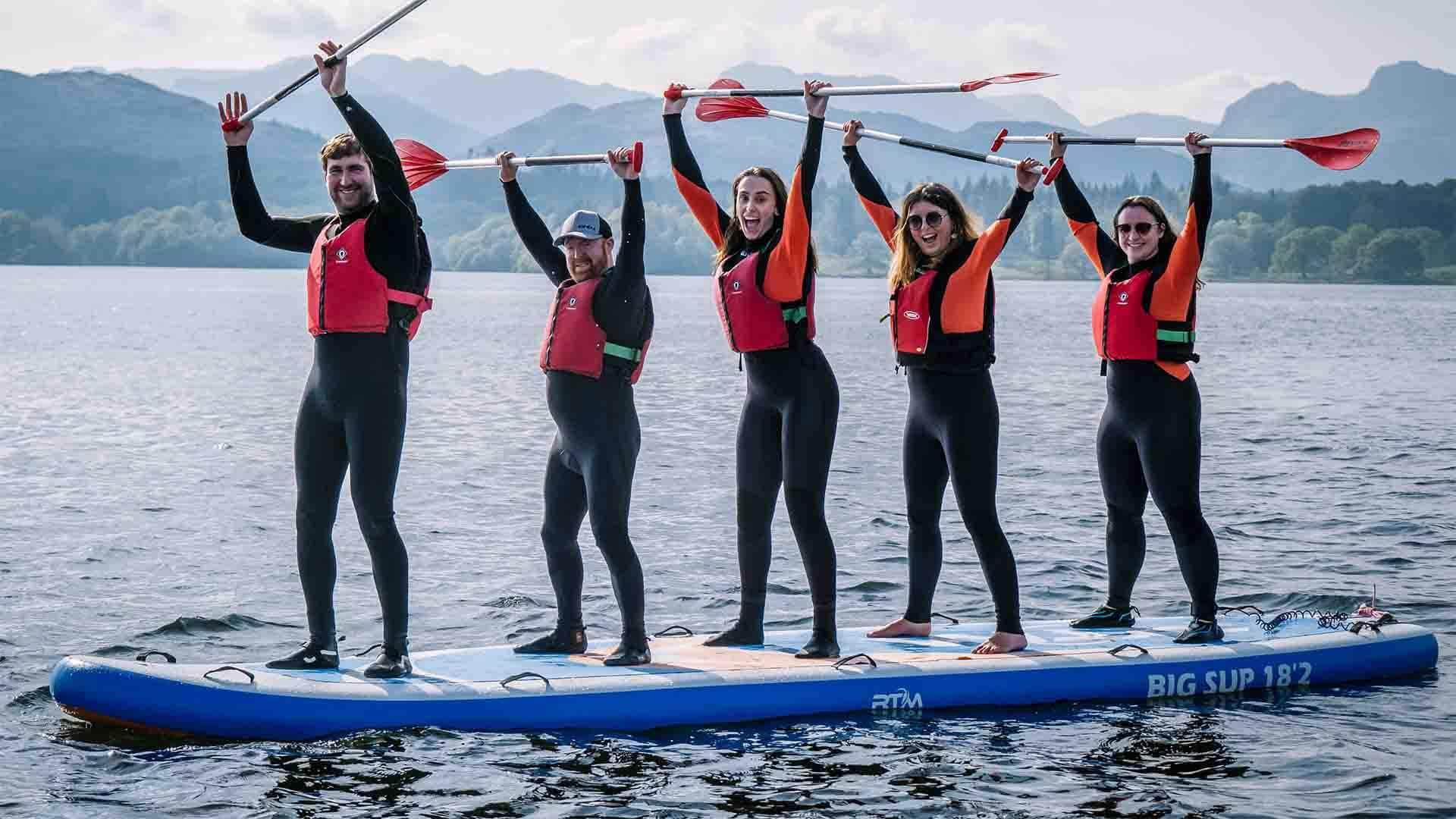
Paddleboarding v/s canoeing: Which is better for your core?
What's the story
Paddleboarding and canoeing are two popular water activities that promise unique experiences and physical benefits. Both sports engage the core muscles, but in different ways. Knowing how each activity works can help you pick the one that suits your fitness goals. Here, we look at the core engagement in paddleboarding and canoeing, and how each activity can help you strengthen your core muscles.
#1
Balance on paddleboards
Paddleboarding requires a lot of balance as you stand on a board floating on water. This constant need to balance engages your core muscles all the time. You have to adjust your posture with every small movement, which improves your stability and coordination. The instability of the water makes paddleboarding an intense workout for your abs and obliques.
#2
Canoeing's rhythmic motion
Canoeing is all about the rhythmic motion of paddling through water. Although you sit in a canoe, your core is still engaged as you twist your torso with every stroke. This movement works out the muscles in your abdomen and lower back, improving rotational strength and endurance over time.
#3
Endurance vs. Intensity
Paddleboarding is usually more intense than canoeing as you have to exert yourself constantly to keep your balance. This intensity means that paddleboarders may feel their core muscles working harder in shorter bursts. Canoeing, on the other hand, is more about endurance as you paddle for longer periods, giving your muscles a sustained workout.
Tip 1
Choosing based on goals
If you're looking to improve balance and coordination while getting a good core workout, paddleboarding could be the way to go. However, if you're more interested in building rotational strength through sustained effort, canoeing might be a better fit for you. Both activities offer unique benefits for core engagement, depending on what you want to achieve with your fitness routine.