Paddleboarding v/s kayaking: Which is better for your muscles?
What's the story
Paddleboarding and kayaking are two popular water sports that provide unique benefits to the muscles. Both activities engage different muscle groups, giving you a chance to strengthen and tone your body while enjoying the outdoors. Knowing how each sport works can help you choose the right one for your fitness goals. Here's a look at how paddleboarding and kayaking differ in terms of muscle engagement.
#1
Core stability in paddleboarding
Paddleboarding requires you to stand on a board in water, which is a great way to work on your core stability.
The constant balancing needed to stay upright engages your abdominal muscles, obliques, and lower back.
This full-body workout improves your posture and balance over time.
Paddleboarding also works your arms and legs as you propel yourself through the water.
#2
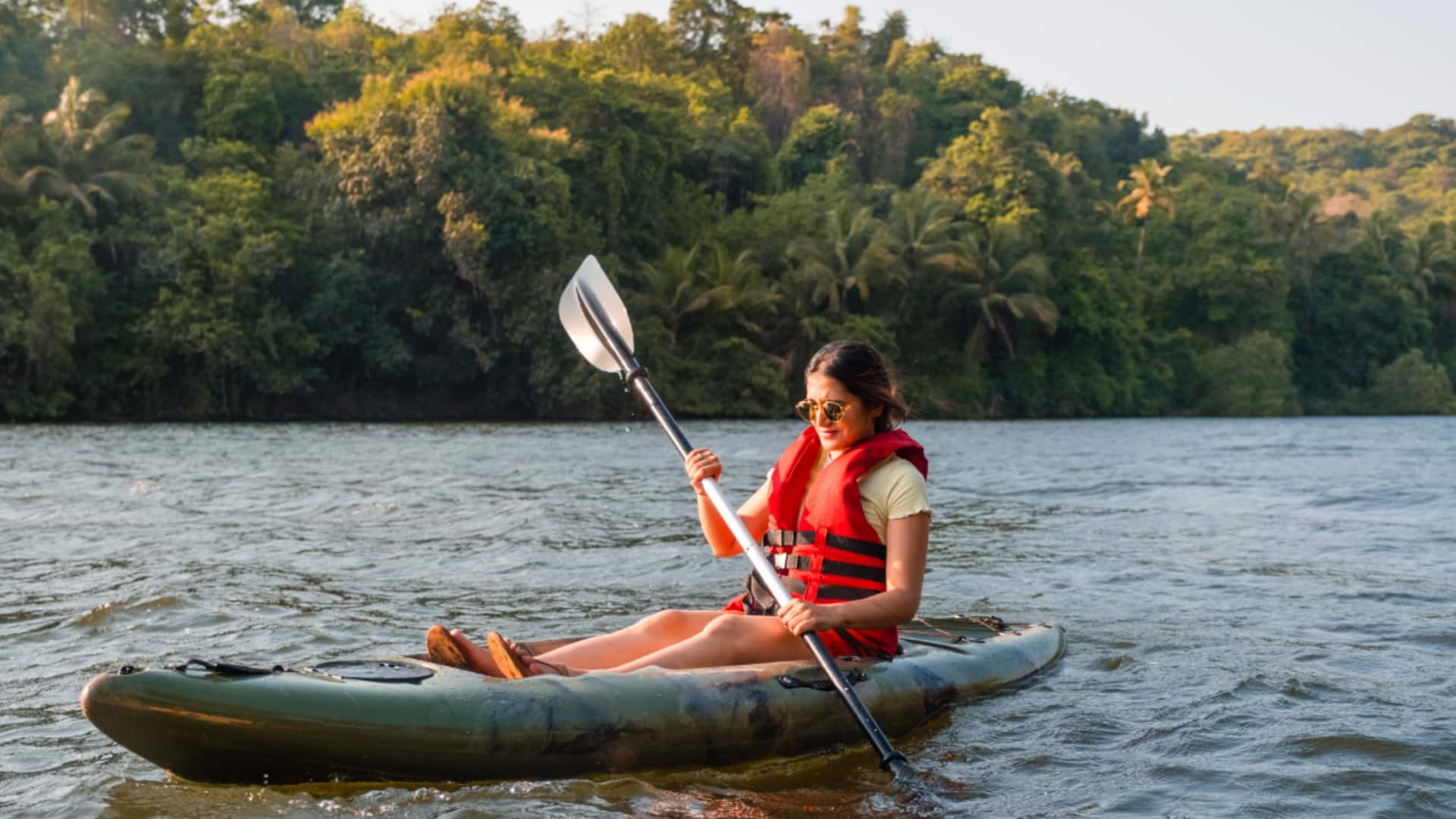
Upper body workout in kayaking
Kayaking is all about using upper body strength as you paddle through the water.
The action mainly works your shoulders, arms, chest, and upper back.
Kayaking is an excellent way to build endurance and strength in these areas as you repeatedly pull the paddle through the water.
The seated position in a kayak also helps you focus more on upper body engagement than lower body.
#3
Cardiovascular benefits of both sports
Both paddleboarding and kayaking provide cardiovascular benefits as they get your heart rate up while you are out on the water.
The continuous motion of paddling or balancing on a board helps improve cardiovascular health over time.
If you are looking for aerobic exercise that also helps with muscle engagement, both these activities make for excellent choices.
#4
Flexibility gains from paddleboarding
Paddleboarding also helps with flexibility as you stretch while balancing on the board or reaching out with each stroke.
The dynamic nature of paddleboarding encourages a full range of motion in joints, which can improve flexibility over time.
This flexibility can help reduce the risk of injury during other physical activities or daily tasks.