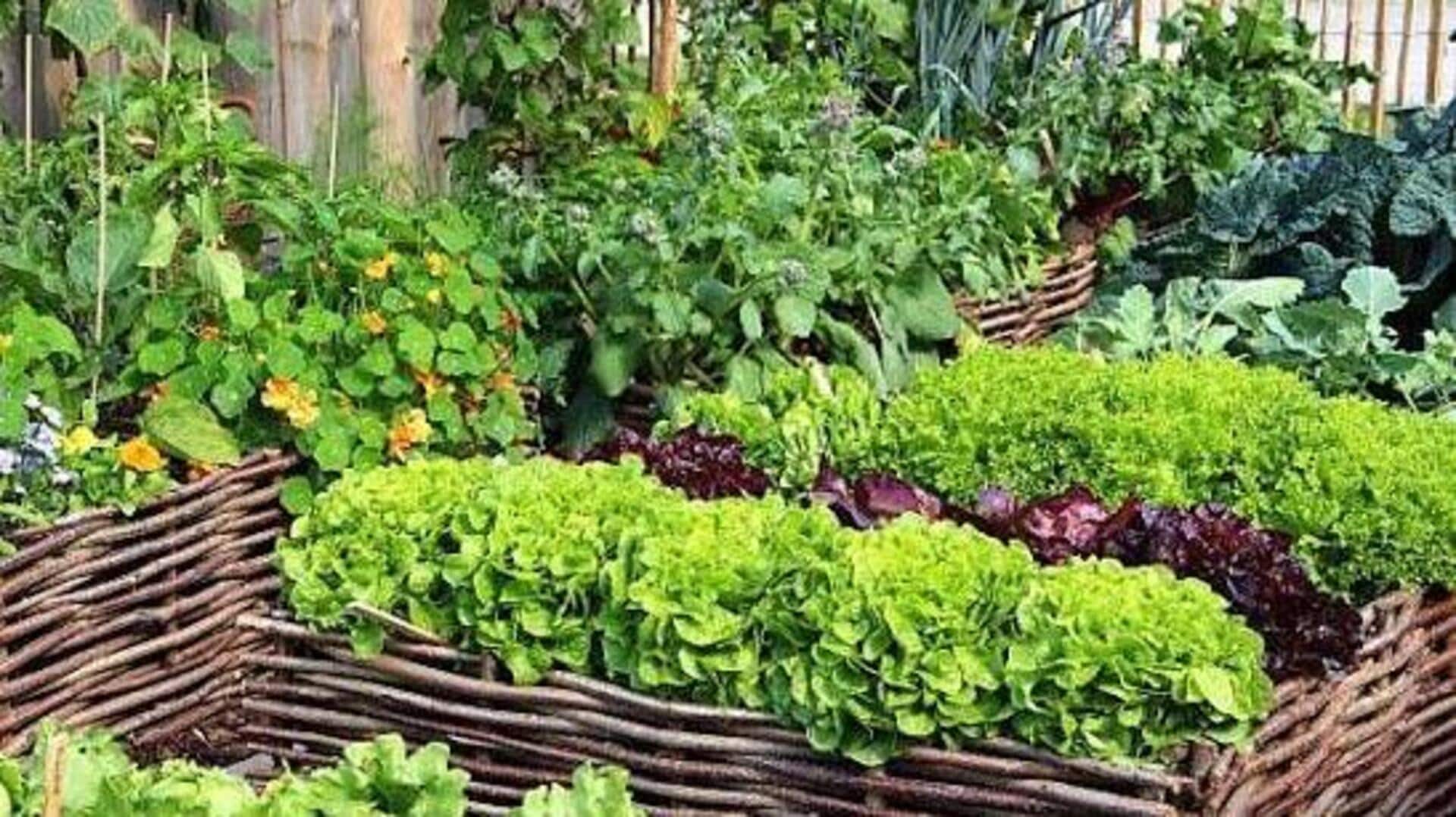
Gardening 101: 5 ways to pair vegetables and herbs
What's the story
Companion planting is an age-old technique that involves growing two or more plants together for mutual benefits. This practice can enhance growth, deter pests, and improve soil health. In home gardens, pairing vegetables with herbs can lead to a bountiful harvest. Here are five effective vegetable-herb pairings that can boost your garden's productivity and flavor profile.
Pairing 1
Carrots and dill
Carrots and dill make a great pair, as the latter attracts beneficial insects, such as ladybugs and lacewings.
These insects prey on carrot pests like aphids.
Further, dill's deep roots can help break up compacted soil, allowing carrots to grow better.
Plant dill seeds between carrot rows to maximize this partnership.
Pairing 2
Tomatoes and basil
Tomatoes and basil are a classic combo that goes well in the kitchen and in the garden.
Basil is said to improve tomato flavor and ward off pests like whiteflies and mosquitoes.
Plant basil around tomato plants to reap the benefits of this aromatic herb's pest-repelling properties.
Pairing 3
Cabbage and thyme
Thyme is an excellent companion for cabbage, as it repels cabbage moths with its strong scent.
This herb also improves the flavor of cabbage when grown nearby.
Plant thyme around your cabbage plants to protect them from pests naturally, without using chemicals.
Pairing 4
Lettuce and chives
Chives are known to deter aphids, which are common pests of lettuce. Their presence can keep your lettuce healthy without any chemical intervention.
Growing chives alongside lettuce not only protects the latter, but also adds a mild onion flavor to salads when harvested together with fresh leaves from both plants regularly throughout the growing season.
Pairing 5
Beans and corn
Beans and corn make a perfect duo in companion planting.
Corn provides natural support for climbing bean vines, while beans add nitrogen back into the soil, which benefits both plants' growth.
Plant beans at the base of corn stalks for a symbiotic relationship that maximizes space and resources.