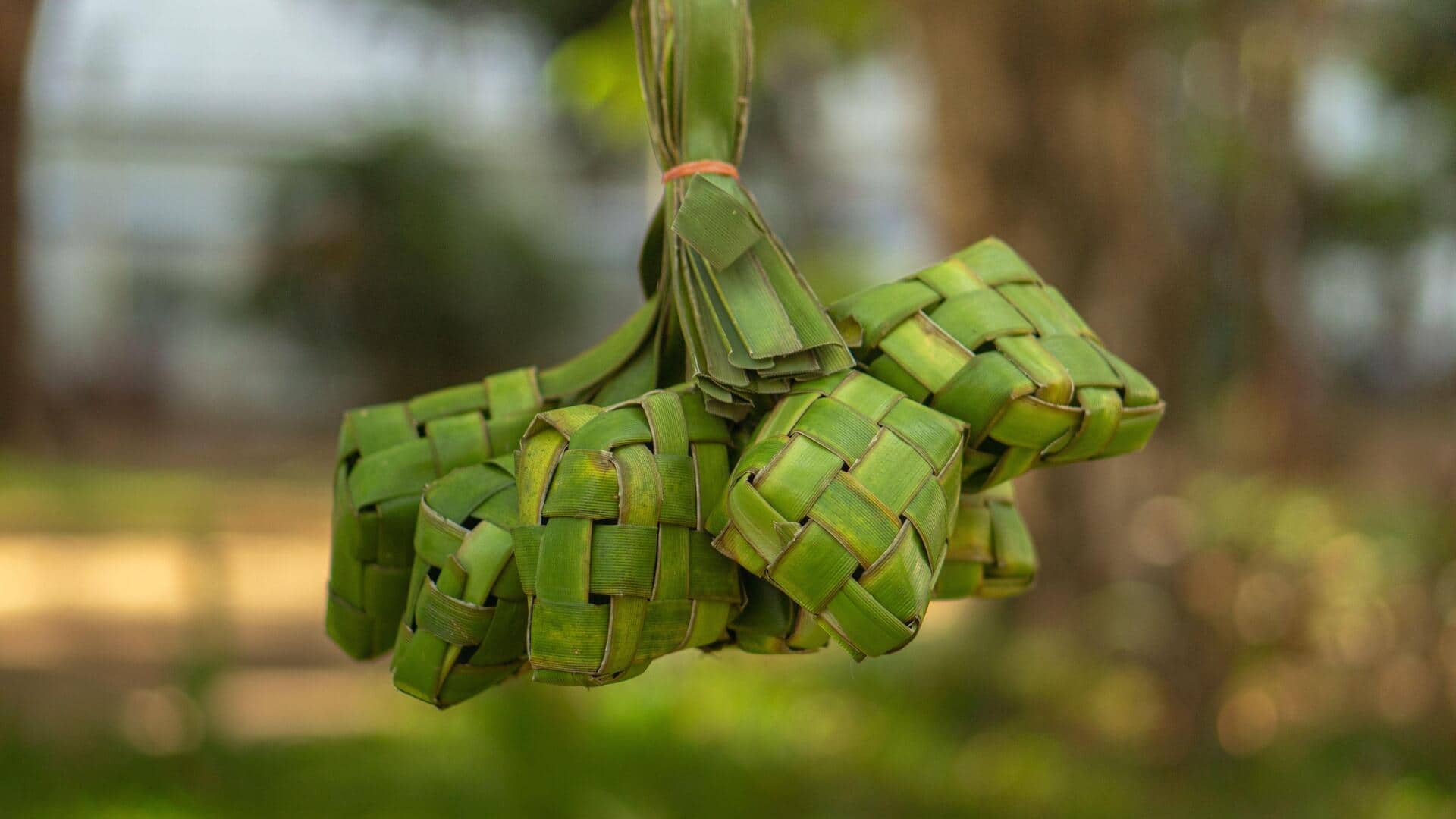
How to use pandan leaves in everyday cooking
What's the story
Popular in Southeast Asian cuisine, pandan leaves are making their way into the global culinary scene. Famous for their unique aroma and vibrant green color, these leaves are more than just a flavor enhancer. They are now being recognized for their potential health benefits and versatility in cooking. As chefs and home cooks experiment with new ingredients, pandan leaves offer an exciting opportunity to innovate traditional recipes.
#1
Nutritional benefits of pandan leaves
Pandan leaves are loaded with essential nutrients, such as vitamins A and C, which are important for healthy skin and immunity.
They also contain antioxidants that can help fight oxidative stress in the body.
The presence of fiber aids digestion and promotes gut health.
These nutritional benefits make pandan a great addition to a balanced diet.
#2
Versatility in cooking
The versatility of pandan leaves in cooking is unmatched.
They can be used fresh or dried to infuse dishes with a unique fragrance that elevates the taste of both sweet and savory recipes.
From desserts like cakes and puddings to savory dishes like rice or soups, pandan leaves add an aromatic touch that makes the simplest of dishes feel gourmet.
#3
Traditional uses across cultures
Traditionally, pandan leaves have been used across cultures for both culinary and medicinal purposes.
In some regions, they are used as natural food colorings due to their vibrant hue.
In others, they are steeped for teas believed to have calming effects on the mind and body.
These age-old practices highlight the cultural significance of pandan, beyond its culinary uses.
#4
Tips for incorporating pandan into your meals
To incorporate pandan into your meals at home, start by using it as a natural flavoring agent in desserts like rice cakes or puddings.
For savory dishes, try wrapping it around rice before cooking, or adding it while simmering soups for an aromatic boost.
Experimenting with small quantities can help you find the right balance without overpowering other flavors in your dish.