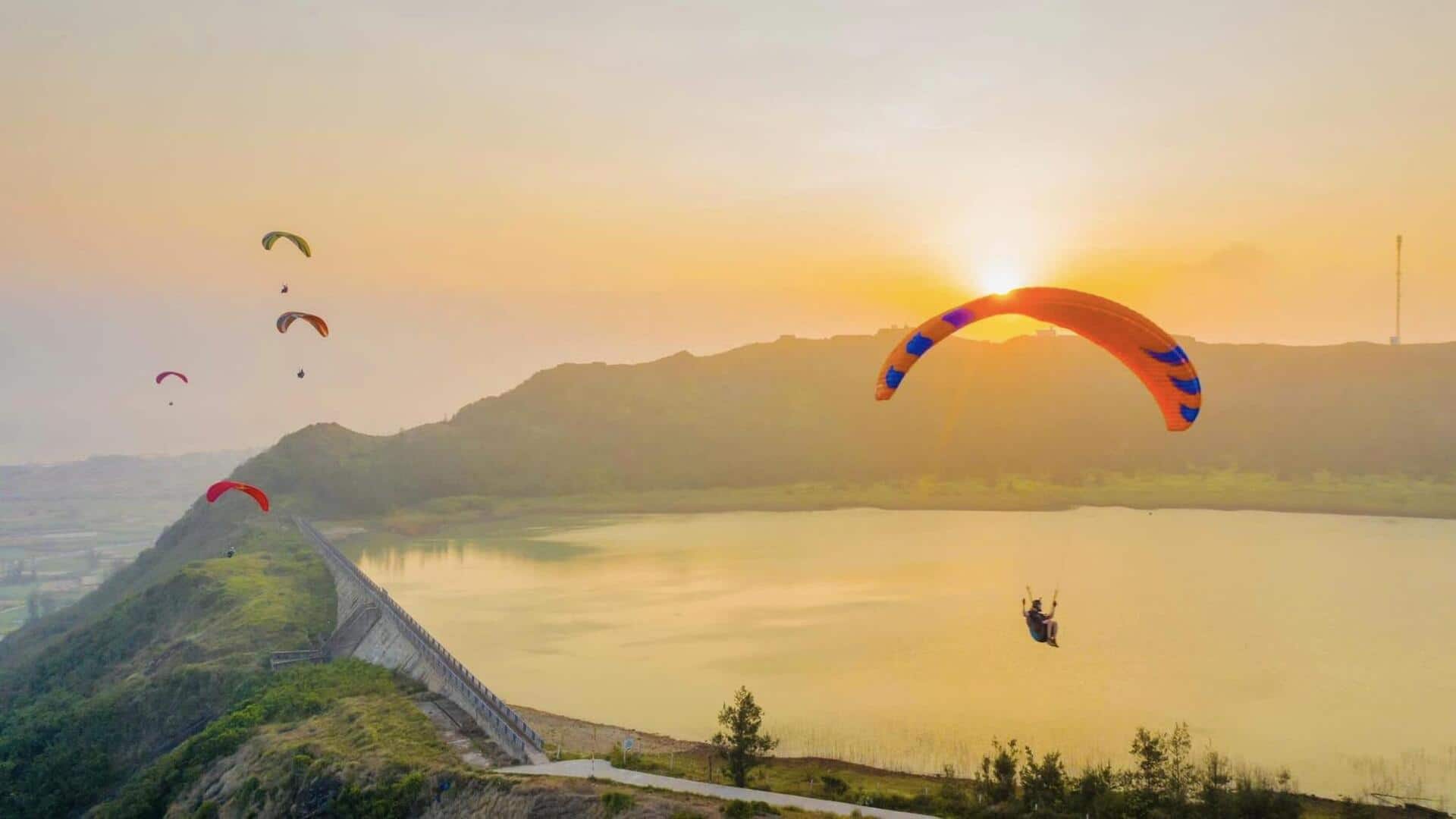
Parachuting over a volcanic crater is one epic adventure!
What's the story
The Ngorongoro Crater in Tanzania is one of the most unique places to go for a parachuting adventure. This massive volcanic caldera is not just a UNESCO World Heritage Site, but also a mind-blowing place for thrill-seekers. With its breathtaking views and rich wildlife, parachuting over the crater gives you a once-in-a-lifetime experience. Here's everything you need to know about parachuting in Ngorongoro Crater.
Timing
Best time for parachuting
The best time to go parachuting over the Ngorongoro Crater is during Tanzania's dry season, which lasts from June to October.
During these months, the weather is mostly clear, with minimal rainfall, giving you perfect visibility and safe conditions for parachuting.
The temperatures are also pleasant, making it easier for adventurers to enjoy their experience without any discomfort.
Preparation
Preparing for your adventure
Before you head out for a parachuting trip over the Ngorongoro Crater, make sure you are physically fit and have no medical conditions that could be aggravated by high altitudes.
Wear comfortable clothes that are suitable for outdoor activities.
It is also important to listen carefully to the instructions given by your guides or instructors, as they will provide crucial information about safety procedures and equipment usage.
Experience
What to expect during parachuting
As you take off from a height of about 10,000 feet above sea level, you'll get an unparalleled view of the Ngorongoro Crater below.
The descent will take you through some clouds before you reach the crater floor at about 5,000 feet above sea level.
The entire experience lasts for about 30 minutes, from takeoff to landing.
Wildlife
Wildlife spotting opportunities
While parachuting over the Ngorongoro Crater, you may spot various wildlife species that inhabit this region.
The crater is home to elephants, lions, zebras, wildebeests, and many more animals.
Keep your eyes peeled during your descent for any signs of wildlife activity below.