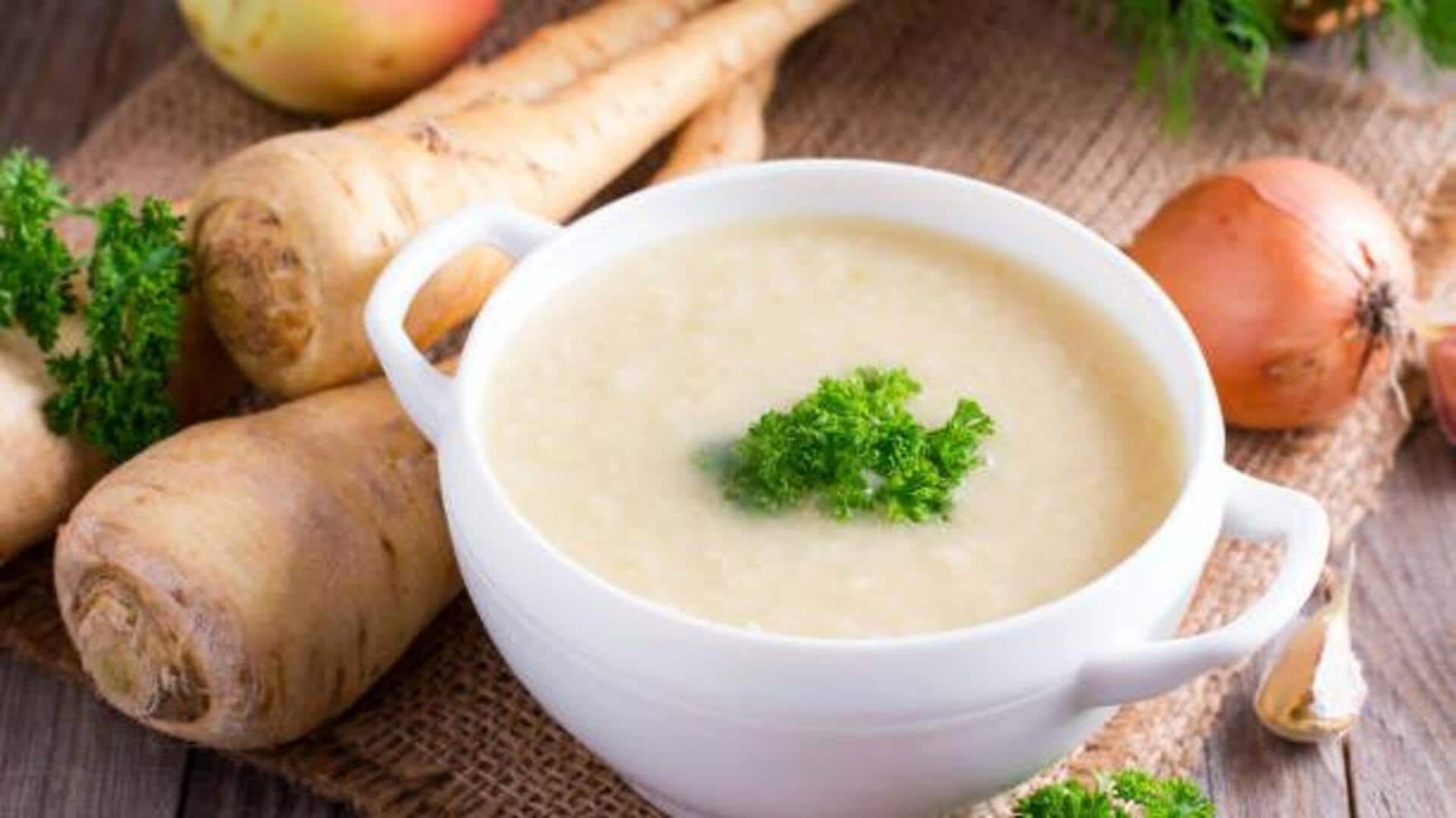
Parsnip soup: A bowl of fiber-rich goodness
What's the story
Parsnip soup is a delicious and nutritious dish that can do wonders for your digestive health. Parsnips, which are root vegetables, are loaded with fiber and other nutrients that promote digestion. Including parsnip soup in your diet can help you maintain a healthy digestive system. Here are some of the benefits of parsnip soup for digestion, and how you can make it a part of your meals.
#1
Rich source of dietary fiber
Parsnips are an excellent source of dietary fiber, which is essential for healthy digestion.
Fiber helps in adding bulk to the stool, making it easier to pass through the intestines.
This can help prevent constipation and promote regular bowel movements.
Including parsnip soup in your diet can help you meet your daily fiber requirements and keep your digestive system functioning properly.
#2
Supports gut health
The fiber in parsnips also acts as a prebiotic, feeding the good bacteria in your gut.
A healthy balance of gut bacteria is essential for proper digestion and overall health.
By promoting the growth of beneficial bacteria, parsnip soup can help you maintain a healthy microbiome, which plays a key role in nutrient absorption and immune function.
#3
Lowers inflammation
Parsnips have anti-inflammatory properties, thanks to antioxidants such as vitamin C and flavonoids.
These compounds can help reduce inflammation in the digestive tract, which is important for those suffering from conditions such as irritable bowel syndrome or inflammatory bowel disease.
Eating parsnip soup regularly may help ease symptoms related to inflammation.
#4
Easy to digest
For people with sensitive stomachs or digestive issues, parsnip soup is an easy-to-digest option.
The cooking process breaks down the fibers, making them easier on the stomach while still providing essential nutrients.
This makes it an ideal choice for anyone looking to support their digestion without upsetting their stomach.
Tip 1
Versatile ingredient use
Parsnips are versatile and can be paired with other vegetables or spices to enhance flavor and nutrition.
Carrots, potatoes, onions, garlic, ginger, and herbs like thyme or rosemary are commonly used with parsnips in soups.
Experimenting with different combinations allows you to tailor recipes according to personal taste preferences, while reaping the benefits of this nutritious root vegetable.