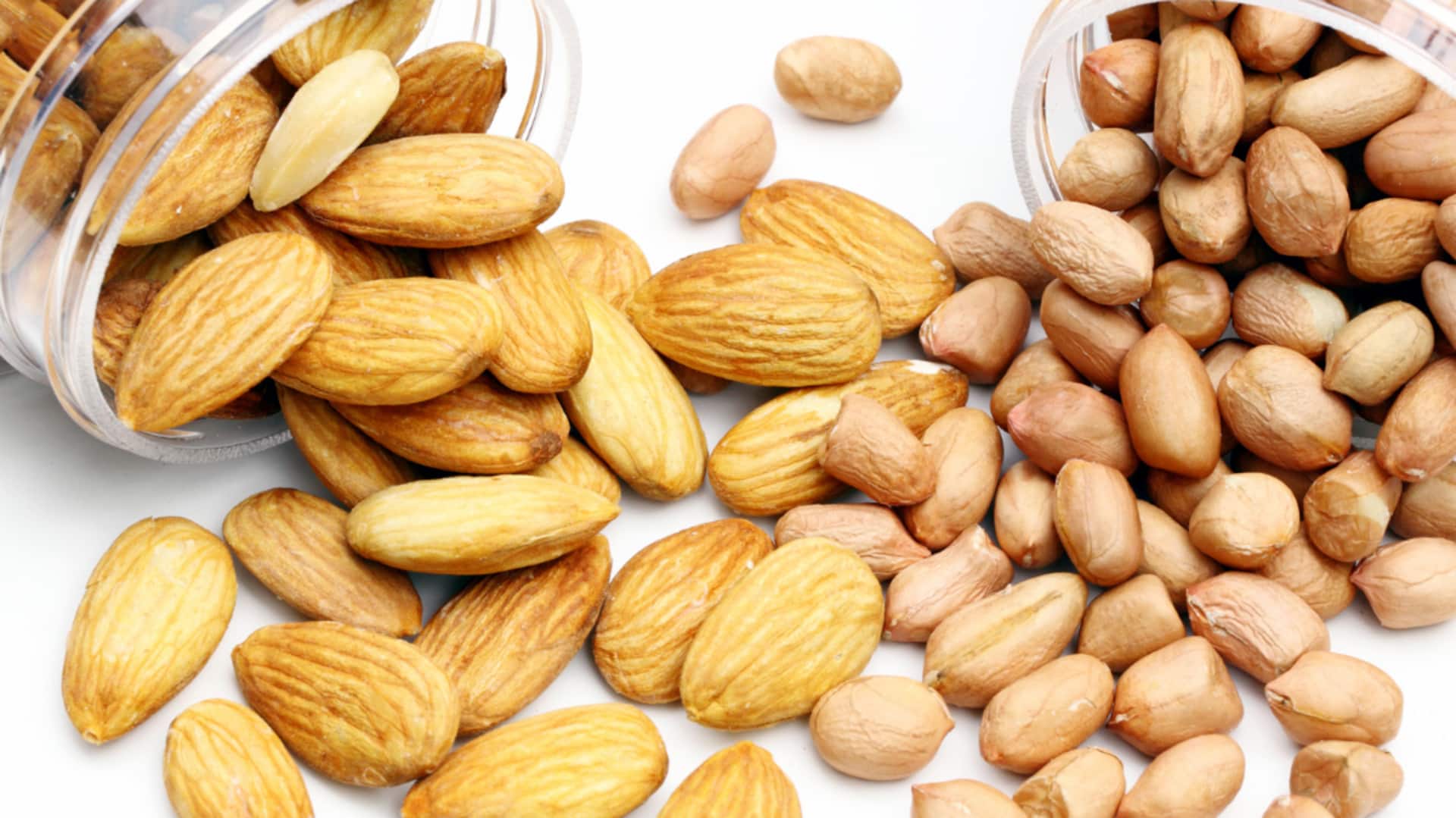
Peanuts v/s almonds: Which has more protein?
What's the story
Peanuts and almonds are two of the most popular nuts, both of which provide unique nutritional benefits. While both are packed with healthy fats, proteins, and essential vitamins, they differ in their nutrient composition. Here, we take a closer look at the nutritional profiles of peanuts and almonds, comparing their calorie content, fat composition, protein levels, and vitamin/mineral content.
#1
Calorie content comparison
Peanuts are generally higher in calories than almonds.
A serving of peanuts, about 28 grams, has approximately 166 calories, while the same serving of almonds has roughly 164 calories.
The slight difference in calorie count does not matter much when it comes to daily intake, but it can matter for those keeping a check on calorie consumption.
#2
Fat composition differences
Both peanuts and almonds have healthy fats, but differ in their composition.
Peanuts have more monounsaturated fats than almonds. Monounsaturated fats are known to promote heart health by reducing bad cholesterol levels.
Almonds also have polyunsaturated fats that contribute to overall well-being.
Knowing the difference can help you choose based on your dietary needs.
#3
Protein levels in each nut
When it comes to protein content, almonds win over peanuts.
A serving of almonds has around six grams of protein, while peanuts offer about four grams per serving.
For those looking for a plant-based protein source, almonds make a better option due to their higher protein content.
#4
Vitamin and mineral content analysis
Almonds are richer in vitamin E than peanuts, which is essential for skin health and acts as an antioxidant.
Peanuts provide more niacin (vitamin B3), which is important for energy production and DNA repair.
Both nuts also provide magnesium and potassium, which are important for muscle function and heart health.