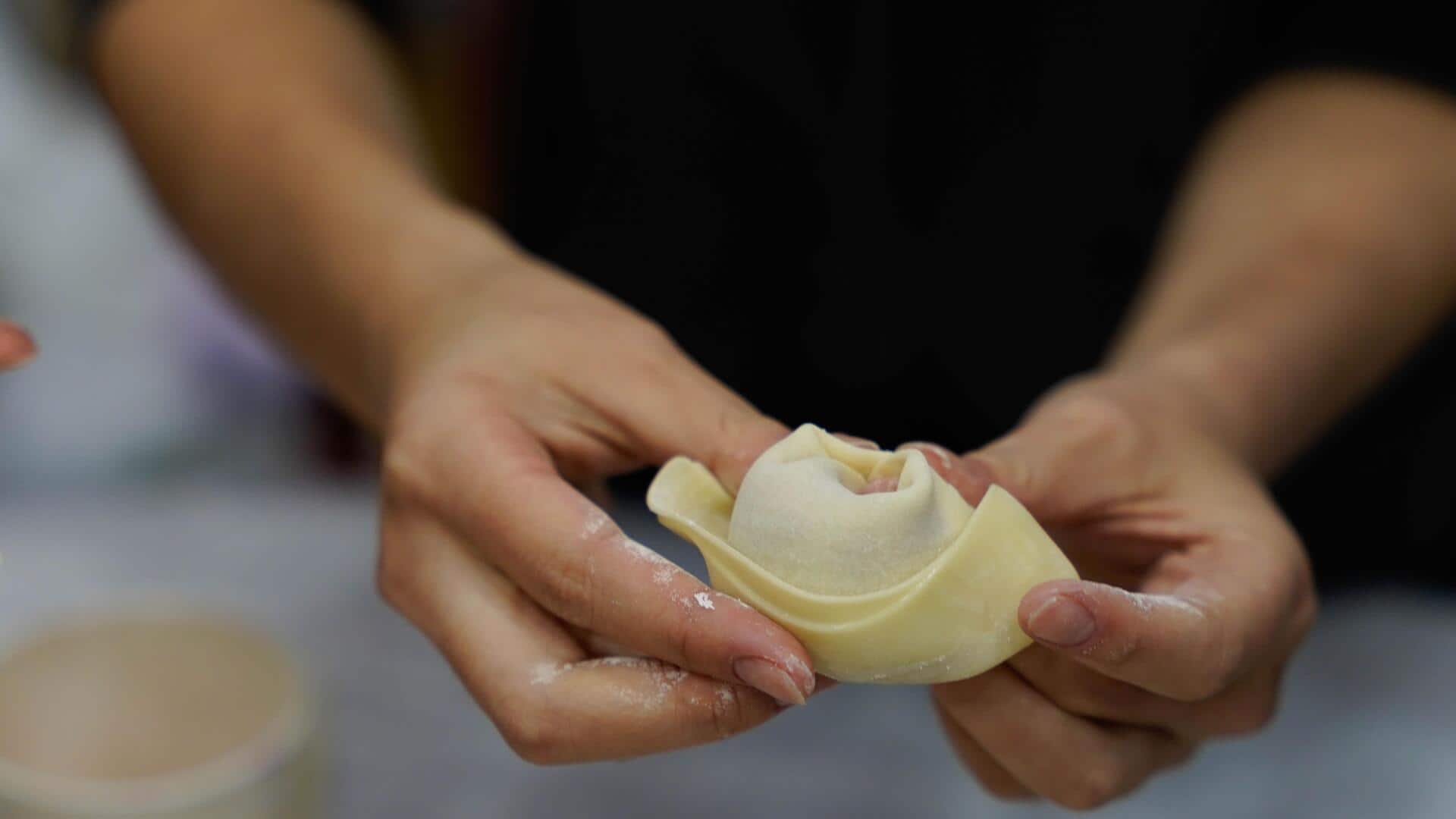
5 dumpling folds every home cook should know
What's the story
Dumplings are a staple in many cuisines, and mastering the art of folding them can elevate your culinary skills. A well-folded dumpling not only looks appealing but also ensures that the filling stays intact during cooking. Here are five essential dumpling folds that every home cook should know. Each fold offers a unique style and technique, allowing you to impress family and friends with your homemade creations.
Pleat style
The classic pleat fold
The classic pleat fold is probably the most common dumpling fold. It involves pinching the edges of the wrapper together while creating small pleats on one side.
This technique is commonly used for potstickers and steamed dumplings.
To achieve this fold, start by placing a small amount of filling in the center of the wrapper, wet one edge with water, and pinch it together while creating pleats along one side.
Half-moon style
The half-moon fold
The half-moon fold is simple and elegant, perfect for beginners.
Just place filling on one half of the wrapper, wet the edges with water, and fold it over to create a semi-circle shape. Press down firmly to seal it completely.
This style works well for boiled dumplings or those served in soups.
Crescent style
The Crescent Fold
The crescent fold offers a unique twist to traditional dumpling shapes.
Start by placing filling in the center of the wrapper, then fold it over like a taco shell.
Seal by pressing down firmly along the edges with your fingers or a fork.
This shape is ideal for pan-fried dumplings.
Purse style
The pleated purse fold
The pleated purse fold gives a sophisticated look to your dumplings.
Place filling in the center of the wrapper, wet the edges, and pinch together at the top while creating multiple pleats around the sides, like a purse handle.
This style is perfect for special occasions where presentation matters.
Rope style
The twisted rope fold
The twisted rope fold adds an intricate touch to your dumpling-making skills.
Place filling on one side of the wrapper, wet edges, then twist both sides towards each other tightly until they meet above the filling, resembling twisted rope strands.
This technique is ideal for those who want to showcase their advanced folding skills.