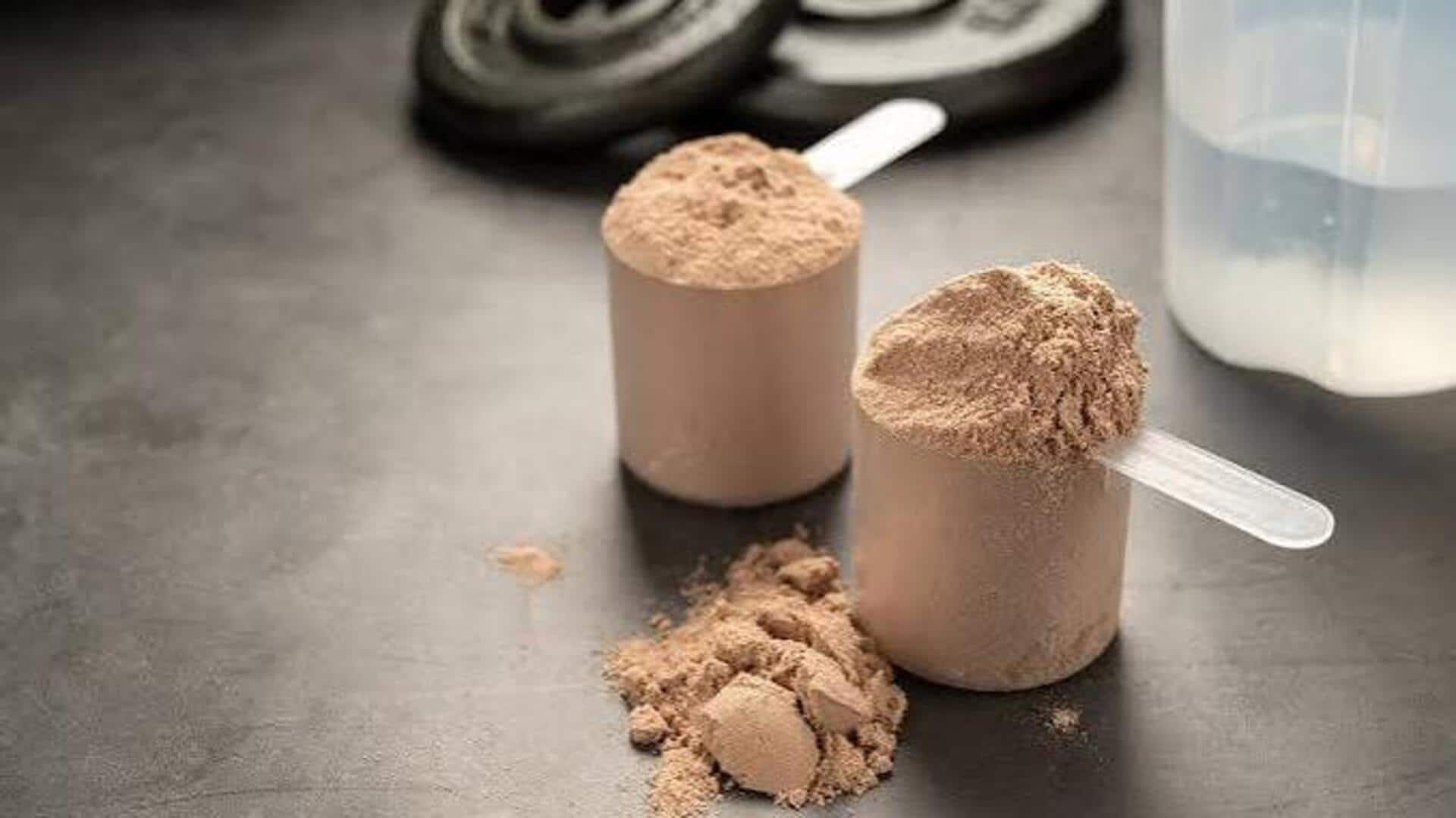
What you should know about protein powders
What's the story
With the growing popularity of protein powders, many myths have emerged regarding their use and benefits. Many people are misled by these myths, which can affect their health and fitness goals. In this article, we bust some common misconceptions about protein powders, giving you a clearer picture of what they really do. Knowing the truth can help you make informed decisions about including protein supplements in your diet.
#1
Myth: Protein powder is only for bodybuilders
Many think protein powder is only for bodybuilders or athletes.
The truth is, anyone who wants to increase their protein intake can benefit from it.
Be it a busy professional looking for a quick meal replacement, or an elderly person wanting to maintain muscle mass, protein powders can be a convenient option.
#2
Myth: More protein equals more muscle
A common misconception is that consuming more protein will automatically lead to increased muscle mass.
However, muscle growth is not just about protein intake; it also involves factors such as exercise, rest, and overall nutrition.
Consuming excessive amounts of protein without proper training may not yield the desired results, and it could strain the kidneys over time.
#3
Myth: All protein powders are the same
Not all protein powders are created equal. They vary by source (whey, soy, and pea) and formulation (added vitamins and minerals).
Each type has its own benefits and drawbacks, depending on dietary needs and preferences.
Knowing these differences can help you choose the right product for your goals.
#4
Myth: Protein powder is unhealthy
Some people think that consuming protein powder is unhealthy or unnatural.
In reality, when taken in moderation as part of a balanced diet, it can be quite beneficial.
It offers a convenient way to meet daily protein requirements without having to consume large quantities of food.
Tip 5
Myth: You need protein powder post-workout
While many believe they must consume protein powder immediately after working out for optimal gains, research indicates that this window is not as narrow as once thought.
Consuming high-quality proteins within several hours post-exercise can still effectively support recovery and muscle repair, without rushing to consume supplements right after workouts.