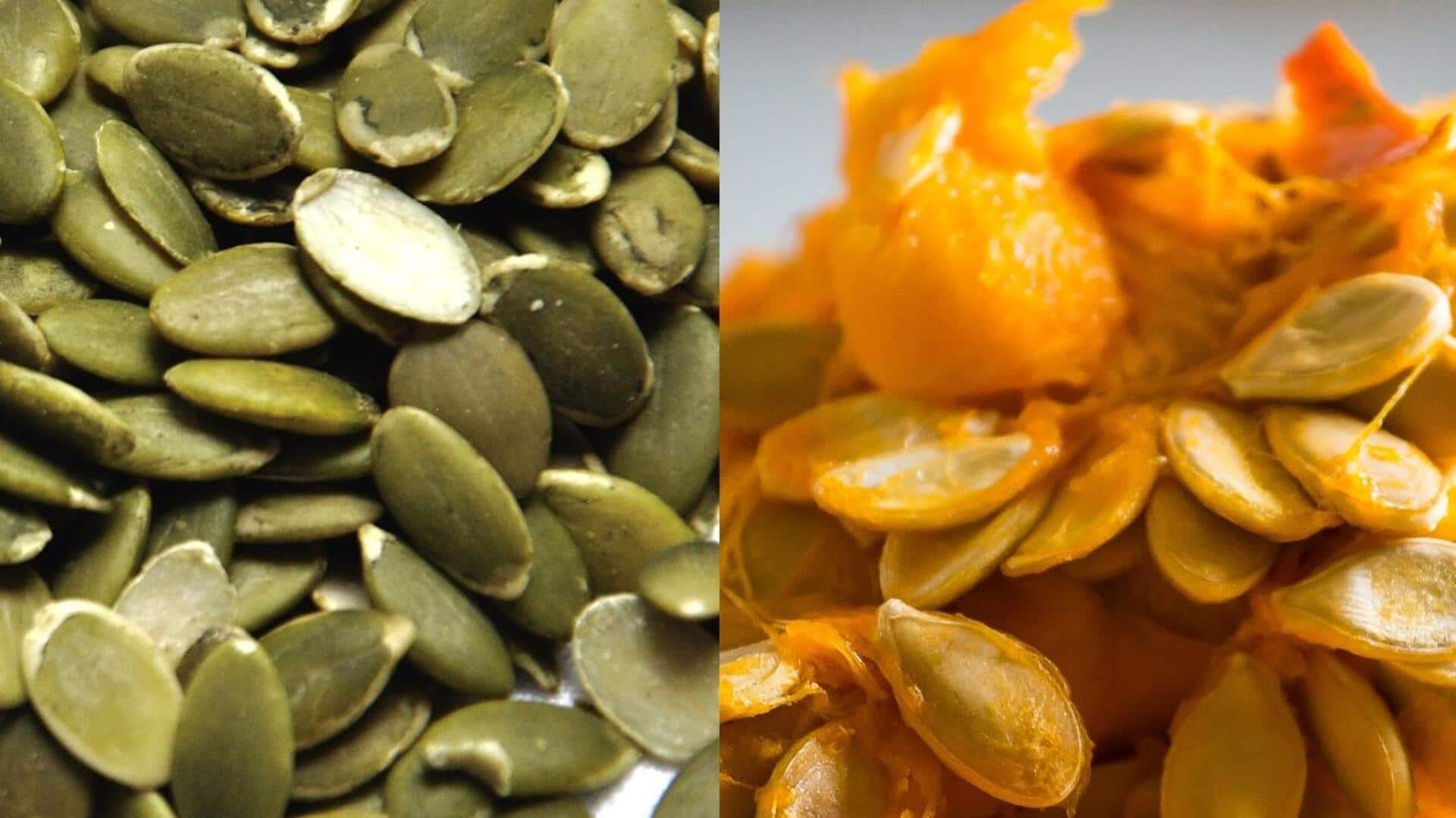
Pumpkin seeds v/s sesame seeds: Which is healthier?
What's the story
Pumpkin seeds and sesame seeds are two popular seed varieties that have been consumed for centuries. Both are packed with nutrients and offer a range of health benefits. While pumpkin seeds are known for their high magnesium content, sesame seeds are famous for their calcium and healthy fats. Here's a look at the nutritional profiles of these seeds to help you make an informed dietary choice.
#1
Magnesium content in pumpkin seeds
Pumpkin seeds are loaded with magnesium, a mineral that is essential for several bodily functions, including muscle and nerve function, blood sugar control, and blood pressure regulation.
A serving of pumpkin seeds can provide up to 37% of the recommended daily intake of magnesium.
This makes them an excellent option for anyone looking to boost their magnesium levels naturally.
#2
Calcium levels in sesame seeds
Sesame seeds are also a great source of calcium, which is important for bone health and teeth strength.
A single serving of sesame seeds can give you around 9% of the daily recommended calcium intake.
Including sesame seeds in your diet can help you meet your daily calcium requirements without consuming dairy products.
#3
Healthy fats in sesame seeds
Sesame seeds are also rich in healthy fats, especially polyunsaturated fats that promote heart health by lowering bad cholesterol levels.
These fats also provide essential fatty acids that the body requires but cannot produce on its own.
Adding sesame seeds to your meals can be a great way to increase your intake of good fats.
#4
Zinc and iron in pumpkin seeds
Apart from magnesium, pumpkin seeds are also a great source of zinc and iron.
Zinc is essential for immune function and wound healing, while iron is important for transporting oxygen in the blood.
A serving of pumpkin seeds can give you about 14% of the daily recommended intake for zinc and around 15% for iron, making them a great addition to a balanced diet.