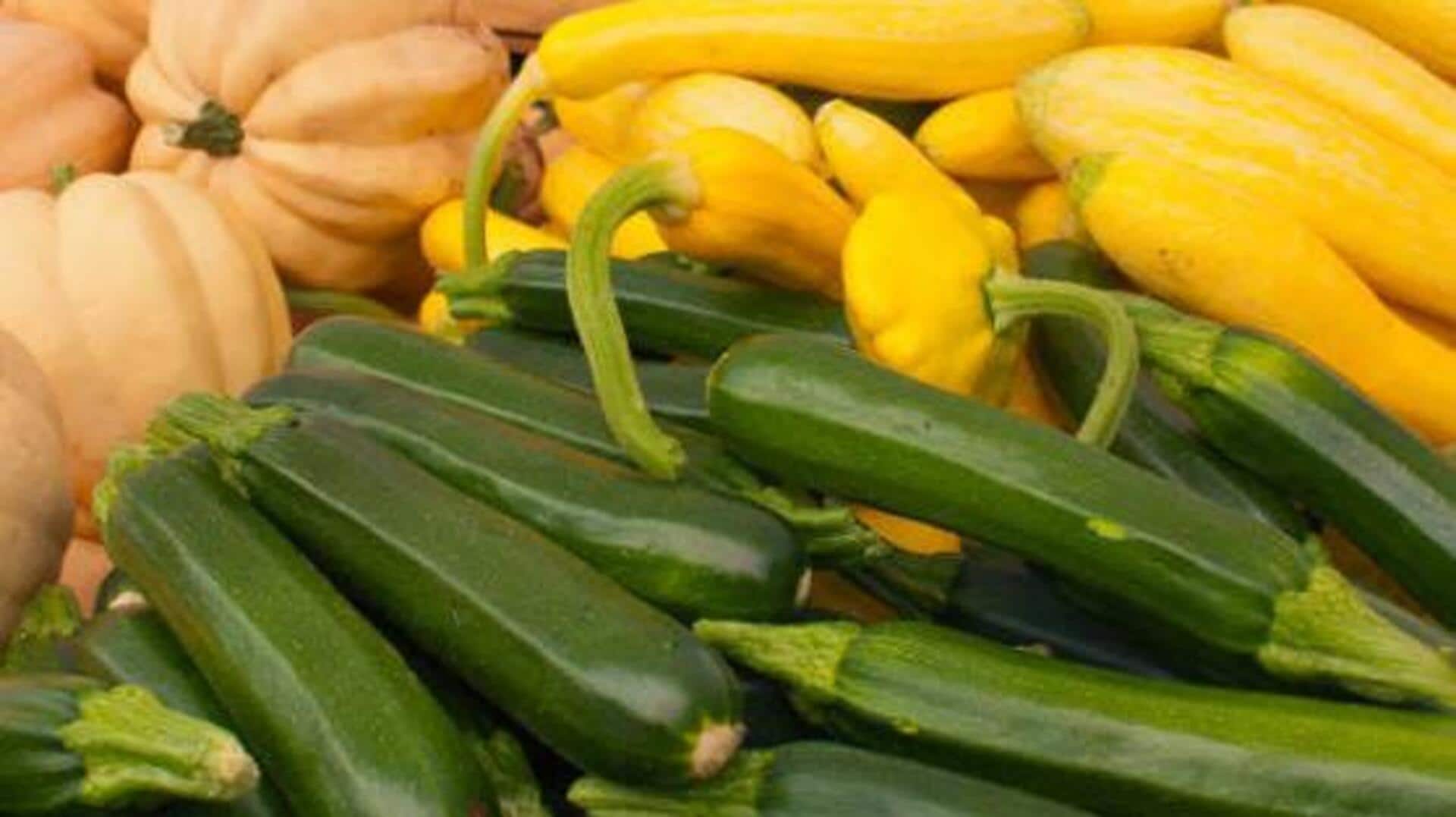
Pumpkin v/s zucchini: Which has more fiber?
What's the story
Pumpkin and zucchini are two popular vegetables often compared for their nutritional benefits. Both are low-calorie, versatile, and packed with essential nutrients. However, one of the key differences between them is their fiber content. Knowing how much fiber each vegetable has can help you make informed dietary choices. Here's a look at the fiber content of pumpkin and zucchini, and how they fit into your diet.
#1
Fiber content in pumpkin
Pumpkin is famous for its high fiber content, which makes it a great choice for those looking to improve their digestive health.
A cup of cooked pumpkin has about three grams of fiber, which is roughly 10% of the recommended daily intake for adults.
This high fiber content helps keep bowel movements regular and may help with weight management by making you feel full.
#2
Zucchini's fiber profile
Zucchini also provides a decent amount of dietary fiber but comparatively less than pumpkin.
A cup of cooked zucchini has about two grams of fiber, which is about 7% of the daily recommended intake.
While not as high as pumpkin, zucchini's fiber still helps in digestion and can be a part of a balanced diet.
#3
Nutritional benefits beyond fiber
Apart from fiber, both pumpkin and zucchini provide other nutrients that are good for health.
Pumpkin is loaded with vitamin A, which is important for eye health, while zucchini provides vitamin C, which boosts the immune system.
Including both vegetables in your diet can ensure you get a variety of vitamins and minerals that promote overall well-being.
Tip 1
Tips for including these vegetables in your diet
To reap the benefits of pumpkin and zucchini, add them to soups, stews, or stir-fries, where they soak up flavors well.
You can also roast them with spices for a tasty side dish, or blend them into smoothies for an extra nutrient boost without changing the taste much.