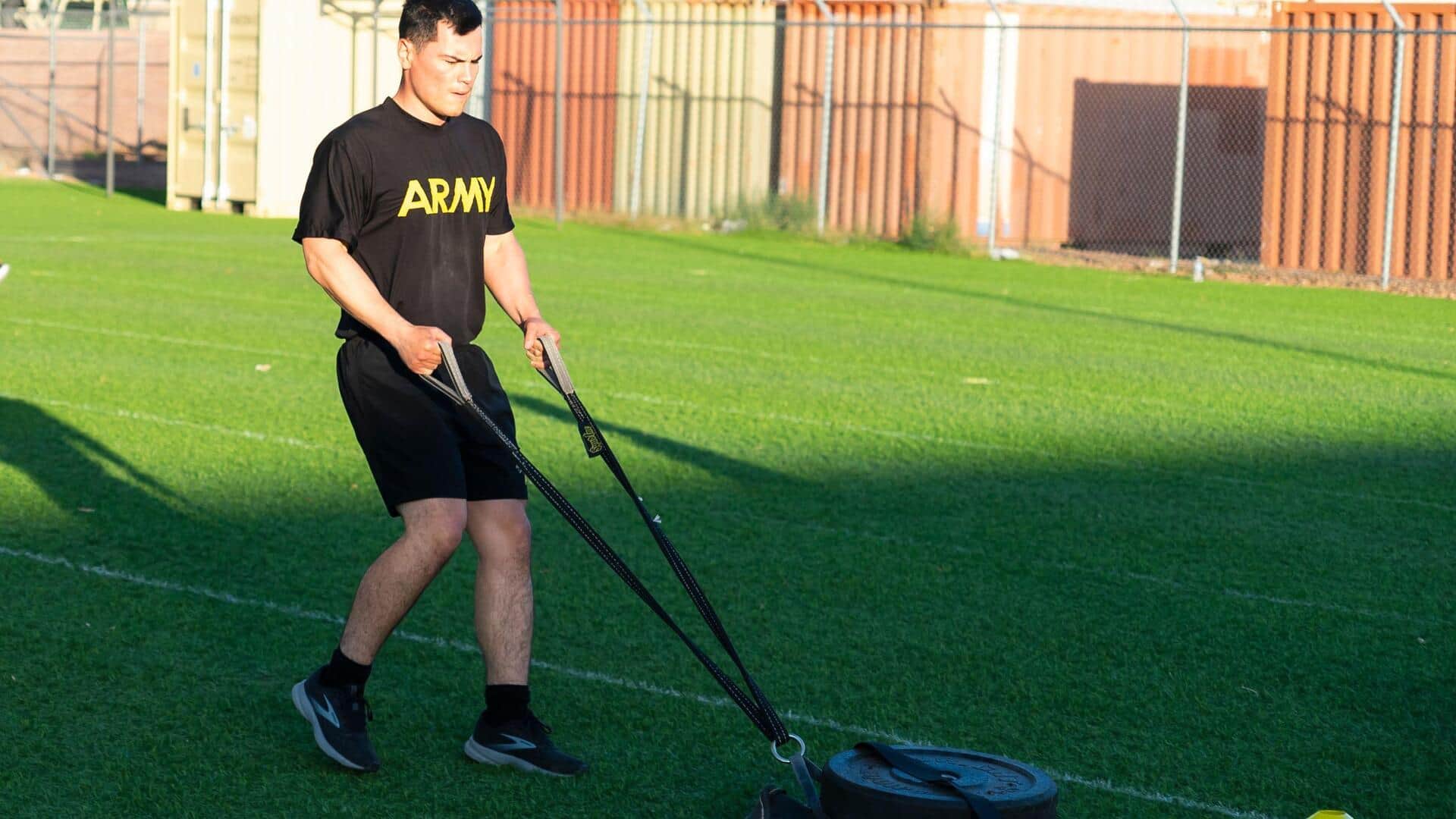
Want stronger quads? Try sled pulls
What's the story
Sled-pulling exercises are a great way to boost quad strength, and they have been used for ages by athletes and trainers. The exercise involves dragging a weighted sled across the ground, which activates the quads, hamstrings, and glutes. This movement mimics many daily activities, making it a functional exercise that can improve your overall lower body strength. Here's how to do sled-pulling exercises for stronger quads.
Weight selection
Choosing the right sled weight
Choosing the right weight for your sled is important to get the most out of your workout and avoid injuries.
Beginners should start with lighter weights to focus on form and technique before progressing to heavier loads.
A good rule of thumb is to start with about 20% of your body weight and adjust as you get comfortable.
Proper weight selection ensures that you engage your muscles effectively, without compromising safety.
Technique tips
Mastering proper form
Proper form is key to reaping the benefits of sled-pulling exercises and avoiding injuries.
Stand with feet shoulder-width apart, keeping your back straight and core engaged.
Grip the handles firmly, keeping elbows slightly bent.
Push through your heels as you pull the sled forward, maintaining a steady pace.
Practicing good form helps target the quads effectively while minimizing strain on other joints.
Exercise variations
Incorporating variations
To keep your workouts interesting and work different muscle groups, you can try different variations of sled-pulling exercises.
For example, try alternating between forward pulls, backward pulls, and lateral drags to target different areas of your legs.
Each variation emphasizes different muscle groups while still working on overall lower body strength.
Goal setting
Setting realistic goals
Setting realistic goals is key to staying motivated and tracking progress with sled-pulling exercises.
Start by determining specific objectives, such as increasing weight by 10% or improving endurance over a certain distance within a set time frame.
Regularly reassess these goals based on performance improvements, adjusting them as necessary to continue challenging yourself without risking injury or burnout.