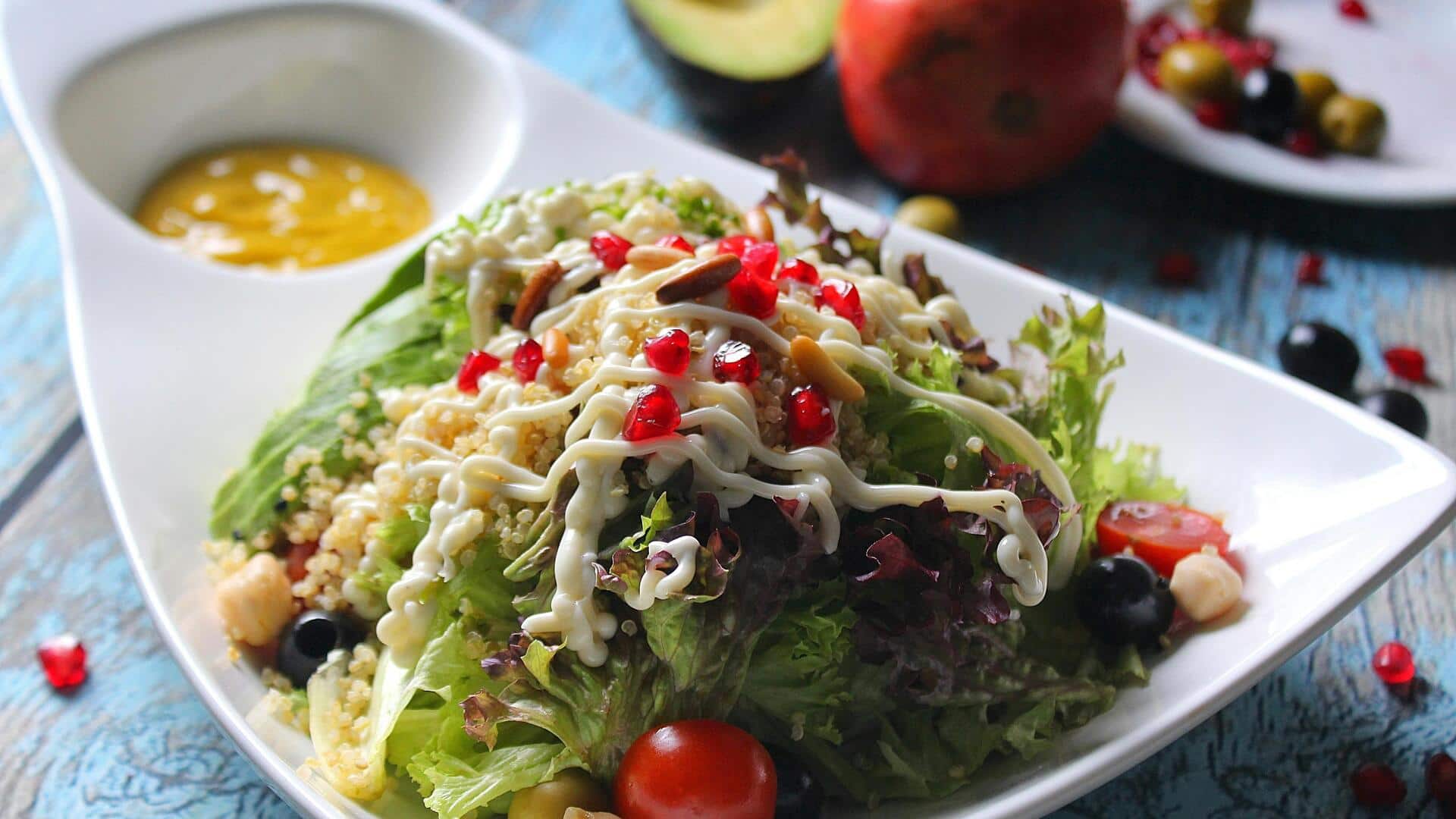
How to make your quinoa salad more protein-rich
What's the story
Quinoa salads are a great way to pack in plant-based protein and stay healthy. Quinoa, a superfood, is packed with all nine essential amino acids, making it a complete protein source. Adding the right ingredients can further boost the protein content of your salad. Here are five ingredients that can amp up the plant-based protein levels in your quinoa salad.
Chickpeas
Chickpeas for added protein punch
Chickpeas are another great source of plant-based protein, with about 19 grams per cup.
They are also rich in fiber and other nutrients that promote digestion and heart health.
Adding chickpeas to your quinoa salad not only boosts its protein content but also adds texture and flavor.
You can use canned or cooked chickpeas, depending on your preference.
Spinach
Spinach: Nutrient-rich leafy green
Spinach is another nutrient-rich leafy green that provides a good amount of plant-based protein.
It has about three grams of protein per cup when raw.
Spinach is also loaded with vitamins A, C, and K, as well as iron and calcium.
Adding spinach to your quinoa salad gives you a nutrient boost while enhancing the taste with its mild flavor.
Almonds
Almonds: Crunchy source of protein
Almonds are also a great source of healthy fats and about six grams of protein per ounce.
They add a crunchy texture to your salad while providing essential nutrients, such as vitamin E and magnesium.
You can either slice or chop almonds before adding them to your quinoa salad for an added crunch.
Edamame
Edamame: Soybean superfood
Edamame is another soybean-based food that is packed with plant-based protein, providing around 17 grams per cup when cooked.
It is also rich in fiber, iron, and calcium, making it an excellent addition to any healthy diet plan.
Simply toss some cooked edamame pods into your quinoa salad for an extra protein boost.
Sunflower seeds
Sunflower seeds: Tiny powerhouses
Sunflower seeds may be small, but they are very nutritious.
They provide around 6 grams of protein per ounce. They also contain healthy fats, including omega-3 fatty acids, which support brain health.
They may help reduce inflammation in the body over time. These benefits are best seen when they are eaten regularly as part of a balanced diet suited to individual needs.