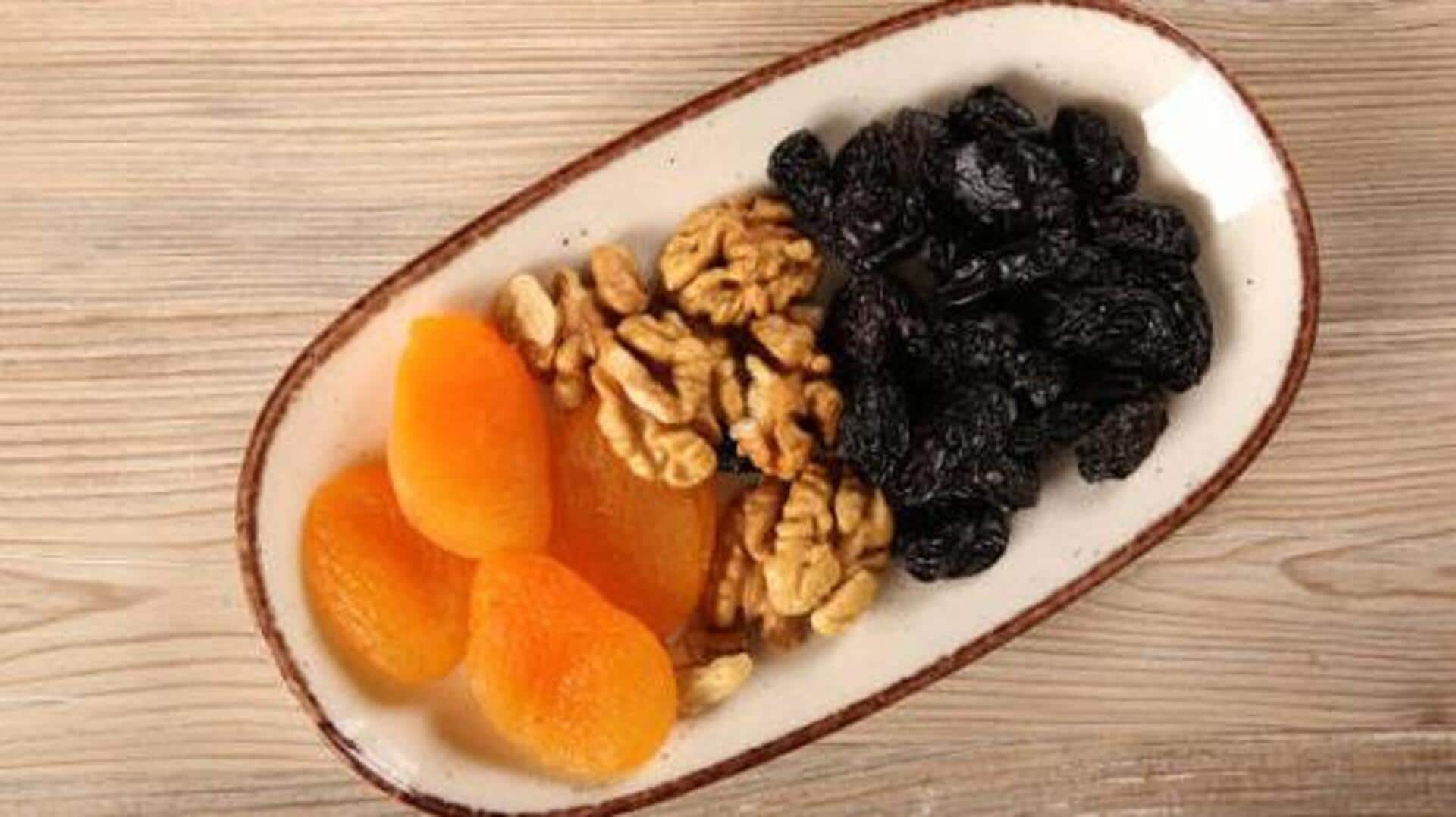
Raisins v/s prunes: Which is healthier?
What's the story
Raisins and prunes are two of the most popular dried fruits, both of which are loaded with nutrients. While raisins are dried grapes, prunes are dried plums. Both offer a range of health benefits, but their nutritional profiles differ slightly. Knowing these differences can help you make informed dietary choices. Here, we take a look at the nutritional content of raisins and prunes, and their respective health benefits.
#1
Vitamin content in each fruit
Raisins are a great source of vitamin B6, which is essential for brain development and function. They also offer small amounts of other B vitamins, such as thiamine and riboflavin.
Prunes, on the other hand, are rich in vitamin K, which is important for bone health and blood clotting. They also contain some vitamin A, which supports vision and immune function.
#2
Fiber content comparison
Both raisins and prunes are high in dietary fiber, which promotes digestive health by preventing constipation and keeping bowel movements regular.
Prunes are especially famous for their laxative effect, thanks to their high sorbitol content.
A serving of prunes usually has more fiber than the same amount of raisins, making them a better option for those looking to boost their fiber intake.
#3
Sugar levels examined
Since they are dried fruits, both raisins and prunes have high sugar content.
However, the natural sugars in these fruits are accompanied by essential nutrients, which can provide energy without the crash of refined sugars.
Raisins have slightly less sugar than prunes, but still provide a sweet taste that can satisfy sugar cravings while offering health benefits.
#4
Mineral richness analyzed
Raisins are a good source of iron, which is important for transporting oxygen in the blood.
They also provide potassium, which is good for heart health by regulating blood pressure levels.
Prunes are packed with potassium, as well, but also provide higher amounts of magnesium, which supports muscle function and bone health.