Rock climbing or kayaking: Which builds more strength?
What's the story
Rock climbing and kayaking are two of the most popular outdoor activities that promise unique physical benefits. Both activities demand different sets of skills and engage different muscle groups. While rock climbing is known for building upper body strength and enhancing flexibility, kayaking focuses on core stability and cardiovascular endurance. Knowing the physical benefits of each can help you choose the right activity according to your fitness goals.
#1
Upper body strength in rock climbing
Rock climbing is a demanding activity that requires a lot of upper-body strength.
As climbers pull themselves up, they engage muscles in the arms, shoulders, and back.
This constant pulling motion builds muscle endurance and increases strength over time.
Climbers also need to have a strong grip as they hold onto various surfaces, which further improves hand and forearm strength.
#2
Core stability from kayaking
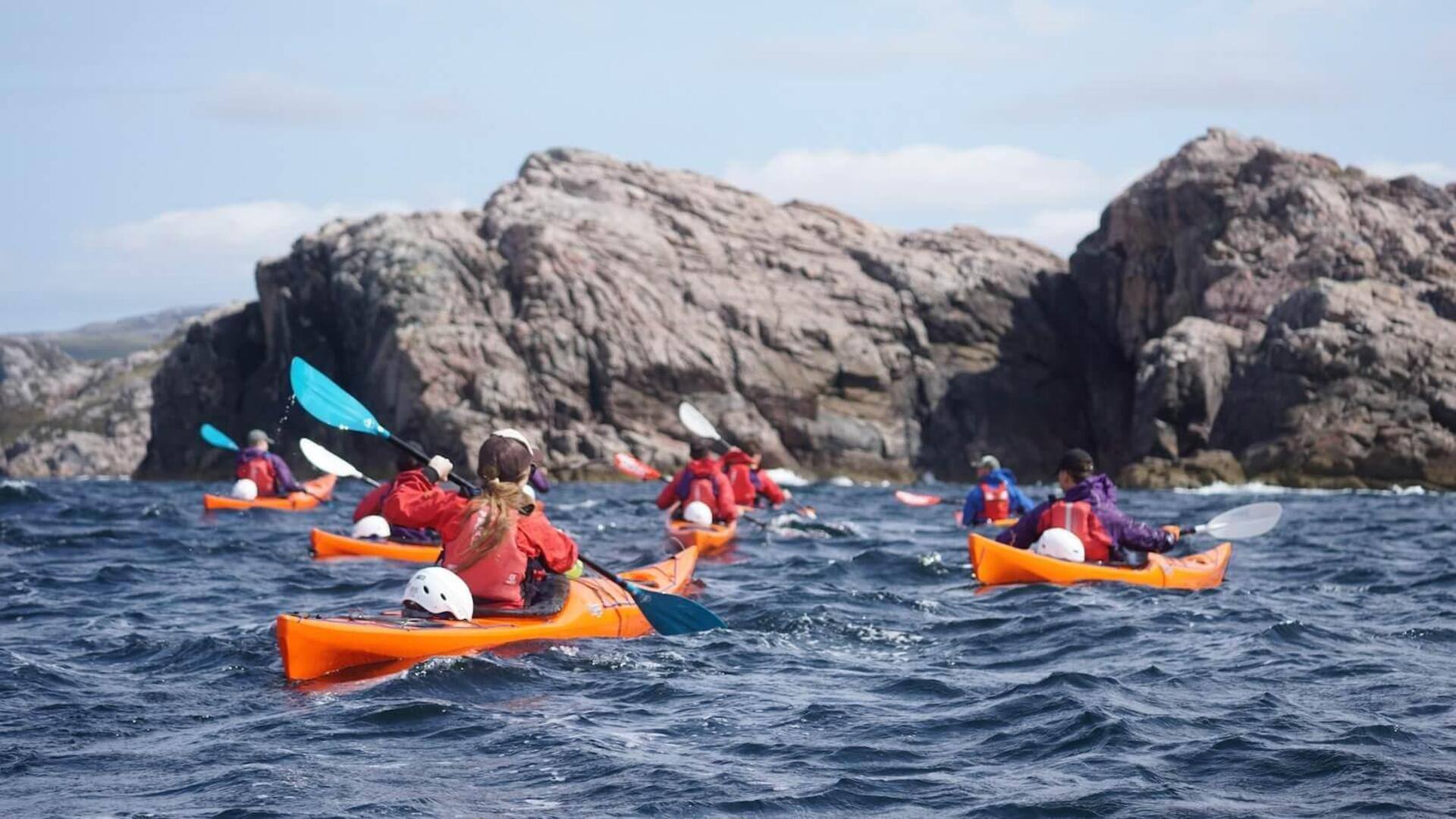
Kayaking is an excellent way to improve core stability as it requires constant balancing on water.
The twisting motions involved in paddling engage the abdominal muscles extensively.
This not only helps strengthen the core but also improves overall balance and coordination.
Kayakers also use their legs to stabilize themselves in the kayak, which adds to the core workout.
#3
Cardiovascular endurance benefits
Both rock climbing and kayaking provide cardiovascular benefits, but in different ways.
Kayaking is a continuous activity that raises heart rate for an extended period, improving cardiovascular endurance efficiently.
The rhythmic paddling motion keeps the heart pumping, making it an excellent aerobic exercise for those looking to improve their stamina.
#4
Flexibility gains from rock climbing
Rock climbing also demands a lot of flexibility, as climbers have to reach for holds that are far apart or in awkward positions.
This need for flexibility encourages climbers to stretch regularly, which can improve their range of motion over time.
Improved flexibility not only helps with climbing performance but also lowers the risk of injury by keeping muscles limber.