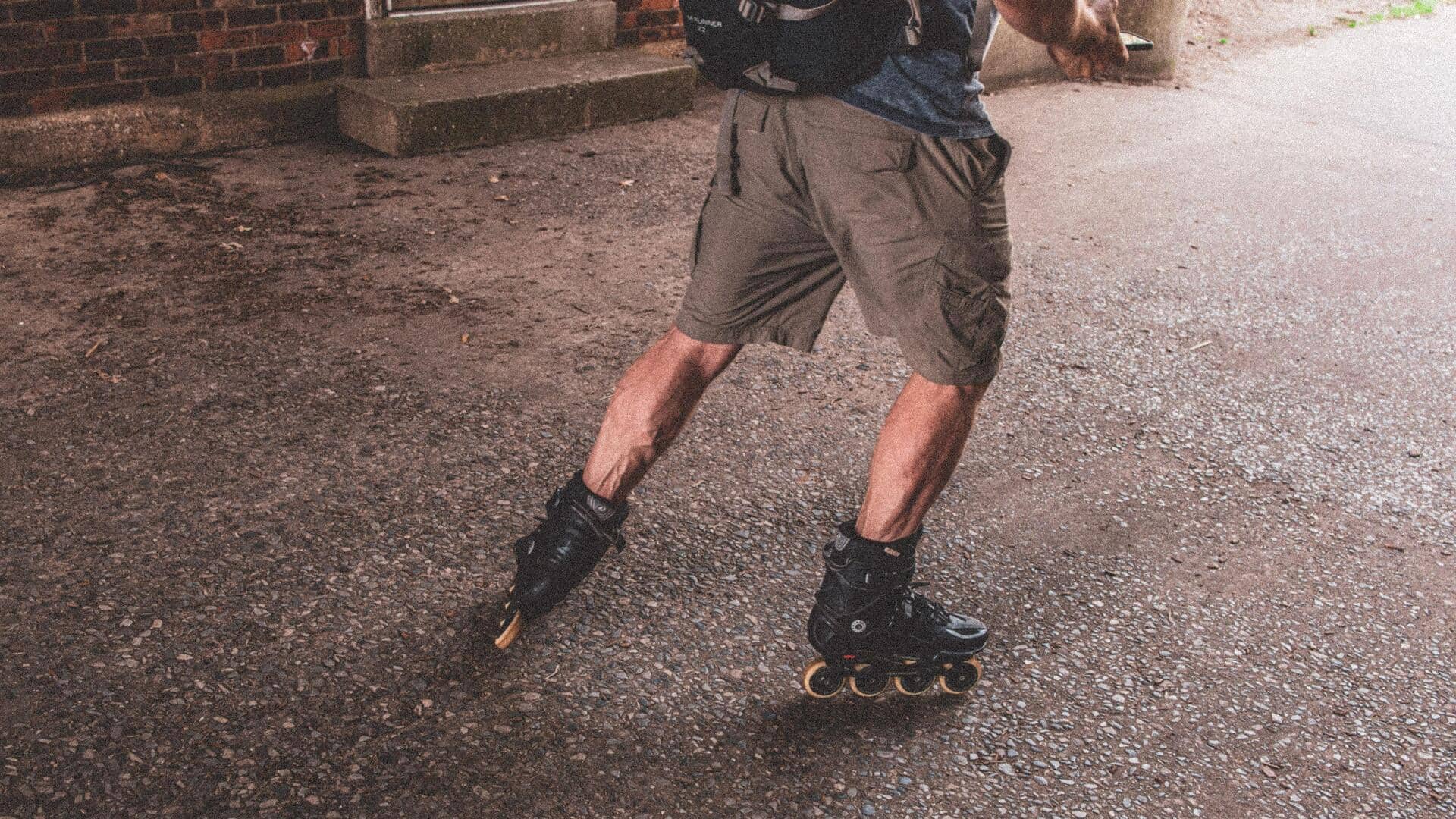
Rollerblading or parkour? Which improves coordination more
What's the story
Rollerblading and parkour are two popular activities that require a lot of coordination and balance. While both activities are fun, they also offer unique benefits when it comes to improving your coordination. Here, we take a look at how rollerblading and parkour can help you improve your physical skills, and which one may be better for you.
#1
Rollerblading's rhythmic benefits
Rollerblading is all about maintaining balance on wheels, which requires a lot of coordination between your body and the ground.
The rhythmic motion of pushing off with one foot while balancing on the other helps develop core stability and lower body strength.
As you glide, your body learns to make quick adjustments to maintain balance, which improves overall coordination over time.
#2
Parkour's dynamic challenges
Parkour involves moving through environments by running, jumping, climbing, and vaulting over obstacles.
This activity demands high levels of agility and precision, as practitioners must constantly adapt their movements to changing surroundings.
The dynamic nature of parkour challenges the body to work as a cohesive unit, enhancing hand-eye coordination and spatial awareness.
#3
Comparing impact on muscle groups
While rollerblading mainly focuses on lower body muscles such as quadriceps, hamstrings, and calves, it also engages core muscles for balance.
Parkour is a full-body workout that activates multiple muscle groups at once. It improves upper body strength through climbing and vaulting movements.
It also builds lower body power through jumps and leaps.
#4
Safety considerations in each activity
Both rollerblading and parkour come with their own risks, so safety gear is a must to minimize injury risks.
Rollerbladers should wear helmets, knee pads, elbow pads, and wrist guards. Parkour enthusiasts should wear proper footwear, padded clothing, and helmets when needed.
The safety gear may vary depending on the environment where they train.